Khaberni - Apple intends to rely on "Samsung" to produce a customized OLED screen with precise curvature for the iPhone that will be released on the twentieth anniversary of the launch of the first iPhone, to be brighter and thinner than current screens, according to new information from the supply chains in China.
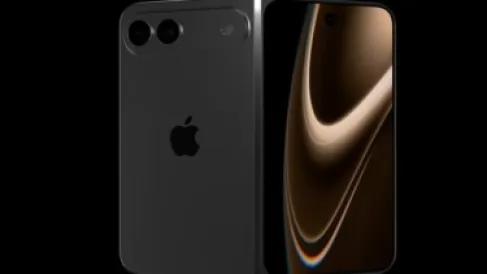
Apple is considering a radical redesign of the twentieth anniversary iPhone, which may include a full screen without edges that curves around all four sides of the phone.
To achieve this, it is said that Apple is seeking to obtain from Samsung a screen design curved from all four sides at an equal depth using "precise curves" to maintain a very slight curvature, instead of the sharply curved edges found in some of Samsung's current screens, according to a report by the tech news site "MacRumors," reviewed by "Al Arabiya Business".
Apple's preference for lightly curved edges may make the device more comfortable to hold, make scrolling from the edges of the screen smoother and more suitable, in addition to reducing the distortion of content displayed at the edges.
The latest information from the supply chain comes from the leaks account on the Chinese platform "Weibo," known as "Digital Chat Station," which also mentioned that Apple is seeking to obtain a "non-polarized" screen from Samsung, i.e., a screen design that removes the polarization layer found atop most current OLED screens.
The polarizer layer works to reduce reflections and enhance image clarity under lighting, but its removal means that the screen will be thinner, brighter, and use less power.
These leaks are in line with a Korean report issued in September 2025, which reported that Apple will adopt OLED technology from "Samsung" called "COE" to make the iPhone twentieth anniversary screen brighter and thinner than previous screens.
"COE" screens rely on removing the polarization layer from the OLED screen, with the color filter applied directly to the screen's special packaging layer.
While this technology helps to reduce screen thickness and allows more light to pass through to improve brightness and reduce power consumption, handling reflections becomes more challenging in the absence of the polarizer layer, but Apple has added a new anti-reflective layer in the latest iPhone, expected to be improved in future versions.
In 2027, it will be the twentieth anniversary of the launch of the first iPhone, and reports suggest that Apple is seeking to design a luxury model made entirely of glass without any openings in the screen.
Screen analyst Ross Young said that Apple will not have completed the development of Face ID technology integrated under the screen by 2027 to use in the phone, but some other leakers see it as possible.
If Apple cannot integrate everything under the screen, it may resort to making Face ID technology integrated under the screen with a small opening for the front camera.
The latest rumors suggest that Apple is still testing an iPhone camera integrated below the screen for the 2027 release, meaning that this possibility remains a possibility.