Khaberni - As he nears his departure from leading «Apple», Tim Cook leaves behind an exceptional legacy of growth and value maximization, despite limited revolutionary innovation, after leading the company to become one of the strongest economic entities globally.
During his presidency at «Apple», Tim Cook was akin to a "head of state rather than a corporate CEO", according to Gene Munster from «DeepWater» Asset Management.
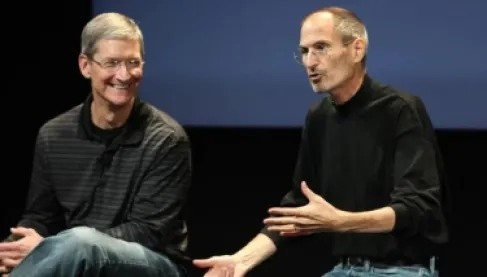
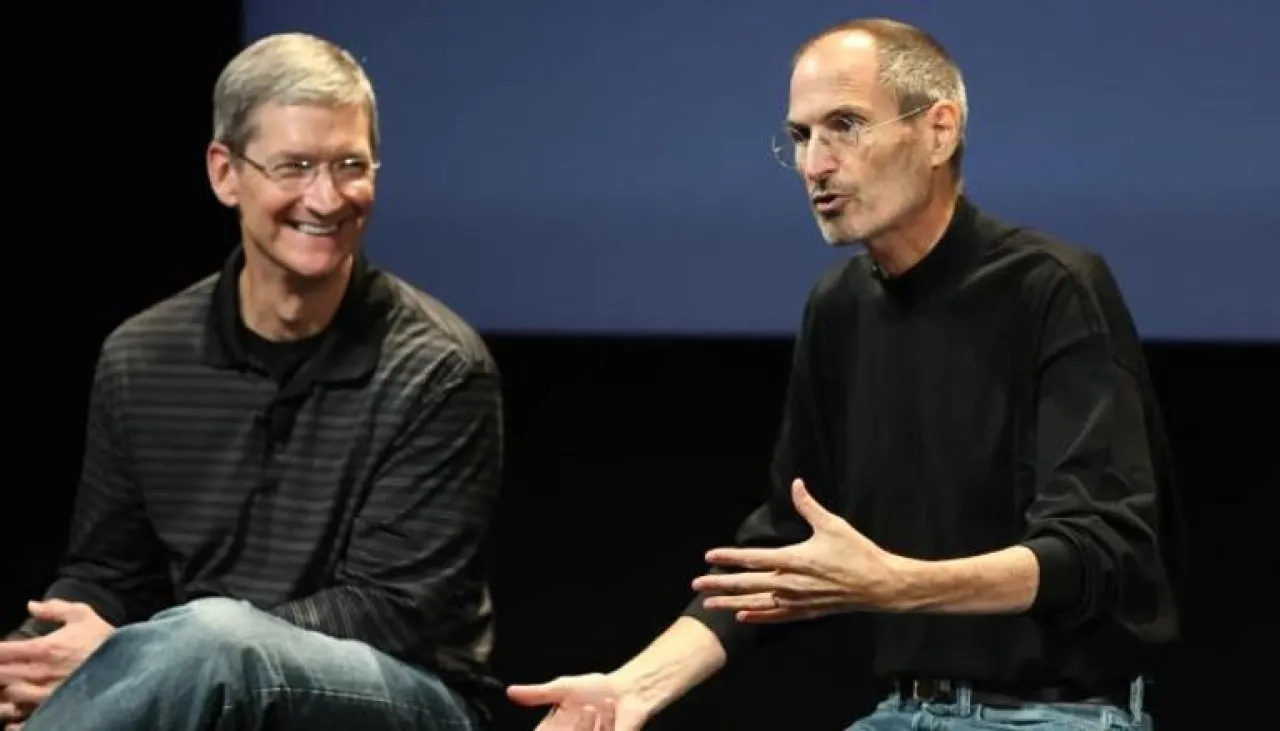
Steve Jobs, Cook’s predecessor, was one of the most prominent product innovation pioneers in recent American history. However, the role changed drastically since Jobs stepped down in 2011 due to cancer, shortly before his death, when Cook was appointed as his successor.
With the end of his tenure as CEO approaching on September 1st, Cook leaves behind a substantial legacy of value creation, with the market value of «Apple» rising from about $350 billion to $4 trillion during his leadership, though the company's products featured more incremental development than revolutionary innovation over 15 years.
According to «New York Times», it was not surprising for Cook, at the age of 65, to hand over the leadership to John Ternus, the former head of hardware.
Several media have highlighted Ternus in recent months, with «New York Times» publishing an article in January titled: "The Man Who Might Be Apple’s Next CEO".
Nevertheless, this move comes about two years ahead of expectations, according to Munster, the managing partner at «DeepWater».
Munster added that Cook skillfully managed tariff policies during Donald Trump's administration, which posed a direct threat to «Apple» due to its heavy reliance on China for manufacturing.
Apple's shares have not declined since the beginning of Trump's second term in January 2025, but rather increased by about 20%, as Cook maintained positive relations with the American administration to serve the company’s interests.
In August, Cook joined Trump at an event in the Oval Office to announce Apple's $100 billion investment in American industry, presenting the President with a commemorative plaque made of gold and glass.
According to «CNBC», Cook said during the event: "Thank you all, and thank you, President Trump, for focusing on American innovation and job opportunities".
This raised the total planned Apple investments in the United States to $600 billion over five years.
Investors have reaped the rewards of their confidence in Cook, as Apple's share value has risen nearly 20 times since he took office, compared to the «Standard and Poor's 500» rising about six times during the same period.
Operational Leadership
Analysts and experts believe that Cook's success is due more to his operational precision and financial discipline than to his product innovations, clearly differing from Steve Jobs’ approach.
Rick Wargo, a managing partner at «Boyden» executive consulting, said that Cook will be remembered for his outstanding operational leadership, which contributed to expanding «Apple»’s global business scope, enhancing its services, strengthening supply chains, and increasing focus on shareholders.
«Apple»’s revenues quadrupled during his tenure to exceed $400 billion in the last fiscal year. Cook is known in Silicon Valley for his operational skills, having restructured the supply chain since joining in 1998 as vice president of operations.
When he joined, «Apple» was on the verge of bankruptcy, before later becoming one of Jobs’ top aides and being promoted to chief operating officer in 2005, two years before the launch of «iPhone».
Cook benefited from the ongoing success of the «iPhone», which maintained its dominance for nearly two decades in the smartphone market.
He is also credited with diversifying «Apple's» business, benefiting from a huge user base that now roughly totals 2.5 billion active devices worldwide.
In 2014, Cook launched the «Apple Watch», describing it as "the most personal product the company has made". This was followed by AirPods in 2016.
Although «Apple» entered familiar markets, it succeeded in commanding higher prices thanks to integration with the «iPhone» system and offering quality improvements.
Revenues from wearable devices exceeded $41 billion in 2022, but later faced challenges due to competition and weak innovation, alongside the Vision Pro device’s failure to achieve widespread adoption, due to its high price of $3500 compared to cheaper competitors.
Revenue in this sector dropped by 4% in 2025 to $35.7 billion, representing 8.6% of total revenue.
«Apple» also faces competition in devices from renowned designer Jony Ive, who joined OpenAI after it acquired his startup for over $6 billion. Ive had designed devices like iPod, iPhone, iPad, and MacBook Air, and left «Apple» in 2019.
During Cook’s tenure, the company’s move towards services gained significant support from investors, given the higher profit margins compared to devices.
After years of stability at a 38% profit margin, it rose to 48% in the last quarter.
The services sector showed strong growth, with revenues increasing by 14% in 2025 to $109.2 billion, representing 26% of total sales.
These services include advertising, cloud computing, digital content, and payments, where Cook succeeded in increasing «iPhone» users’ spending through subscriptions like Apple TV and Apple Care, alongside payment services.
Nitin Seth, CEO of «Incido», said that «Apple's» strength under Cook lies in its ability to seamlessly integrate hardware, software, and services, providing a comprehensive experience that remains one of the company's key distinguishing factors globally.