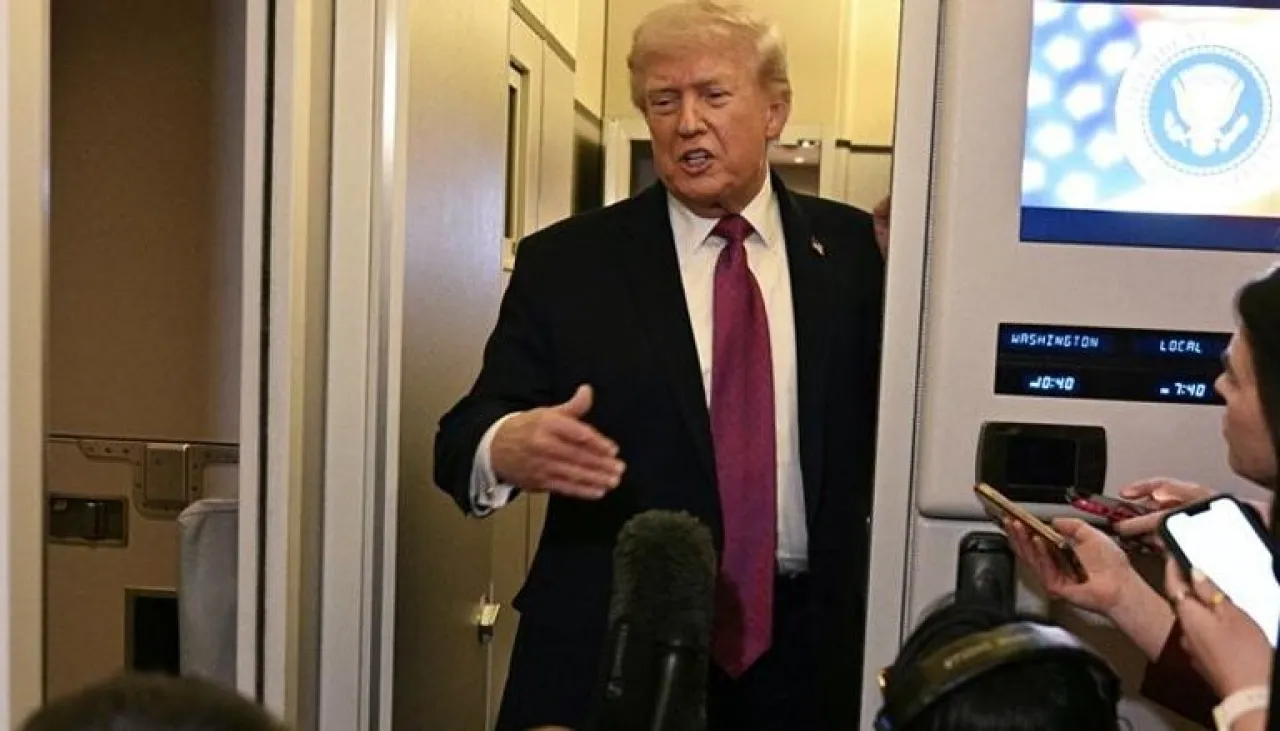
Khaberni - In a striking diplomatic development, U.S. President Donald Trump hinted at the possibility of a breakthrough in the talks with Iran, indicating the possibility of announcing "good news" regarding a second round of negotiations within a few days, perhaps next Friday.
Trump's statement was brief in a text message in response to a question about the prospects for progress, saying: "It's possible!", while Pakistani sources confirmed that ongoing mediation efforts show "positive" signs, with expectations of progress within a period ranging between 36 and 72 hours, according to the New York Post and informed diplomatic sources.
This cautious optimism follows Trump's decision to extend the ceasefire with Tehran, conditional on the latter presenting a "unified proposal" that reflects consensus within its political institutions.
In a post on his "Truth Social" social media platform, Trump confirmed that he had directed the U.S. military to continue the maritime blockade in the Strait of Hormuz while keeping the forces on high alert, clarifying that the extension aims to provide Tehran with sufficient time to resolve its internal position.
On the other hand, Pakistan continues its role as a primary mediator through intensified diplomatic channels with Iran. .
A senior source in Islamabad confirmed that the ceasefire is still holding despite the escalation in rhetoric, pointing out that neither side has made any military moves, which reflects - according to him - "positive intentions" that support the continuation of the diplomatic path.
Pakistan is preparing for a new round of high-level consultations, considering that the current anticipation represents a temporary stall rather than a collapse of the negotiations.
Concurrently, the American conditions for resuming negotiations reveal the depth of challenges within the decision-making structure in Tehran. Washington requires a single negotiating offer that reflects the consensus of its governing institutions, putting the ball in the court of the Iranian leadership, which has its powers distributed among the elected government, the Guardian Council, the Supreme National Security Council, and the Revolutionary Guard.
Analysts familiar with discussions within Pakistani circles believe that the current phase represents an "actual halt" to the negotiations, pending Iran's success in unifying its negotiating stance.
The analysts confirm that this condition reflects a clear American inclination not to enter new rounds of dialogue without guaranteeing the presence of a unified and committed negotiating partner.
While Washington continues its policy of pressure by maintaining military options, it seeks to give diplomacy one last chance, conditioned by reorganizing Iran's internal house.
The ongoing developments reflect a complex mix of calculated escalation and conditional openness, where the U.S. administration balances between military pressure tools and providing a window for a political solution.
On the other hand, the future of this path depends on Tehran's ability to overcome its internal divisions and present a unified negotiating vision.
Until then, the Pakistani mediation remains a crucial factor in keeping communication channels open, amidst international anticipation for any signal that may push the negotiations towards a long-awaited breakthrough.