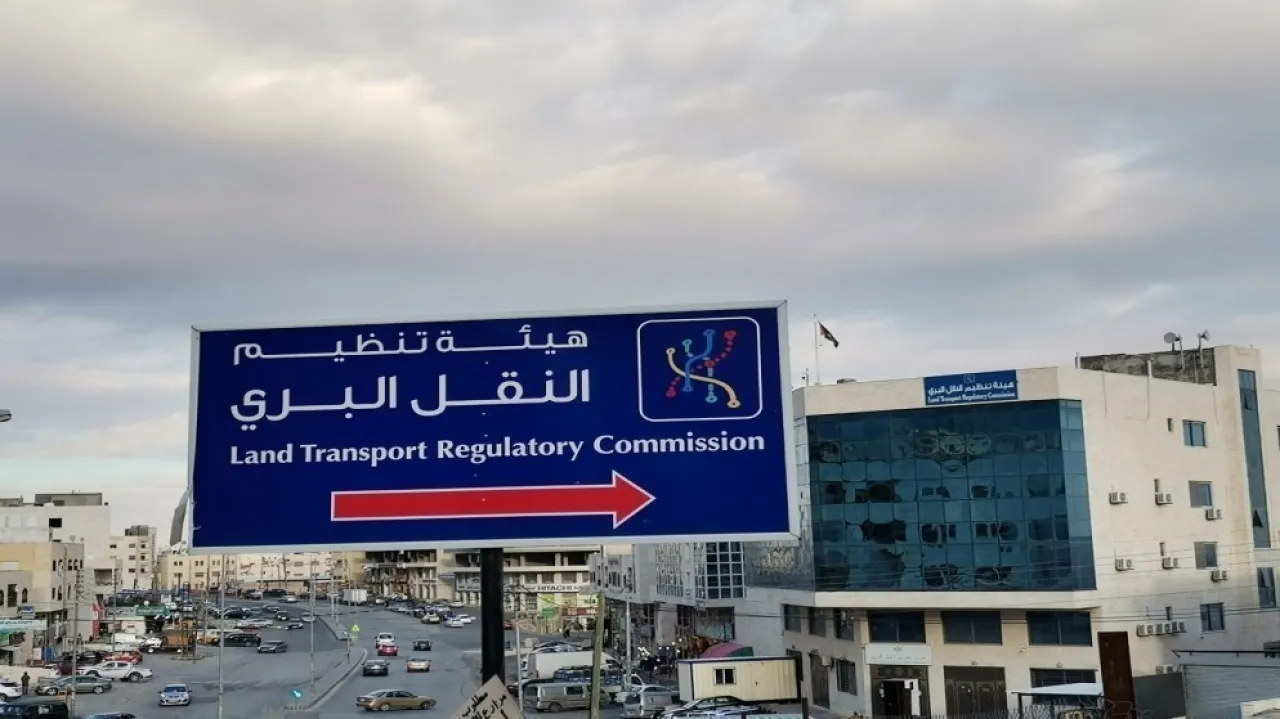
Khaberni - Lubna Abdel-Hadi, the director of the Studies Department at the Land Transport Sector Regulatory Authority, said on Wednesday that calls for operations were issued to manage 35 new public transport lines in three governorates (Jerash, Zarqa, and Mafraq), using 108 vehicles from small and medium passenger categories with capacities ranging from 12 to 14 passengers.
Abdel-Hadi stated in comments to "Al-Mamlaka" channel that the selection of these vehicle categories was based on studies that showed a need for public transportation in areas currently underserved, primarily relying on private transportation or high-fare transport, which raises the cost of moving for residents in those areas.
She added that the new lines aim to link the inner neighborhoods in the three governorates with city centers and departure complexes, contributing to improved service frequency and making access easier for citizens, whether they are students, workers, visitors to health centers and hospitals, or those handling daily needs.
Abdel-Hadi confirmed that the project aims to improve transportation quality and elevate service levels in underserved areas, noting that the Authority will continue conducting studies to expand the coverage in other governorates.
Regarding expansion plans, Abdel-Hadi explained that the first phase of the inter-governorate transportation project included four governorates and achieved positive success indicators, with about 1.6 million passengers using the lines according to electronic payment data and usage statistics.
She pointed out that the second phase includes operating seven main routes connecting the capital, Amman, with a number of governorates, in addition to linking major governorates such as Zarqa, Irbid, and Mafraq, based on studies that showed an increase in demand for these lines.
She mentioned that the third phase will involve the introduction of 300 vehicles equipped with smart transport systems, to connect city centers, governorates, and districts as part of a gradual plan to expand the public transport network.
Regarding the alignment of plans with the capital's transport network, Abdel-Hadi confirmed that the operational scheduling considers reducing travel time and facilitating the movement of citizens, while working on the integration of schedules between inter-governorate transport and intra-governorate transport.
She added that the upcoming phase will witness the development of electronic tracking systems (GPS) and smart applications that allow citizens to know the locations of vehicles and the nearest means of transport, thereby enhancing service efficiency and ease of use.