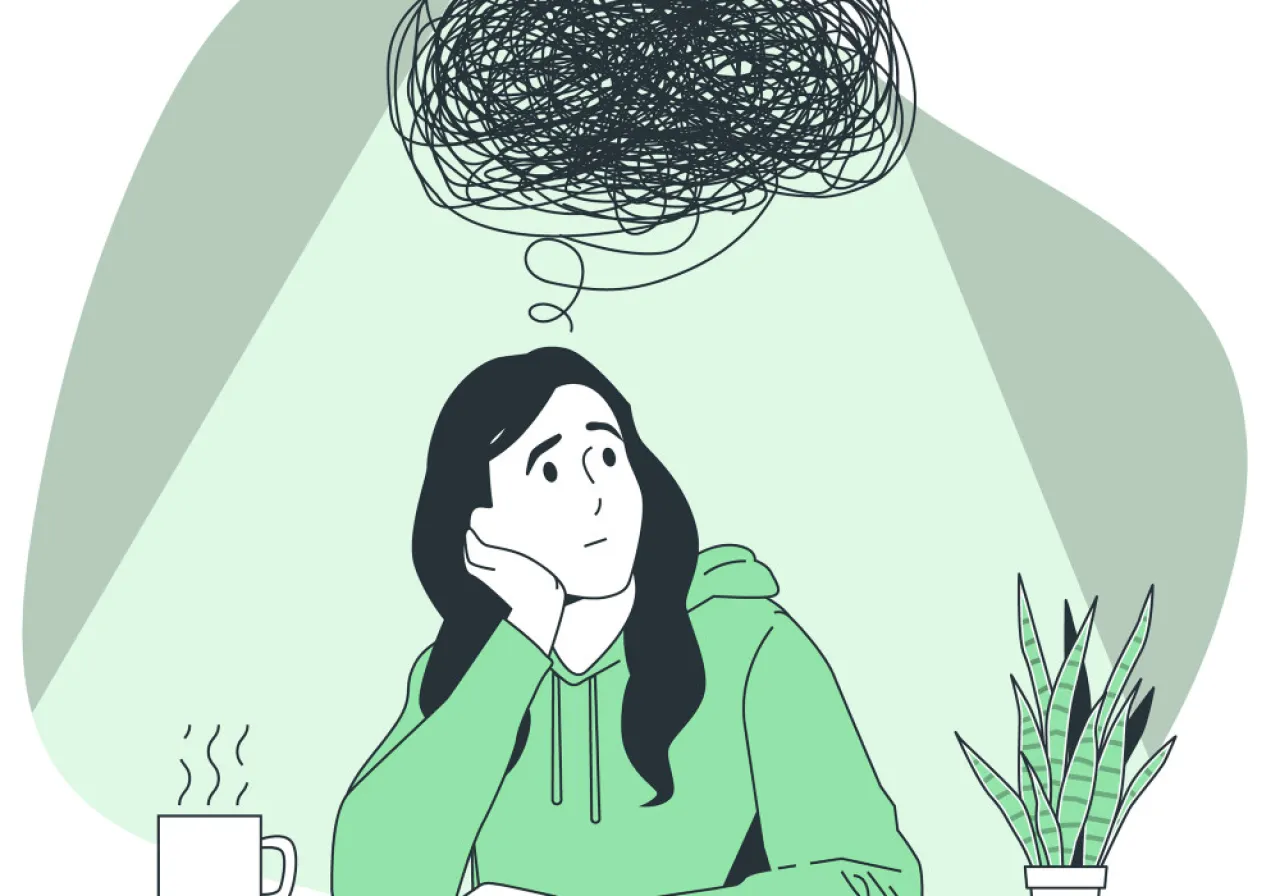
Khaberni - Have you ever felt that your mind never stops thinking, and that this continuous stream of thoughts is starting to reflect on your body? Many go through this condition called "overthinking," which is not just a transient psychological phenomenon but can have real and tangible physical effects.
But to what extent can overthinking actually cause physical illnesses?
The relationship between the mind and the body
Initially, it is important to understand that the mind and body are not separate entities as we might think, but are closely connected. Any psychological stress or mental tension automatically translates into physiological reactions within the body. When a person thinks excessively, especially about negative or worrying issues, the body begins to deal with these thoughts as if they were a real threat.
Here, the body secretes stress hormones like cortisol and adrenaline, which help humans cope in emergency situations. However, the problem arises when this state continues for long periods, turning stress from a temporary condition into a chronic one affecting various bodily functions.
How does overthinking affect the body?
Continuous thinking does not stay within the mind only; it gradually reflects on bodily systems, and different symptoms may appear from one person to another, such as:
Digestive disorders such as acidity and irritable bowel syndrome
Difficulty sleeping or insomnia
Continuous or tension headaches
Muscle tension, especially in the neck and shoulders
Rapid heartbeat and elevated blood pressure
Some may not link these symptoms to overthinking, which makes the problem persist longer without proper handling.
The digestive system: The first to be affected
One of the most affected organs by overthinking is the digestive system. Many people notice that anxiety and continuous thinking increase stomach issues. This is because the digestive system is directly connected to the nervous system and is sometimes known as "the second brain."
When the mind is in a state of constant stress, it affects bowel movements and stomach secretions, leading to discomfort or bloating or abdominal pain, and over time, these conditions may worsen into chronic issues such as irritable bowel syndrome.
Overthinking and sleep quality
Sleep is the first victim of overthinking. When a person tries to stop their day and enter into a restful state, the mind begins replaying and over-analyzing events, preventing the body from relaxing.
Difficulty in sleeping
Frequent waking during the night
Feeling tired despite a sufficient number of sleep hours
With ongoing sleep deprivation, memory and concentration are affected, making a person more susceptible to stress, thus creating a vicious cycle that is hard to break.
Impact on the muscles and the body in general
The tension resulting from overthinking doesn't only show internally, but also as continuous muscle tension. Many people feel pain in the neck or shoulders without an obvious reason, often caused by mental stress.
This continuous tension can lead to:
Chronic pain
Tension headaches
General fatigue even without significant physical exertion
Can it really lead to actual illnesses?
Yes, in some cases, chronic overthinking can increase the likelihood of true physical diseases. Not because thinking alone directly causes illness, but because it keeps the body in a constant state of depletion.
Over time, chronic stress can contribute to:
High blood pressure
Heart problems
Weakened immune system
Slowed recovery from illnesses
In other words, overthinking doesn't create disease from scratch but creates an internal environment that makes the occurrence of health problems more likely.
When does overthinking become dangerous?
Thinking in itself is natural, and sometimes useful in solving problems and making decisions. But the problem starts when a person loses control over it.
Overthinking becomes dangerous when it:
Continues for long hours daily
Focuses on negative scenarios or unfounded fears
Affects sleep or productivity
Causes constant stress
In this case, it turns from a useful tool into a mental and physical burden.
How can its impact be reduced?
Stopping thinking entirely isn't possible, but it's possible to control it and reduce its impact on the body. Some simple habits can make a significant difference:
Allocating specific times for thinking instead of leaving it open all day
Regular physical exercise to vent negative energy
Reducing phone use before sleep
Trying breathing exercises or meditation
Writing down thoughts instead of keeping them in mind
Talking to a trusted individual or specialist can also help reduce overthinking and reorganize thoughts in a healthy way.