Khaberni - Researchers from the University of California, San Diego have developed a new medical implant that may transform the treatment of obstructive sleep apnea.
Patients with this disorder suffer from frequent pauses in breathing during sleep due to the relaxation of the throat and palate muscles, leading to airway blockage, manifesting as severe snoring and sudden awakenings due to choking. Over time, this disorder can cause significant stress to the heart, increase blood pressure, and raise the risk of serious conditions such as strokes and heart attacks.
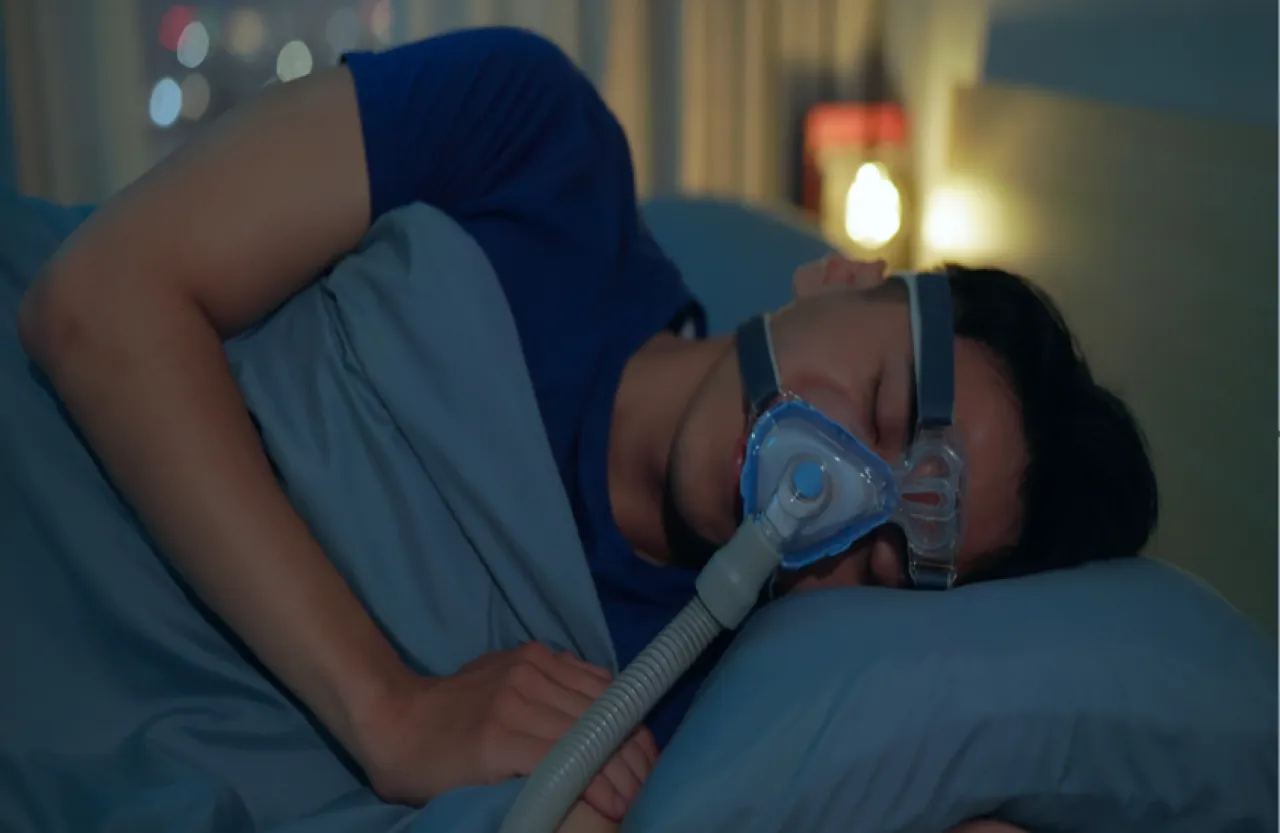
Traditional treatments rely on a Continuous Positive Airway Pressure (CPAP) device, which is a mask that pumps air to keep the airway open, but many patients find it difficult to tolerate.
In this context, the researchers introduced a new implant known as proximal hypoglossal nerve stimulation (pHGNS), a small device implanted under the skin in the upper chest, connected by a thin wire to a nerve in the neck responsible for tongue movement. When activated before sleep, the device sends mild electrical pulses that stimulate the tongue and airway muscles, helping to keep the airway open during sleep and preventing blockage.
The device operates on a rechargeable battery and is about the size of a pacemaker, and it is easier to install compared to previous versions.
In a clinical trial involving 104 adults with moderate obstructive apnea, participants were divided into two groups: one received active treatment a month after implantation, and the other had their devices remain inactive for seven months.
The results showed a clear improvement in the group that received the treatment, with more than 58% of patients experiencing a reduction in breathing stoppages, significant improvement in oxygen saturation and daytime sleepiness, and a reduction in fatigue levels from pathological to normal in many of them.
The average episodes of apnea also declined from severe to mild during the study period, without any severe complications. Side effects were limited and mild, such as pain at the implant site, temporary headache, or minor tongue discomfort in a small percentage of patients.
After activating the device for the control group later, their results also improved, further enhancing the overall effectiveness of the technology.
The researchers concluded that this implant represents a promising and safe option for patients unable to use the CPAP device, but emphasized the need for longer studies to evaluate its long-term effects, especially regarding the prevention of serious complications such as heart diseases and strokes.