Khaberni - Hours separate us from what analysts and specialists have described as the "last chance negotiations" between the United States and Iran, slated to take place today, Monday, in Islamabad, Pakistan, unless Tehran continues to adhere to its decision to boycott the talks.
In the latest updates, US President Donald Trump said that the framework of the agreement with Iran is ready, expressing optimism about the negotiations scheduled in Pakistan, while Israel is exploring all possible scenarios.
The US President - in a telephone interview with a Channel 12 Israeli reporter – mentioned that he feels "good" about the negotiations with Iran, indicating that the negotiation course will continue despite the tensions.
Trump had previously confirmed - in remarks to the New York Post - that he has offered a fair and acceptable deal to Iran, expressing hope that it will be accepted, adding that "if they do not, they will be forced to surrender quickly; we can easily destroy all power stations and bridges, and it would be my honor to do what needs to be done."
Despite the sharp tone of threat, officials in the White House are anticipating an imminent breakthrough in the negotiations with Iran.
Furthermore, CNN reported that Washington's delegation in the second round of negotiations - scheduled for today, Monday in Pakistan - will include the same figures who participated in the first round.
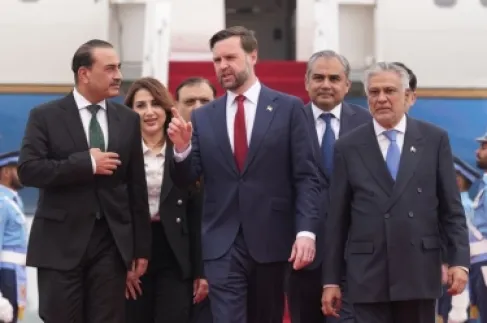
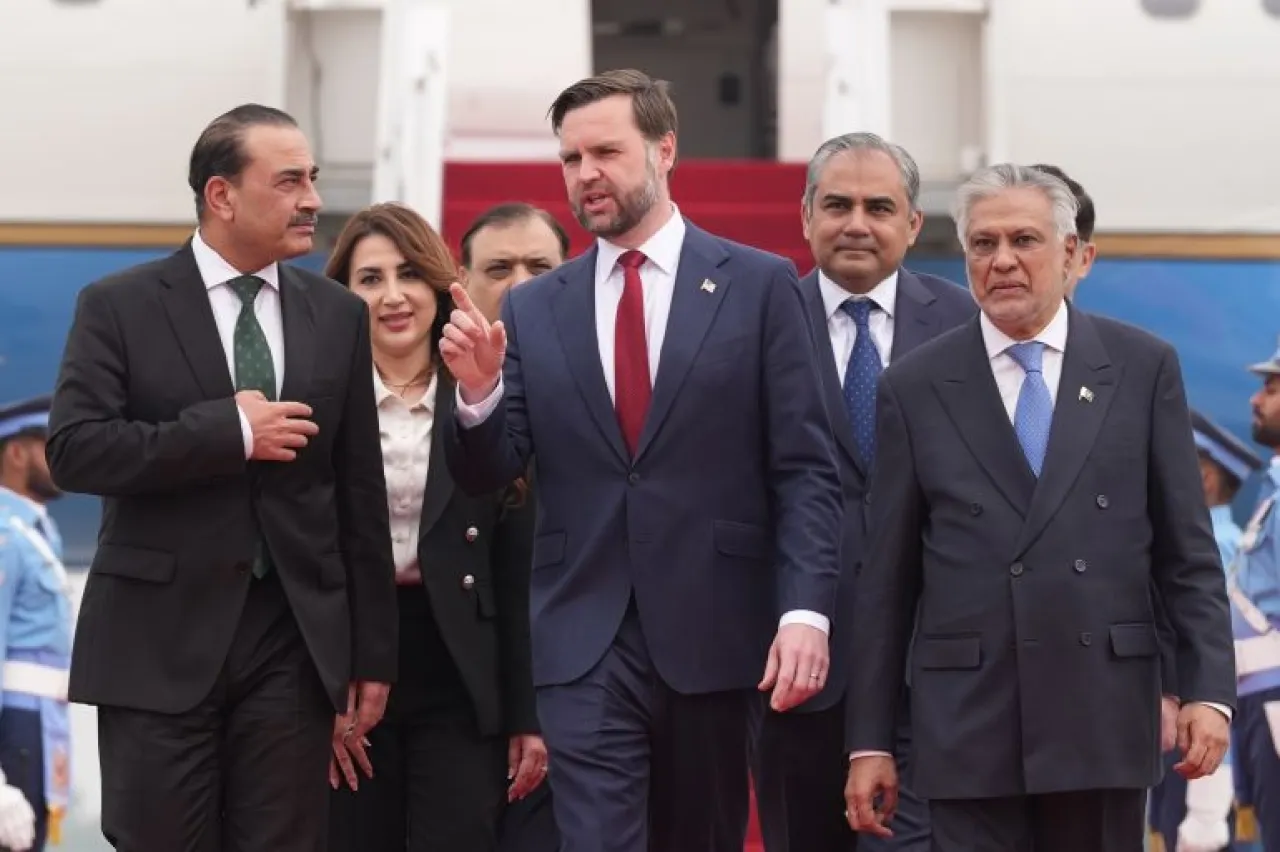
Accordingly, the US delegation will include Vice President J.D. Vance, and envoys Steve Witkoff and Jared Kushner.
Pakistani government officials – as per the Anadolu Agency - reported that two planes landed in Islamabad carrying the preliminary delegation from Washington to participate in the second round of negotiations, while Geo News reported that the Pakistani police announced stringent security measures in the Pakistani capital, ahead of the second round of negotiations between the United States and Iran.
Tehran Denies Participation
On the other hand, Iranian state media - yesterday Sunday - quoted sources saying that Tehran currently does not plan to participate in new talks with the United States in Pakistan, despite American assurances about the negotiations and the sending of their delegation.
The Broadcasting Corporation of Iran quoted Tehran sources stating, "Currently, there are no plans to participate in the next round of talks between Iran and the United States."
However, CNN expects the participation of the Iranian Parliament Speaker Mohammad Baqer Qalibaf and Foreign Minister Abbas Araghchi in the negotiations. It speculated the attendance of the American and Iranian Presidents, Masoud Pezeshkian, to Islamabad if an agreement was reached.
At the same time, Islamabad continues its efforts to bridge viewpoints, where Pakistani Prime Minister Shehbaz Sharif stated that he had a telephone conversation with President Dr. Masoud Pezeshkian about regional developments yesterday evening. He added, "Pakistan remains fully committed to its role as an honest and sincere mediator to achieve lasting peace and regional stability."
Preparations in Israel
Amid these developments, the Israeli Ministerial Cabinet (the Cabinet) - on Sunday evening - held consultations regarding the updates, and the political-security Cabinet is set to meet today, Monday, to discuss the possible scenarios, according to Channel 12 Hebrew.
According to the Israeli channel, Tel Aviv estimates that Trump prefers reaching an agreement, and if understandings are not achieved during the ongoing negotiations - mediated by Pakistan - it is likely that the ceasefire will be extended to allow more time for the talks.
Conversely, estimates indicate that Israel is prepared for the possibility of sudden resumption of fighting if the negotiation process collapses.
The channel quoted a senior Israeli official saying: "We don’t fully know where things are heading, Trump wants negotiations" but he claims that the "rigid Iranian stance" could lead to resuming fighting, referring to the American President's post talking about bombing all power stations and bridges in Iran if the negotiations fail.
According to the same source, Israel is currently formulating a list of targets if fighting resumes, although political sources confirmed that there are other "different type" targets that are not yet completed, necessarily unrelated to infrastructure.
And Israel continues to monitor developments very carefully, amid estimates that the transition from ceasefire to renewed fighting could occur quickly, with all concerned systems prepared for this scenario if the talks fail.
Complex Issues
The first round of negotiations between Iran and the United States - last weekend in Islamabad - concluded without tangible results on the major points of contention, primarily concerning Iran's nuclear ambitions, missiles, and navigation in the Strait of Hormuz.
These disputes cast a shadow over the second round of negotiations mediated by the Pakistani intermediary, amid doubts about the possibility of reaching an agreement that ends the war initiated by the United States and Israel against Iran on February 28, before the current ceasefire ends this coming Wednesday.
Diplomats on the eve of the negotiations said that reaching a framework agreement might be possible, based on a nuclear package and an economic one, but they warned that the nuclear file remains the most contentious issue.
The talks focus on Iran's stockpile of about 440 kilograms of 60% enriched uranium, a material that can be used to make several nuclear weapons if further enriched.
In addition to the stockpiles, the deeper dispute revolves around Iran's right in principle to enrich uranium.
A senior Trump administration official stated that Washington's red lines include halting uranium enrichment operations, dismantling major enrichment facilities, acquiring highly enriched uranium, and accepting a broader peace framework that includes allies in the region.
The economic track in the negotiations focuses on lifting sanctions and unfreezing Iranian assets, and providing security guarantees to countries in the region, while diplomats believe that Iran’s demand to completely abandon ballistic missiles would be unrealistic without broader security guarantees.