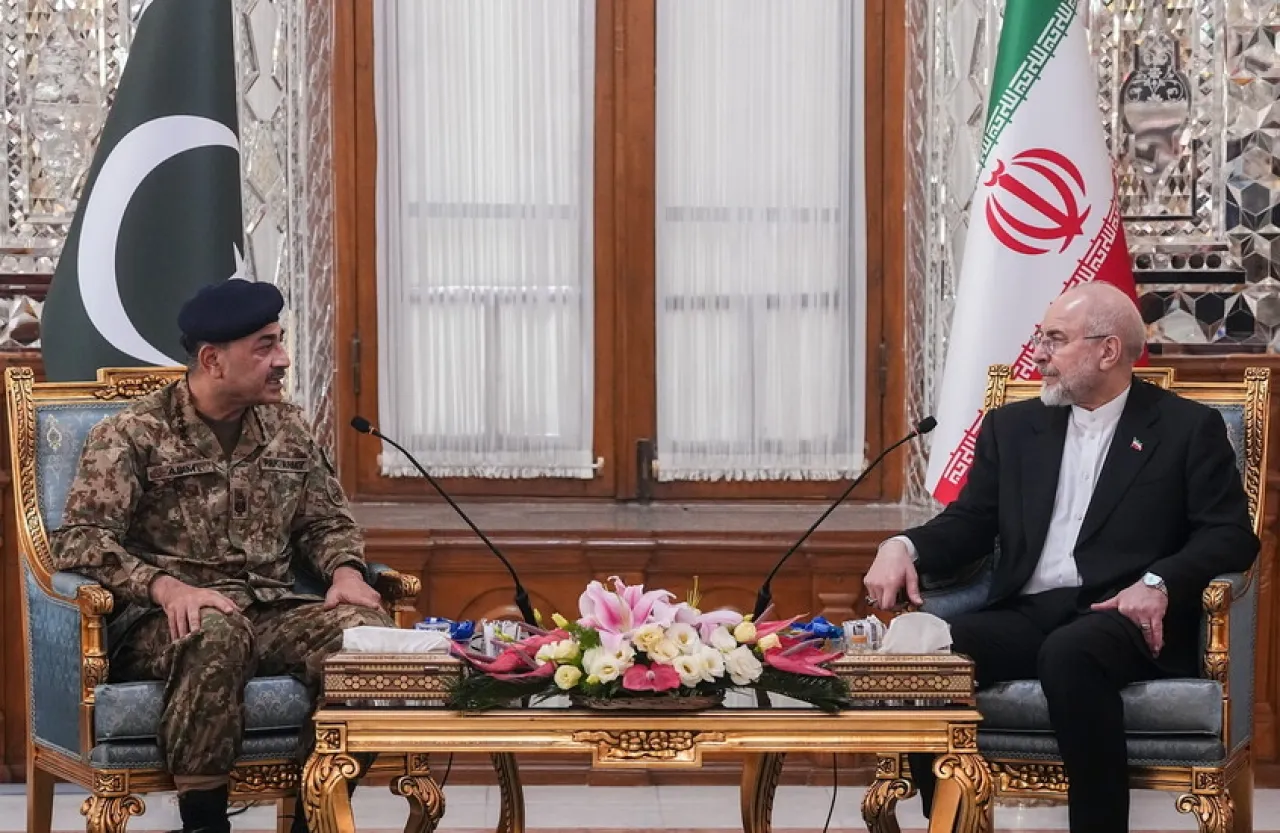
Khaberni - The Speaker of the Islamic Consultative Assembly of Iran, Mohammad Bagher Qalibaf, stated that the negotiations with the United States have made progress, but there are still large gaps between the two parties.
Qalibaf, who headed the Iranian negotiating delegation in the Islamabad talks, said: "We have reached agreements on some issues, but not on others, and various proposals have been put forward. We are still far from a final discussion. We insist on some non-negotiable issues for us."
He added that the Islamabad talks have not removed Iranian distrust of the United States, but the mutual understanding between the two sides has become more realistic.
Qalibaf revealed that the Iranian side began examining American messages only from the thirty-sixth day of the war, and the actual exchange of messages was conducted through Pakistan in the last 48 hours before the ceasefire, while direct negotiations began after the arrival of the Iranian delegation to Islamabad.
Regarding the sticking points, Qalibaf pointed out that the remaining differences focus on the nuclear file and the Strait of Hormuz, emphasizing that Iran wants a lasting peace where war does not recur.
Concerning Hezbollah, Qalibaf confirmed that involving Hezbollah in the ceasefire was one of the fundamental items in the ten conditions proposed by Iran, saying: "One of our discussions in the ten conditions was that the ceasefire should also include Hezbollah."
He clarified that "the ceasefire must also include Hezbollah, and it was part of Iran's conditions for a ceasefire in the region."
Qalibaf mentioned that the Prime Minister of Pakistan, in his tweet calling for a ceasefire, emphasized including Lebanon, saying: "When we went to Pakistan, a ceasefire was announced in Lebanon, but it was not implemented properly. Therefore, I tweeted that America should complete and stabilize the ceasefire in Lebanon."
He revealed that Washington asked Tehran that if a ceasefire is achieved in Lebanon, Iran should restore normal traffic in the Strait of Hormuz.
Qalibaf warned of the consequences of breaking the ceasefire in Lebanon, saying: "We have declared that if they do not adhere to the ceasefire in Lebanon, we will strike and stop the negotiations."
He confirmed that Iran's approach was that it would enter the ten-framework of negotiations when a ceasefire was applied in Lebanon and Iran's funds are released.