Khaberni - Under a title that addresses the so-called moral shocks and the silence that envelops them for the soldiers of the Israeli army, writer Tom Levinson published a detailed report in Haaretz newspaper highlighting soldiers who found themselves facing monsters within after returning from the war.
Levinson begins his report with the story of Yuval, a 34-year-old computer programmer, sitting on a street in Tel Aviv with eyes full of suspicion.
Yuval bitterly says that his greatest fears are revenge, not because he is a criminal, but because of what he saw and did in Khan Younis. He recounts a pivotal moment when his unit stormed a location they thought harbored "militants," only to find themselves facing an elderly man and three unarmed boys torn apart by bullets.
He spits on the corpses
Yuval adds in his testimony to Levinson that he was shocked when he saw the battalion commander spitting on the corpses and screaming insults, while he himself remained silent, describing himself as a coward who has no answers, and all the prayers in the world are not enough to atone for what he did.
Levinson moves on to the story of Maya, a philosophy student who served as a human resources officer in the armored corps. Maya describes her life as being split into two opposite worlds.
Maya tells Haaretz about an incident at a military site in southern Gaza, when 5 unarmed Palestinians were targeted with a barrage of fire and buried with a bulldozer to prevent disease spread, according to the leaders' claims.
They urinate
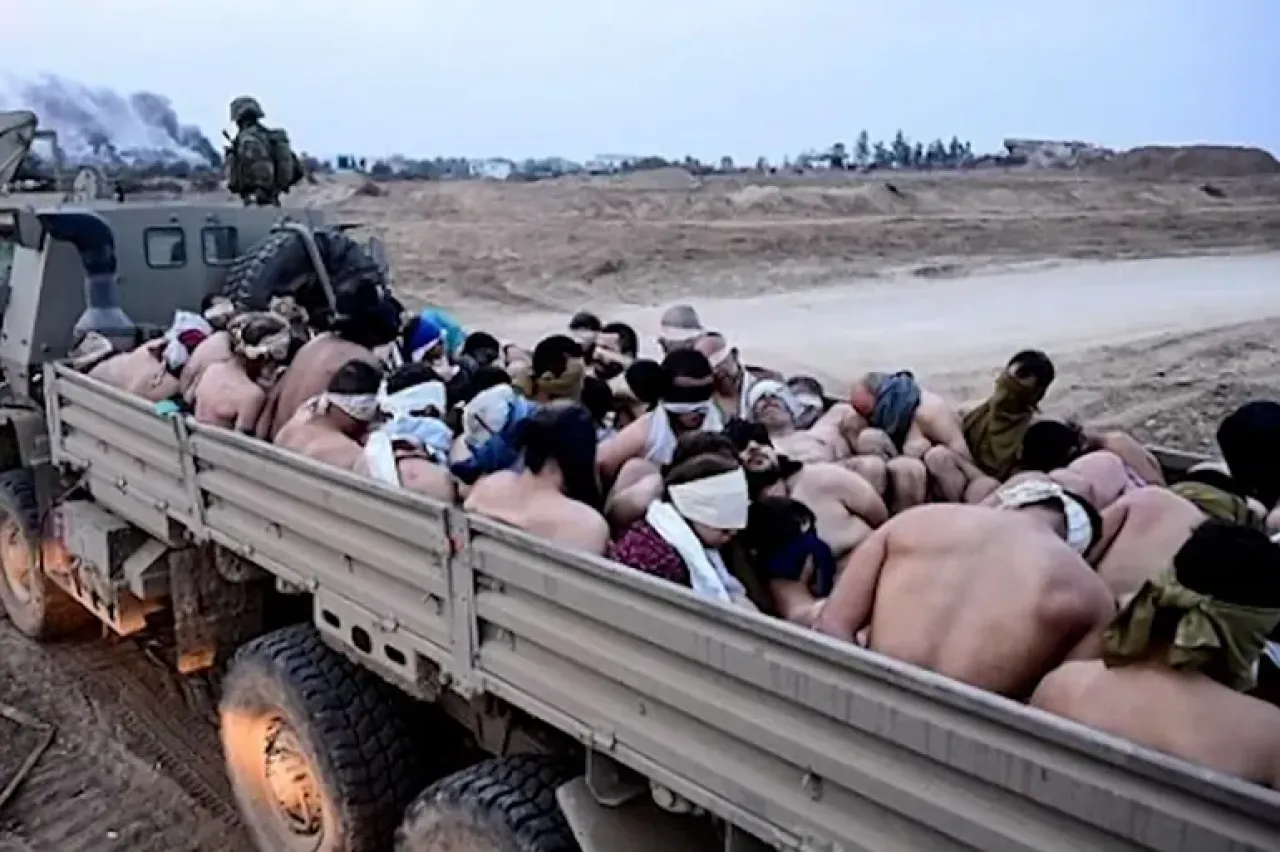
But the most painful memory for Maya was when she saw soldiers urinating on a bound and blindfolded Palestinian prisoner amid everyone's laughter.
Maya says sadly that she felt hypocritical and dirty, wondering how someone like her who claims to be ethical and volunteers to help refugees could stand silently before such a humiliating scene, confirming that the image of that helpless prisoner haunts her imagination, making her shower three times a day in a failed attempt to wash away that feeling.
Likewise, Levinson recounts the story of Yehuda who served at the same site and saw an officer kill an unarmed Palestinian who had raised his hands in surrender with no justification. Yehuda says the incident was covered up and described as killing a "militant."
But the real confrontation for Yehuda happened in the Prado Museum in Madrid, when he stood in front of a painting by Goya depicting a helpless man raising his hands in front of soldiers' rifles.
He cries hysterically
Yehuda describes the moment of his breakdown saying he felt sweat pouring from him and began crying hysterically in the middle of the museum because the painting reminded him so much of what happened in Gaza. Yehuda adds in his talk to the writer that the shame does not leave him, wondering how he became someone who stands by doing nothing right.
Levinson also shines a light on the testimony of Eitan who witnessed harsh interrogations conducted by Unit 504.
Eitan tells Levinson how one of the interrogators tortured a prisoner in a brutal and disgusting manner using plastic ties on his genitals, noting that the screams of that man still echo in his ears and shatter everything he believed about the "morality of the Israeli army."
Eitan bitterly wonders about the other secrets hidden in the basement and the spiritual cost the soldiers pay for these practices.
He does not forget the faces of those he killed
Elsewhere, a sniper who did not reveal his name talks about the nightmares that haunt him, confirming that looking through a sniper scope makes the victims appear very close, and that he cannot forget the faces of the people he killed no matter how hard the doctors try to convince him of the need to forget the past.
Levinson in his report in Haaretz discusses the case of Ran, an air force officer who planned raids he knew would kill dozens of civilians.
Ran says the revenge instinct initially blinded him, but he began feeling a terrible contradiction between planning to kill children and sitting down to eat in the peaceful streets of Tel Aviv.
He confirms that he decided to stop serving because he felt he was betraying everything beautiful within him, and he now lives in a state of self-torment by searching for photos of Palestinian victims to see if he was responsible for their deaths.
Deep identity crisis
Levinson comments that these cases reflect a deep identity crisis, where the Israeli army tries to label it as "identity harm" instead of "moral injury" to avoid political criticism.
Professor Gil Zalsman, head of the National Council for Suicide Prevention, tells the writer that clinics are seeing a significant increase, and that moral harm requires a different kind of treatment based on self-forgiveness, something that seems impossible for many.
Tom Levinson concludes his report by affirming that the silence surrounding these shocks stems from the soldiers' fear of being labeled as traitors or weak in a society that idolizes strength and thirsts for revenge.
Suffering in the shadows
Levinson notes that many soldiers prefer to suffer in the shadows rather than admit that what they did in Gaza contradicts their consciences.
Levinson says these narratives are an attempt to penetrate the wall of silence and reveal the invisible scars left by the combat on the soldiers' souls, warning of the human cost of war not only borne by the victims but also extending to shatter the humanity of those who carried out the orders, leaving them in an eternal confrontation with a mirror that reflects only the truth of the monsters they fear they have become.