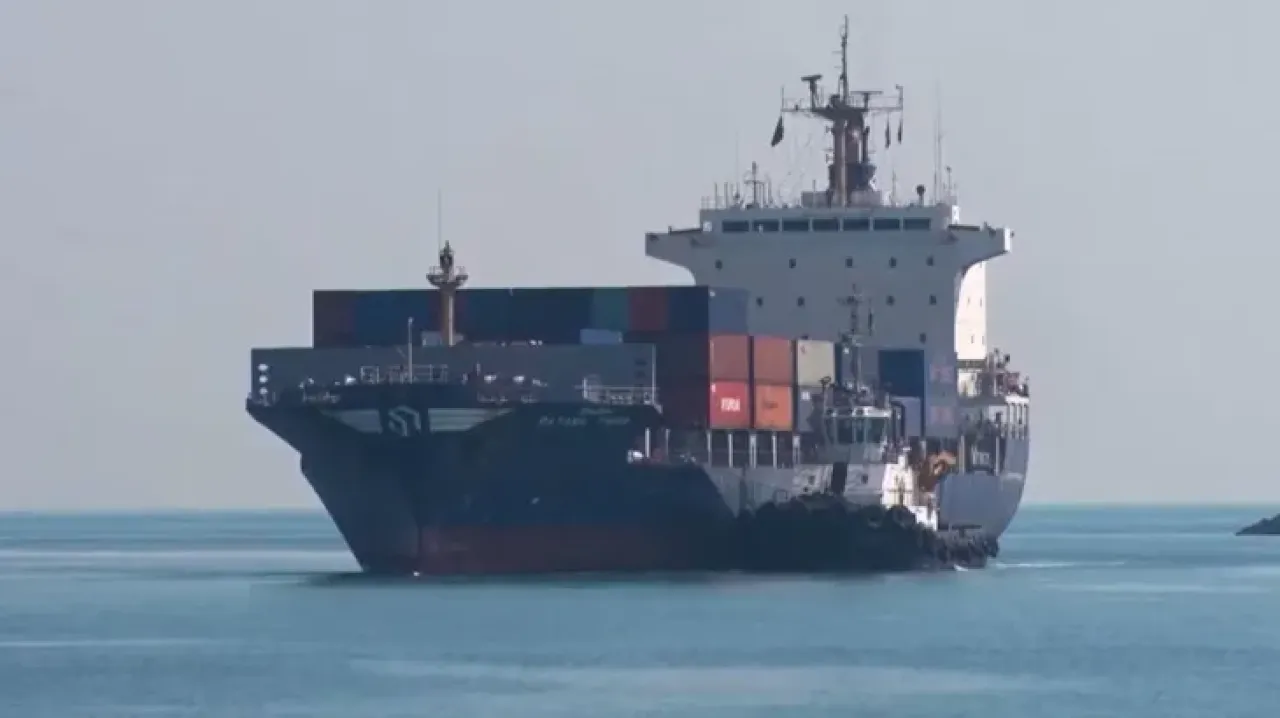
Khaberni - The American blockade imposed on Iran redraws the scene in the Strait of Hormuz, ending a period that lasted about 6 weeks during which Iranian oil tankers moved with relative freedom, indicating a radical shift in the rules of navigation within one of the most important maritime corridors in the world.
The strait is not just a strategic waterway, but a vital artery for the Iranian economy, as it carries approximately 1.9 million barrels of Iranian crude oil daily.
The annual trade value that crosses it exceeds $100 billion, making it a central axis in the conflict equation between the United States and Iran.
Iran relies on ports overlooking the Gulf for more than 90% of its trade, with annual revenues approaching $110 billion.
According to estimates, the American blockade could cost Iran direct losses exceeding $400 million daily, due to the disruption of the ports of Bandar Abbas, Imam Khomeini, Khark, and Asaluyeh.
Breaking "the monopoly"
According to the scene data, the American blockade aims to break the "monopoly" that Iran imposed inside the strait during the past period, where its ships crossed safely, while ships from other countries were forced to obtain permits from the Iranian Revolutionary Guard.
During the years of sanctions, Tehran relied on a complex network to circumvent international restrictions, including what is known as the "shadow fleet," alongside front companies in countries like China and Russia, enabling it to continue exporting oil.
It also benefited from temporary American exemptions that allowed it to dispose of about 140 million barrels that were stored at sea.
However, the equation looks different today, as the American blockade aims to tighten the noose on this economic artery by reducing Iran's ability to export oil freely, putting it under increasing strategic pressure.
Oil artery
If this blockade continues for a longer period, its repercussions may not be limited to Iran alone but may extend to include the navigation system in the Strait of Hormuz, which could reshape the rules of passage in this vital passageway and reflect on energy markets and the global economy as a whole.
In this reality, Tehran finds itself facing complex choices, between accepting new terms imposed on it or entering into a confrontation that may exceed the strait's limits to encompass the entire region.
Thus, the Strait of Hormuz is no longer just a passageway for oil and trade but has turned into a direct front line in the battle of wills between the United States and Iran, where economic calculations intertwine with military ones, in a scene open to possibilities of escalation or rebalancing.
Reuters reported today that U.S. officials stated Washington would not extend the temporary waiver from sanctions on Iranian oil.
Yesterday, Monday, President Donald Trump's threat to blockade all ships entering and leaving Iranian ports came into effect, threatening immediate action against any Iranian ships that approach the blockade area.