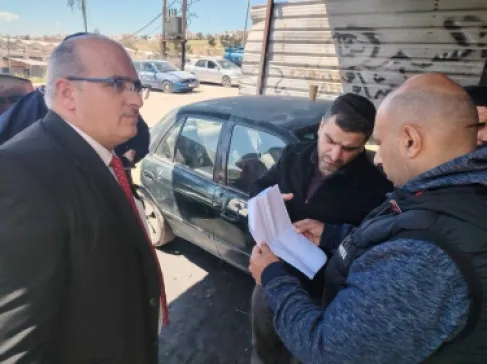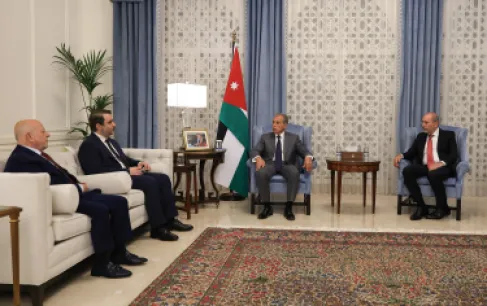
Khaberni - The Ministry of Energy and Mineral Resources and the Jordan Engineers Association launched the national campaign for energy conservation attended by the Minister of Energy, Saleh Al-Kharabsheh, and the head of the Engineers Association, Abdullah Asim Ghosheh.
During the launch event, Al-Kharabsheh said that we need today, more than ever, to generalize and expand the culture of conservation, noting that the first steps to achieve comprehensive energy security are to adopt a culture of consumption moderation.
He explained that the results of the auditing and moderation projects carried out by the Renewable Energy and Energy Conservation Encouragement Fund under the ministry showed that moderation in some factories achieved savings of up to 20% and in some hotels 50%, hoping that we reach a stage where moderation becomes part of behavior in various sectors, noting that what has been achieved in the moderation file today is still modest in various sectors, pointing out that Jordan registered an indicator in energy use intensity exceeding the global average by 25%.
Al-Kharabsheh emphasized that moderating consumption is now fundamental and aligns with the vision of economic modernization in supporting the national economy, increasing productivity, and creating job opportunities, urging all concerned parties to intensify efforts to entrench the culture of moderation, in conjunction with legislative reviews.
For his part, the head of the Engineers Association, Abdullah Asim Ghosheh, said that the surrounding regional circumstances have pushed the energy conservation file to the forefront of engineering and national priorities, noting that the successive crises have provided a starting point for redefining the vision towards managing resources and using them efficiently, enhancing Jordan’s ability to adapt and respond to the energy market variables.
Ghosheh added that the current phase requires deepening institutional work in the energy sector by linking moderation concepts to all stages of engineering work, starting from preparing designs and plans, passing through energy auditing, and up to applying sustainability standards in buildings and facilities, which ensures their efficiency enhancement and consumption reduction.
He stressed the importance of developing and updating the codes and regulations governing the sector continuously, to keep pace with technical developments and global standards, asserting that energy efficiency is no longer a technical option, but a national necessity linked to energy and economic security and contributes to supporting development paths and enhancing the competitiveness of various productive sectors.
The campaign relies on targeting all categories of energy consumers (governmental, industrial, commercial, educational, and residential) through a gradual and integrated approach that combines speed of implementation and depth of impact, and through immediate low-cost implementation, adjusting operations in facilities and institutions, reducing unnecessary loads, enhancing demand management during peak times, which helps in reducing pressure on networks and minimizing operational costs, and short-term operational improvement, through launching practical work programs based on simplified energy auditing to identify saving opportunities, and enhancing system efficiency, especially in the fields of air conditioning, lighting, and operation, introducing measurement tools, and building a sustainable institutional system that ensures the continuity of impact includes developing and adopting national energy efficiency standards, and gradually introducing sustainable solutions according to clear national priorities that consider the economic and social reality.
The campaign designed a set of awareness messages that ensure dissemination and impact, including organizing specialized seminars and workshops, preparing and distributing educational materials in universities, schools, and community events, producing short videos on social media, and broadcasting brief advisory messages.
The seminars and workshops will be implemented in cooperation with official bodies, the private sector, and experts in universities, enhancing the role of the new generation in spreading the culture of energy conservation.
```