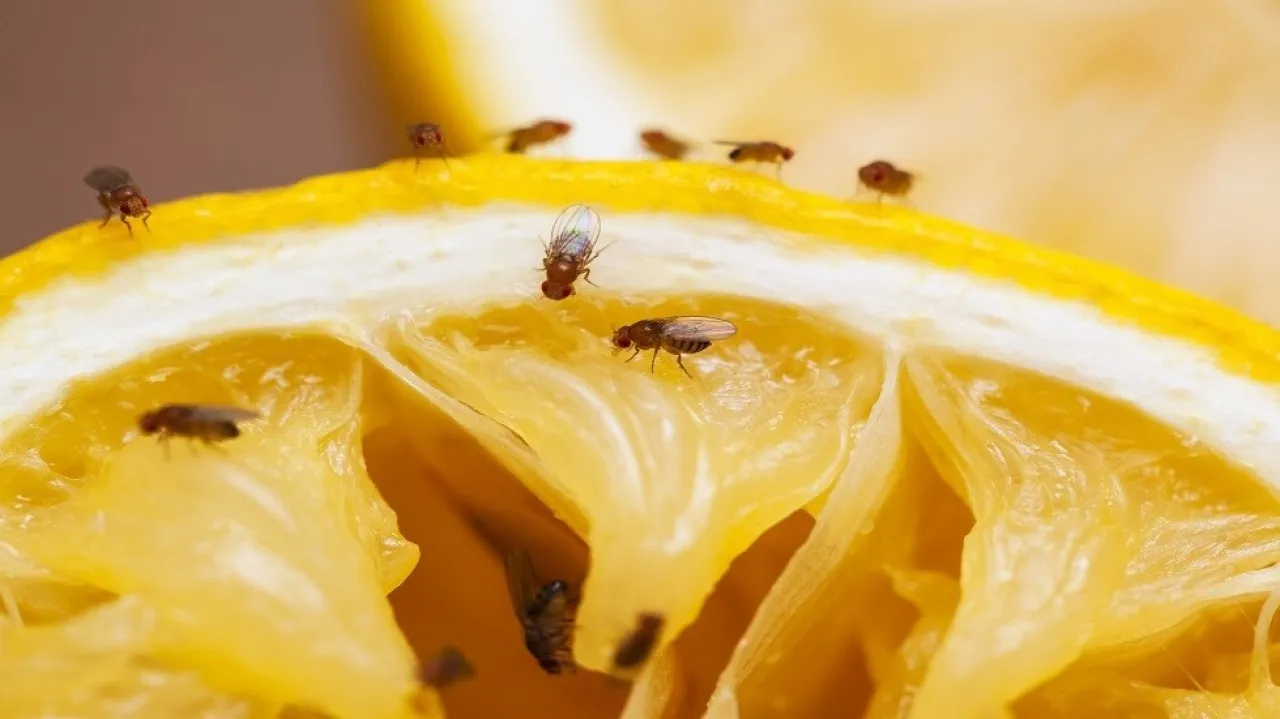
Khaberni - A simple scene that repeats daily—a fly lands on your plate for a few seconds, but what actually happens at that moment? And is it worth worrying about?
According to experts in microbiology, the common housefly, like Housefly, is not just an annoying insect; it can be a carrier of a large number of disease-causing microbes.
It travels between contaminated places such as garbage and unclean surfaces, carrying various bacteria on its body and inside its digestive system.
How does the fly contaminate food?
When a fly lands on food, it can transfer bacteria in multiple ways, whether through its legs, mouthparts, and even through its feces.
Studies have shown that some flies are capable of transferring significant amounts of bacteria like Escherichia coli, which can cause digestive disorders.
In fact, these bacteria can remain inside the fly’s body for several days, allowing it to spread them every time it lands on a new surface.
Can you actually get sick?
The answer depends on several factors. The amount and type of bacteria play a significant role, as some strains can cause illness in very small doses, while others require larger amounts.
The timing of the fly’s landing is also important. If it happens while you are eating the food directly, the risk of infection is less because the bacteria do not have enough time to proliferate. However, if the food is left uncovered for a period after being exposed to the fly, microbes may multiply and increase the likelihood of food poisoning.
Should you be worried?
In most cases, the situation does not pose a significant risk to healthy people, as the immune system can handle small amounts of bacteria. However, experts advise not to ignore it, particularly in unclean environments or when there are children or individuals with weakened immune systems.
The landing of a fly on your food is not just an annoying situation but a potential transfer of unwanted microbes. While this does not warrant panic, caution and cleanliness remain the best ways to avoid any unpleasant surprises.