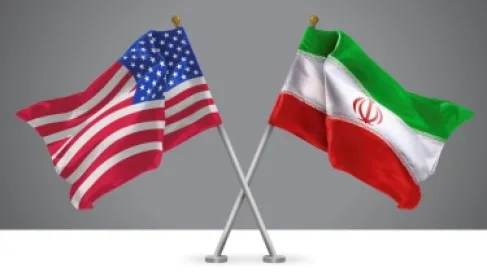
Khaberni - We begin our tour among the newspapers today from The Economist, a British magazine, which published an article titled: "Iran and America agree on a truce for their war."
"The Economist" stated that yesterday, which began with threats of annihilation, ended with a truce being reached, noting that the American president, less than 90 minutes before the deadline he had set himself for Iran to reopen the Strait of Hormuz, initiated a call to stop the American and Israeli war in Iran, "at least for the time being."
The British magazine added that, as usual in the Middle East, the truce begins with more gunfire, pointing to Iranian attacks on Qatar, Saudi Arabia, and the Emirates, in addition to Israel, before the official Iranian television announced that the supreme commander had issued orders to the army to cease fire.
As expected, according to "The Economist," both parties rushed to declare victory. In the American narrative, Trump's mad approach to foreign policy bore fruit in forcing the Iranians to reopen the strait, even without a comprehensive ceasefire being reached. In the Iranian narrative, it was Trump who capitulated, and threats to attack power stations and desalination plants in Gulf states pushed the American president to back down from making his threats.
The British magazine saw this truce, which represents a chance to catch one's breath, as "welcomed by everyone in the Middle East," with one exception who might be Benjamin Netanyahu, the Israeli Prime Minister, who was not given the option to either accept or reject the truce.
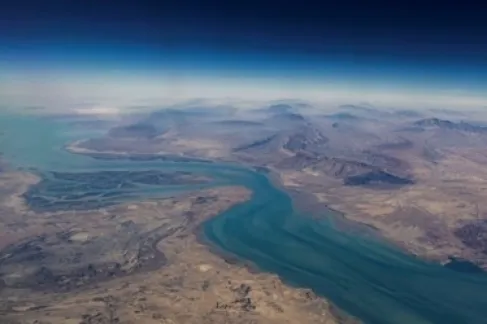
"The Economist" raised the question: Will the truce hold and lead to a final agreement, or will it be short-lived? It confirmed that the talks in the Pakistani capital, Islamabad, will be complex, especially in light of the Iranian demands laid out for negotiation, which include the continued control over the Strait of Hormuz, recognition of its right to enrich uranium, and the withdrawal of American forces from bases in the region. The British magazine considered any agreement on these points in a final deal as "a major concession on the part of the United States."
"The Economist" noted that agreeing to discuss the Iranian demands does not necessarily mean Trump will accept them, pointing out that the United States also has its demands, including Iran's complete abandonment of the idea of enriching uranium. If both sides stick to their current stances, the talks are likely to reach the same deadlock they had reached just before the war broke out last February.
"Iraq pays the price for a war it did not choose to be part of"
And in Foreign Policy, an American magazine, where we read an article titled "The Iranian War Reveals Iraq's Vulnerabilities," by Stephen Simon, a researcher at Dartmouth University, and Adam Weinstein, a researcher at the Quincy Institute in Washington.
The researchers pointed out that the American and Israeli war with Iran affected Iraq in many complex ways, turning Iraqi territory into a "proxy battleground," intensifying pressure on Iranian-backed Iraqi militias, revealing the weakness of the central government in Baghdad in asserting its sovereignty, and disrupting air movement and the flow of oil and energy, as well as highlighting contradictions among various Iraqi political groups.
The researchers stated that Iraq is being pulled into this war, despite its government declaring it was not a party to the conflict. The reality, according to the article, indicates that Iraqi territory includes American facilities, diplomatic missions, militia infrastructure, and transit routes, making neutrality in such a war difficult to maintain on the ground.
The researchers observed that recent attacks on American diplomatic facilities in Iraq show that the country has become practically a "stage for retaliation and the exchange of messages and pressure through proxies."
The researchers noted that Iraqi leaders in Baghdad, over the past two decades, have been keen to take a middle position between Washington on one hand and Tehran on the other, given the significance of both parties to Iraq. While the United States is Iraq's official financial patron and guarantor of its access to the global economic market, Iran represents a strong regional neighbor with deep political, religious, and cultural ties to Iraq.
In this context, the researchers pointed out that decentralized Iraqi forces tend, one way or another, towards one of the conflict parties; the Kurds lean towards Washington, while other Iraqi forces have stronger ties to Iran. Yet, the central leadership in Baghdad has no choice but to balance between the United States and Iran, despite its close ties with the latter.
The researchers concluded that the war had tested various Iraqi armed groups supported by Iran, such as the "Hezbollah Brigades" and the "Hezbollah Al-Nujaba Movement," and revealed how these militias "hesitate more than they refrain" from attacking the United States and Israel, because any attack, no matter how limited, could lead to counterattacks resulting in the death of leaders, as well as dragging Iraq into a war it had previously declared it did not wish to wage.
"The Last Fig Leaf Falls"
Concluding our tour from The Wall Street Journal, an American newspaper, with an article titled: "The UN Fails to Aid the Strait of Hormuz," by the newspaper's editorial board.
The newspaper began by stating that the United Nations is no longer a destination for serious individuals in times of crises, evidenced by the failure of the Security Council yesterday to adopt a resolution "softening the wording" in order to do something, anything, to end the closure of the Strait of Hormuz.
The Wall Street Journal noted that after this failure, countries in Europe and Asia, which had hoped to align under the UN umbrella, were left with no choice but to make a real decision.
The use of the veto by Russia and China against the resolution proposed by Bahrain and presented by the United Arab Emirates, according to the newspaper, is natural since neither Moscow nor Beijing are interested in the good prevailing or law prevailing as much as they want to defeat America.
The newspaper said that Gulf countries should take into account that Russia and China are siding with Iran in an "axis of despotism."
The newspaper highlighted that eleven countries, from Greece to Panama, voted in favor of the resolution, "but a veto is a veto," capable of rendering the top UN decision-making body "incapable of contributing anything to end the crisis in the Strait of Hormuz."
The Wall Street Journal emphasized that if the truce announced by President Trump in the last hours does not hold and a final agreement meeting American demands, including "the complete, immediate, and safe opening of the Strait of Hormuz," is not reached, then the United States may benefit from the naval forces of its allies, and all those benefiting from reopening the strait.
The newspaper added: "But the Europeans, apparently, are looking for prior approval from the Security Council, hence, they give precedence to enforcing international law over offering assistance to President Trump."
The Wall Street Journal concluded by stating that the resolution rejected by the Security Council yesterday was "the last fig leaf that the hesitant countries could hide behind." Now that this fig leaf has fallen, and the UN door has been expectedly closed, there is no room for maneuver regarding Iran's insistence on closing the strait, and countries "must decide for themselves and thereby reveal their allegiances," according to the newspaper.