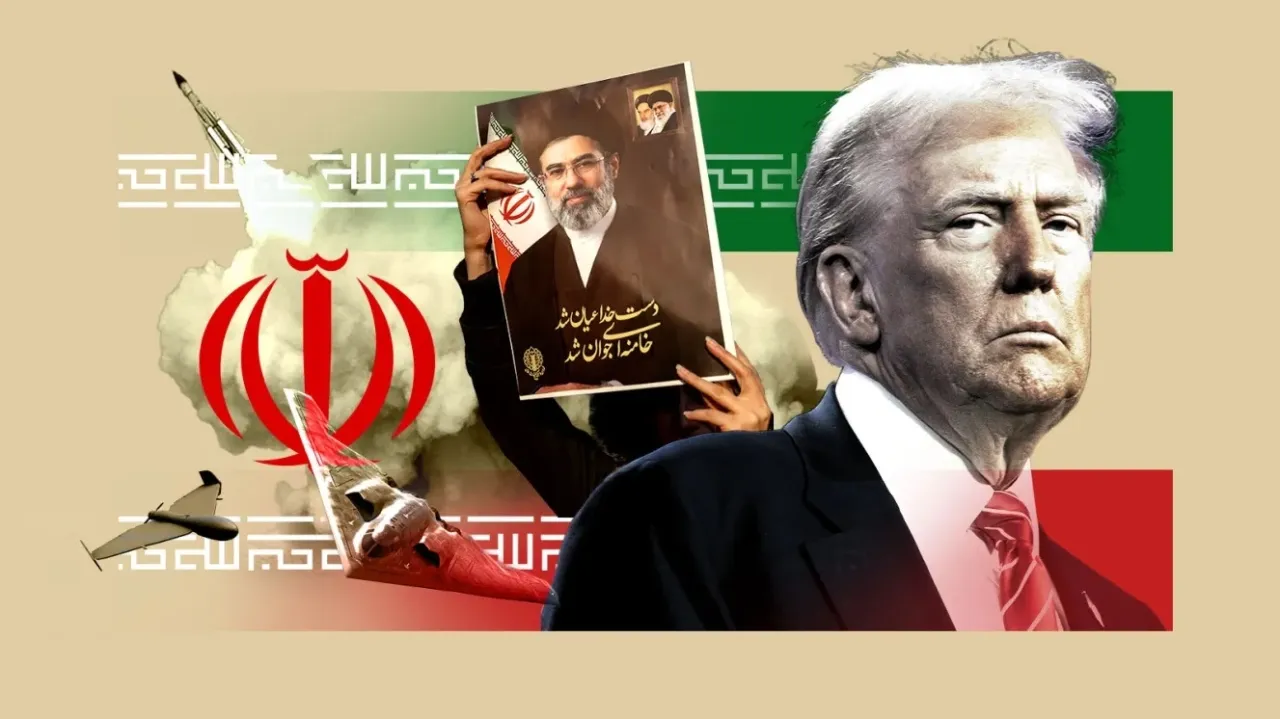
Khaberni - After about 39 days of war in Iran, U.S. President Donald Trump agreed to a ceasefire for two weeks, less than two hours before the deadline set for Tehran to reopen the Strait of Hormuz or face widespread attacks on its civilian infrastructure.
Trump's announcement, which he posted on social media, marked a sudden shift from his earlier stance that day, when he warned that "an entire civilization would be wiped out tonight" if his demands were not met.
Pakistani Prime Minister Shahbaz Sharif, who helped mediate the ceasefire, posted on "X" that he invited the Iranian and American delegations to meet in Islamabad on Friday.
Trump said the agreement, reached at the last minute, is conditional on Iran agreeing to stop blocking oil and gas supplies through the strait, which typically handles about a fifth of the world's oil shipments.
Iranian Foreign Minister Abbas Araghchi said in a statement that Tehran would halt counterattacks and allow safe passage through the Strait of Hormuz.
Trump wrote on his platform "Truth Social": "This will be a ceasefire on both sides!" He added, "The reason we did this is that we have already achieved all our military objectives and exceeded them, and we have made significant progress towards reaching a final agreement for a long-lasting peace with Iran, and peace in the Middle East."
Later, the U.S. President announced that the United States would help end the navigation disturbances in the Strait of Hormuz. Trump wrote on his social platform "Truth Social": "The United States will help end the navigation disturbances in the Strait of Hormuz." He added: "There will be many positive actions! Great money will be made. And Iran can start the reconstruction process."
Iran's Supreme National Security Council described the agreement as a victory over the United States, adding that Trump accepted Tehran's terms to end the hostilities.
According to what a senior Israeli official told the "Times of Israel" in remarks published on Wednesday, Israel coordinated with the United States ahead of the announcement of a two-week truce with Iran.
The official said Iran would reopen the Strait of Hormuz without meeting any of its previous demands, including a permanent end to the war, compensation, and lifting of sanctions, according to a written statement.
He added that the Trump administration informed Israel that it would continue to adhere to its negotiating demands, including removing all nuclear materials from Iran, ending uranium enrichment, and eliminating the threat of ballistic missiles. The official confirmed that these goals are shared between Israel and the United States.
Israel and the United States began their joint military campaign against Iran on February 28.
The war, which entered its sixth week, resulted in the loss of over 5000 lives in more than 10 countries.
Trump, who had issued a series of threats in recent weeks before retracting them, said the progress made by both sides prompted him to approve the ceasefire. He added that Tehran presented a 10-point proposal that represents a "practical basis" for negotiations, expecting to "finalize the agreement and complete it" during the two-week ceasefire period.
This sudden shift capped a stormy day dominated by Trump's threat to destroy all bridges and power stations in Iran unless the strait was opened, which alarmed world leaders and shook global financial and energy markets.
The closure of the strait, through which about a fifth of the world's oil supplies normally pass, led to a sharp increase in oil prices, increasing the likelihood of a global economic slowdown or even recession.
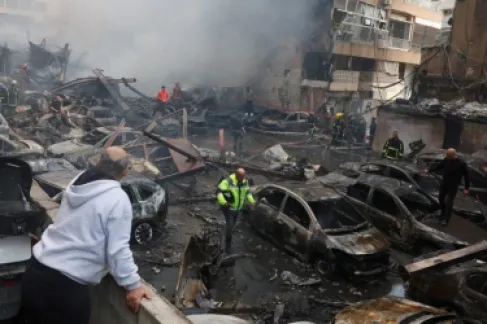
As the deadline set by Trump at 8 PM Eastern Time (0000 GMT) approached, American and Israeli strikes on Iran intensified, targeting bridges, railways, an airport, and a petrochemical plant. American forces attacked targets on Kharg Island, home to Iran's main oil export terminal.