Khaberni - American media outlets have unveiled new information regarding the developments and the course of the ongoing negotiations to reach a ceasefire agreement between the United States and Israel on one side, and Iran on the other, as part of efforts to avoid a more severe escalation, with the deadline set by U.S. President Donald Trump approaching.
The New York Times cited high-level Iranian officials stating that Tehran’s proposal to end its war with the United States and Israel was in 10 points, which included lifting sanctions on Iran, requesting guarantees against future attacks, and stopping Israeli strikes on Hezbollah.
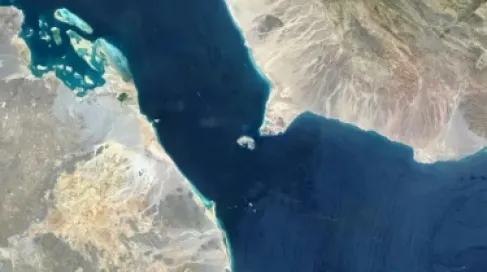
It was reported that in return, Iran would lift the blockade on the Strait of Hormuz and impose fees estimated at about 2 million dollars per vessel, to be shared with the Sultanate of Oman located on the other side of the strait.
According to Iranian officials, Tehran would use its share of the revenues to rebuild the infrastructure that was destroyed by American and Israeli strikes, instead of demanding direct compensation.
Iranian media outlets reported that Tehran had put forward a proposal conveyed through Pakistan, which plays the role of the main mediator in the conflict that entered its 39th day.
Iranian official media mentioned that the text of the Iranian proposal "rejected a ceasefire," and "emphasized the need to permanently end the war in a manner consistent with Iran's considerations."
While the full proposal was not published in the official media, it noted that it included a protocol for safe passage through the Strait of Hormuz, as well as reiterating Iranian demands for lifting sanctions, rebuilding damaged infrastructure, and ending regional hostilities.
Vance May Join the Talks
On its part, Politico -citing a source familiar with the talks- reported that the current negotiations are led by Trump’s special envoy Steve Witkoff, and Jared Kushner, the president’s son-in-law, and JD Vance, the vice president, may join them if the duo makes sufficient progress.
According to the site, it is still unclear what Iran might offer, noting that Vance is ready to intervene in sensitive negotiations with Iran, should informal talks progress to a direct meeting with Iranian officials.
Trump acknowledged Vance’s participation in the negotiations, confirming to reporters —yesterday, Monday— the deadline he set for Iran to reopen the Strait of Hormuz, stating, "We are negotiating with them in front of them until 8 p.m. tomorrow Eastern Standard Time, but we are negotiating with them, I think things are going well Mr. Witkoff is here, JD Vance is involved in the negotiations."
The White House spokeswoman Anna Kelly said that President Trump has an exceptional national security team, which includes Vice President Vance, Secretary of State Marco Rubio, special envoy Witkoff, and Kushner, all working together to explore the possibility of reaching a peace agreement.
She added, "The vice president has always been a trusted voice in all matters of foreign policy, and the president appreciates his efforts to understand whether the Iranians can face the reality of this current moment."
She confirmed that in the meantime, the American army will continue to destroy all its military targets, and Iran will be returned to its primitive ages tomorrow night if it does not seriously engage in confrontation."
On March 24, the United States sent its 15-point proposal to end the war with Iran to Pakistan for delivery to Tehran. Iran rejected the proposal and sent back a list of counterproposals, some of which were reaffirmed in its proposal yesterday, Monday.
The spokesman for the Iranian Foreign Ministry, Ismail Baqai, stated at a press conference that the previous American proposal -conveyed through intermediaries- was "excessively harsh, unfamiliar, and illogical."
Israeli Doubts and Concerns
In this context, CNN reported from an Israeli source that Israel strongly doubts the likelihood of achieving an agreement, noting that Prime Minister Benjamin Netanyahu expressed concerns about potential ceasefire agreements during recent talks with the US President.
According to the source, Israel believes that any ceasefire must compel Iran to surrender all its stockpiles of enriched uranium and commit to a complete halt of enrichment activities.
Amid the ongoing negotiations, an Israeli security official told CNN that Tel Aviv had approved an updated list of energy sites and infrastructure in Iran in anticipation of an emergency scenario that might fail the diplomatic dialogue with the United States.
The security official clarified that Israel is waiting for Trump’s decision on the next steps, but it has additional plans for the coming weeks while awaiting the green light from the US.
Axios reported -citing informed sources- that the United States and Iran are discussing, alongside regional mediators, the terms of a potential 45-day ceasefire that could pave the way for a permanent end to the war, as part of last-minute efforts to avoid a broad military escalation.
Four American, Israeli, and regional sources stated that the chances of reaching a partial agreement within the next 48 hours are still limited, but it represents the last chance to prevent an escalation that may involve extensive strikes on civilian infrastructure in Iran, potentially prompting Tehran to retaliate by targeting various locations in the region.