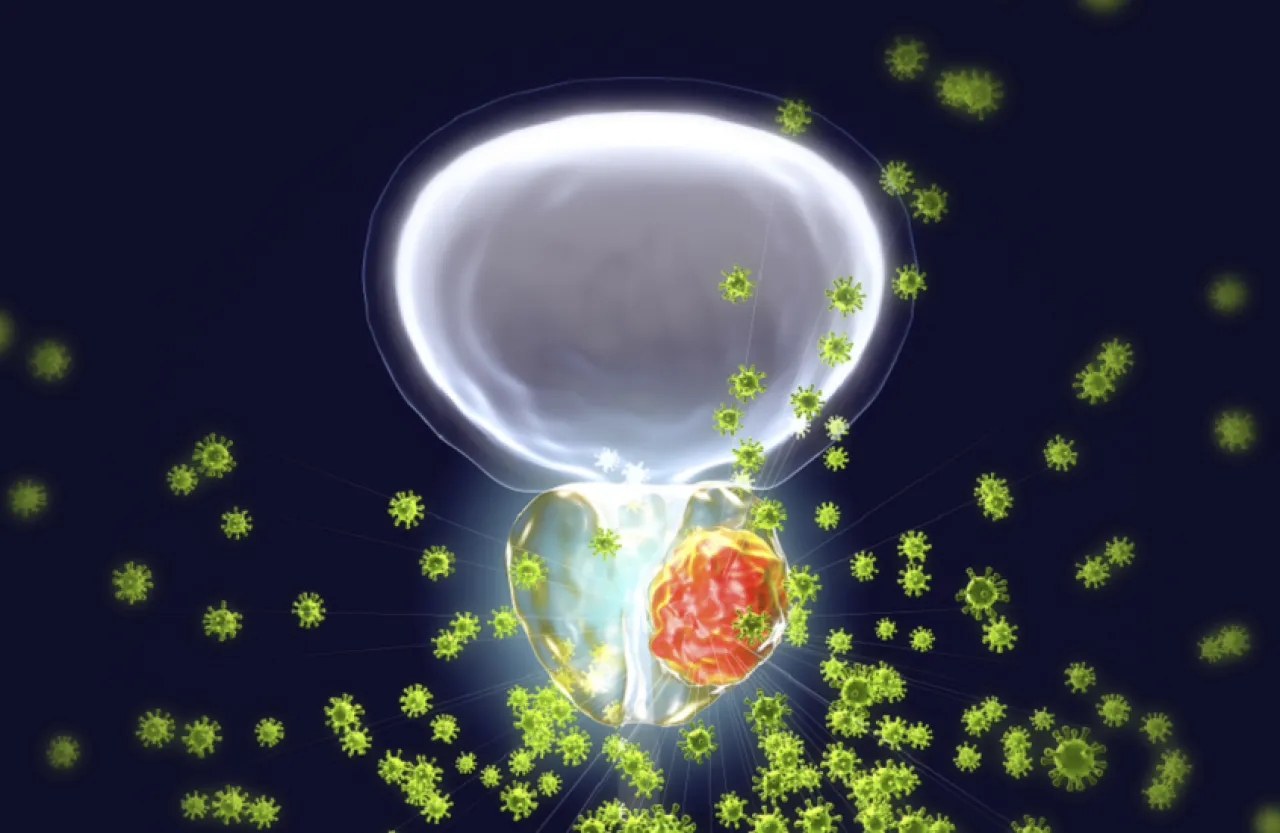
Khaberni - Researchers at the Massey Comprehensive Cancer Center at Virginia Commonwealth University and the Institute of Molecular Medicine (VIMM) have developed a new drug that prevents prostate cancer from reaching an advanced, untreatable stage in the bones.
The study showed that the new drug also enhances the effectiveness of traditional chemotherapy, opening new possibilities for treating metastatic tumors.
Prostate cancer is one of the most common types of cancer among men, and when it spreads to the bones, treatment becomes difficult, leading to bone problems and decreased quality of life, and in many cases, death.
The process of cancer spreading to the bones involves the implantation of tumor cells in bone tissue, then forming physical and functional relationships with surrounding tissues, which enhances tumor growth and weakens the bones. The researchers explained that understanding the genes responsible for this interaction between the tumor and the bone is essential for developing effective treatments.
The team discovered that the MDA-9/syntenin gene plays a key role in the growth and spread of tumors to the bones. Using the new drug IVMT-Rx-4, the researchers were able to stop the activity of this gene and prevent the spread of tumors to the bones in laboratory experiments, without any apparent side effects. The drug works partially by disrupting the interaction of two important proteins, PDGF-AA and CXCL5.
The study also showed that combining IVMT-Rx-4 with "Docetaxel," a common chemotherapy drug for prostate cancer, improves survival chances in cases of cancer that has spread to the bones.
Paul B. Fisher, one of the study's leaders, said, "Our results suggest that this drug can enhance the effectiveness of traditional treatment and offers a new approach to dealing with the significant health complications of advanced prostate cancer."
The team also plans to study another drug called PDZ1i, which is part of the development of IVMT-Rx-4, and will be clinically evaluated by 2027, with expectations of improving its therapeutic properties such as better water solubility and reduced tumor resistance without toxicity.