Khaberni - Many media reports published on websites close to the White House in the United States suggest that the seizure of enriched uranium cylinders is one of the key objectives that the United States considers if it decides to carry out a ground operation in Iran.
Apart from the difficulty of pinpointing those cylinder locations, which requires substantial intelligence effort, this is not the only problem; the bigger crisis would be transporting a substance with very special specifications, making this scheme a highly complex operation, particularly during a military operation that will not be easy.
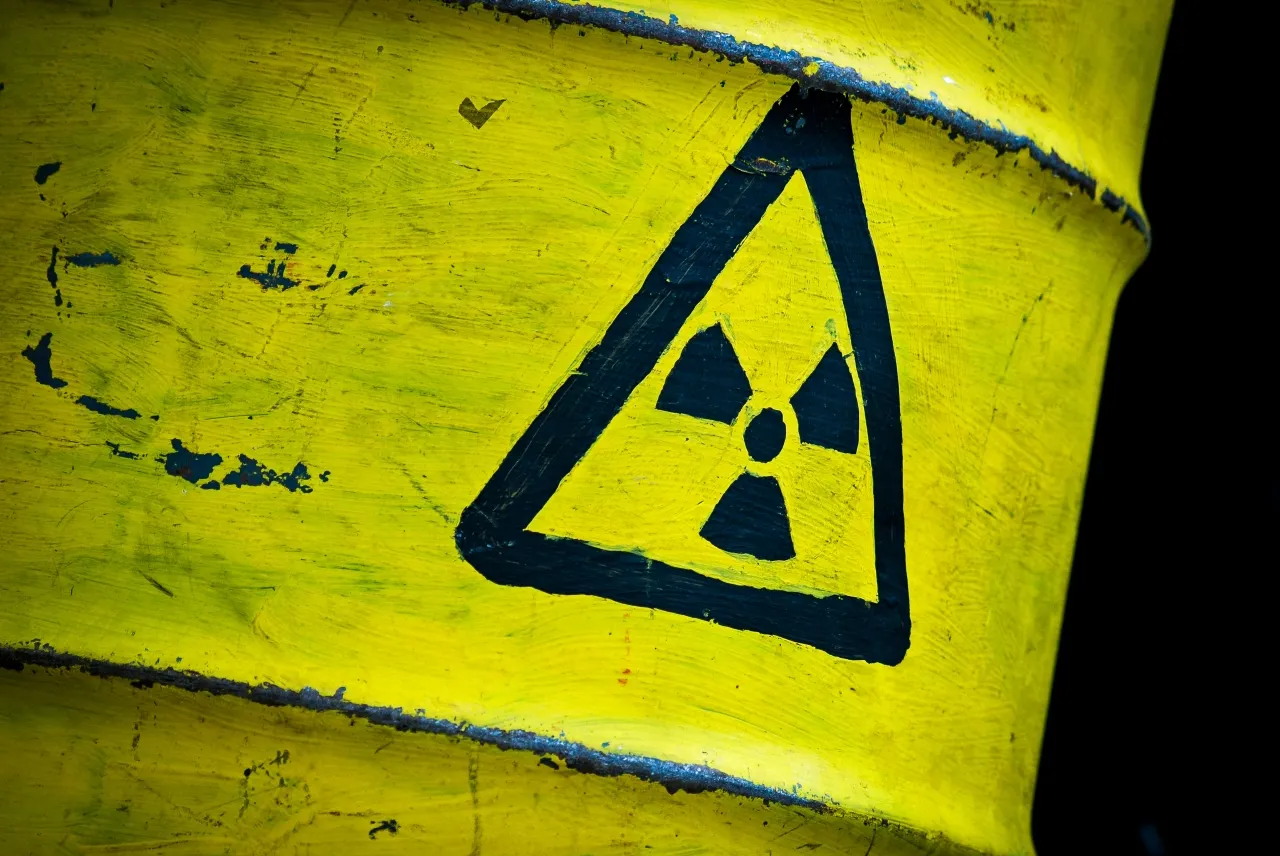
At first glance, enriched uranium cylinders just look like huge metal cylinders, but they actually contain a substance described as "the most dangerous on Earth," due to its physical properties in weight, pressure, and temperature, adding significant complications to the transportation process.
Five Times Heavier than Water
Enriched uranium is usually transported as uranium hexafluoride, a chemical compound that turns into a crystalline solid at low temperatures to facilitate transport and reduce risks. When needed for enrichment processes, it is heated to revert to its gaseous state, allowing it to spread through pipes and continue processing. These characteristics make handling the material highly sensitive, as transport and storage require strict safety measures to prevent any leakage or pressure increase that may lead to chemical or radiation hazards.
According to Dr. Abdel Nasser Tawfik, the head of the Egyptian Center for Theoretical Physics, to Al Jazeera Net: "We are dealing with a material of very high density, as it weighs about 5.1 grams per cubic centimeter in its solid state during transport, making it about five times heavier than water, which means that even small quantities of it will be extremely heavy."
He adds, "This high density means that large amounts of the material can be compressed into a relatively small volume, but conversely, it makes the cylinders used for its storage and transportation very heavy and difficult to handle, posing a logistical challenge during transport."
Such material requires large transport equipment as well as intricate engineering and logistical complexities. This also necessitates the use of strong containers that can support the weight and meticulous calculations for load distribution during transportation, also considering potential mechanical risks like falls or shocks as explained by Dr. Abdel Nasser.
A report by the International Atomic Energy Agency indicates that this material must be transported under less pressure than atmospheric pressure, a method aimed at reducing the likelihood of leaks.
The report clarifies that, "Another major challenge is that the cylinders used for transportation are multi-purpose containers, utilized not only for transport but also for storage and production within nuclear facilities. Since transportation is only a small part of the cylinder's lifecycle, it is exposed over time to the effects of mechanical wear, chemical and thermal stress."
Risks of Rising Temperature and Pressure
The problem with transporting this material is not only its heaviness but also the risk of gradual increases in temperature.
Abdel Nasser explains: "Some uranium compounds, especially when stored or transported for long periods, may undergo a gradual increase in temperature due to what is known as self-induced radioactive decay. In this process, the unstable atomic nuclei release energy as particles and radiation, part of which converts into heat that slowly accumulates within the material, especially if stored in sealed or poorly ventilated containers."
A report by the United States Nuclear Regulatory Commission explains that this thermal increase, even though gradual, can lead to the expansion of the material or gas inside the cylinder, which raises the internal pressure over time. With the continued pressure, the possibilities of stressing the container walls increase, and minute cracks might appear or the insulation system might be affected, especially if there are additional protective factors preventing corrosion or shocks during transport.
A study by researchers from Oak Ridge National Laboratory in the United States published in the "Journal of Radioanalytical and Nuclear Chemistry," states that even daily heat can become a real threat because cylinders of uranium hexafluoride used for transporting enriched uranium may sometimes be exposed to direct sunlight during transportation, which can lead to changes in the distribution of the material inside them.
The study explained that the heat from the sun causes the material to fragment along with decay products, leading to misleading measurements of enrichment levels when using conventional devices for verification. In other words, the cylinder might appear safe according to readings, but it could contain a different reality from its actual contents.
However, the risks do not stop at measurements, as the thermal change, according to the study, causes internal expansion of the gas and solid material, increasing the pressure on the cylinder walls and raising the likelihood of minor cracks or damage to the insulation system. With additional factors such as shocks and vibrations during transportation, the risk becomes doubled, making the protection of the cylinders, the crew, and the surroundings a paramount necessity.
Small Errors Could Turn into Disasters
And the dangers do not end with the big problems; according to Abdel Nasser, "Even small errors can turn into disasters because of the nature of these materials, such as excessive vibration that could cause friction, hence damage to the container, an uncalculated increase in temperature that could lead to the expansion of the material or damage to the insulation materials, and mechanical shocks during loading and transportation that could cause minor cracks that might later result in leaks. Finally, we cannot ignore the possibility of human errors in sealing or fixing and loading, which could lead to losing control of the material."
The risks associated with leakage are not trivial, as indicated by many studies, including an American study published in "Atmospheric Environment," which showed that when uranium hexafluoride is leaked, it can pose a significant risk when it reacts with the atmosphere. Upon exposure to atmospheric moisture, it transforms into hydrogen fluoride and uranyl fluoride, compounds that can cause acute irritation to the respiratory system, eyes, and can corrode the skin upon direct exposure, and can remain in the air as fine dust or settle on the soil and water.
Therefore, dealing with highly enriched uranium is an extremely sensitive process, not only because it is a nuclear material that could be used in military applications but also because its physical and chemical properties make it highly susceptible to significant risks if not transported and stored according to strict standards.
If these risks exist under normal conditions, imagine them under military operations aimed at forcibly seizing and then transporting it out of Iran.