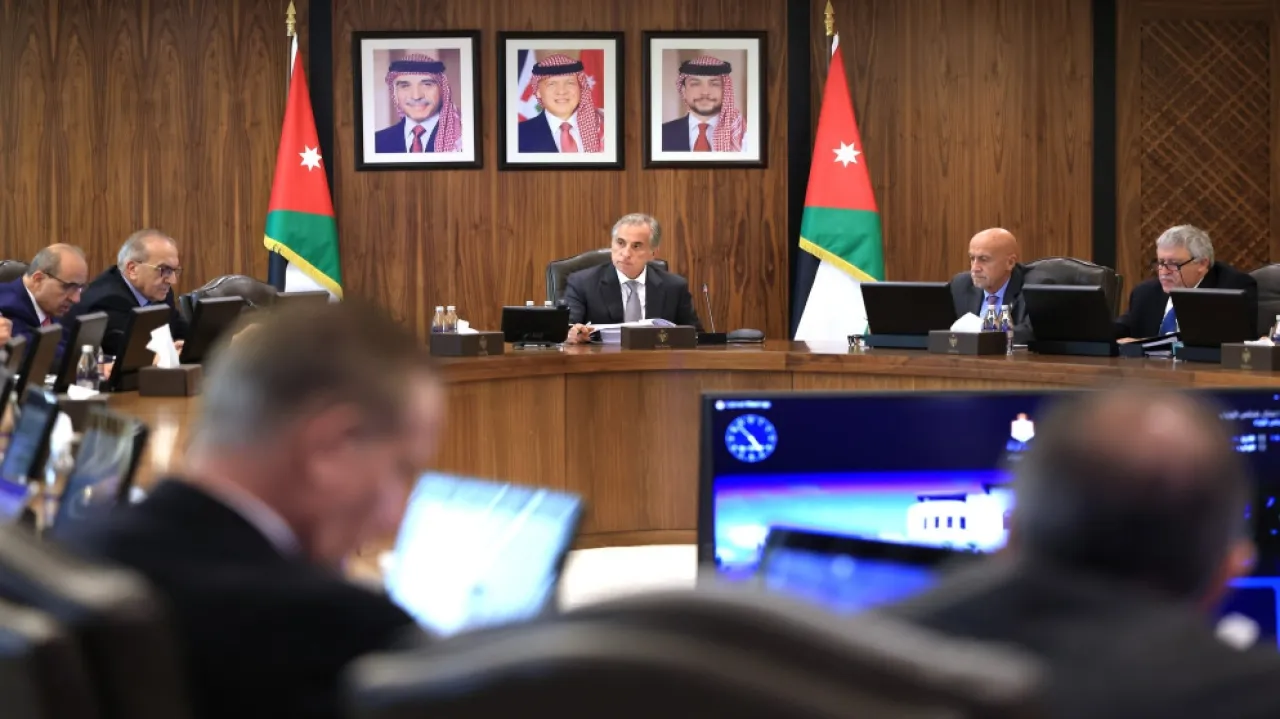
Khaberni - The Cabinet approved in its session held on Sunday, chaired by Prime Minister Jaafar Hassan, the Digital Media Regulation System for the year 2026, and a number of related amended systems.
The decision included the adoption of an amended system for broadcast and re-broadcast licensing for the year 2026, an amended system for the licensing of visual and audio works and their monitoring for the year 2026, and an amended system for fees and compensation for licensing of printing presses, publishing houses, distribution houses, publishing and distribution houses, studies and research, public opinion measuring houses, translation houses, advertising and publicity offices, and periodicals for the year 2026.
The purpose of the Digital Media Regulation System for the year 2026 is to provide a comprehensive legislative framework that regulates digital media on clear bases, enhancing the Kingdom's position in the digital media landscape both regionally and internationally, and supporting the development of the digital media sector and investment in it.
The new system, and the amendments that have occurred to other systems, contribute to the development of the media environment by keeping up with technological and digital advancements and regulating them in the rapidly evolving digital landscape and the need to employ them in media service.
Under the new system, digital tools belonging to media institutions that have been licensed by the Media Authority before the enforcement of its provisions are not required to be licensed, while these institutions may optionally register their communication tools in the digital space at the Authority, provided that their general content is consistent with what is published in the print or television station or radio.
The system contributes to enhancing the protection of digital media work producers in various aspects such as enhancing the protection of intellectual property, enhancing the quality of digital content, and providing a legislative umbrella for ethics in using artificial intelligence technologies.
The system distinguishes between mandatory licensing and optional accreditation at the Media Authority, defining activities that necessitate obtaining a license from the Authority, with an exception for individuals who publish personal content on social media platforms, and requiring professional digital content creators to be licensed if they engage in activities that require licensing, such as: the advertising sector, production, as well as granting the right to non-obligatory content creators to register their digital communication tools in the Media Authority's records in exchange for service fees.
The Digital Media Regulation System becomes effective thirty days after its publication in the Official Gazette, and grants a ninety-day grace period for those obligated by licensing to rectify their status according to its provisions after its enforcement.