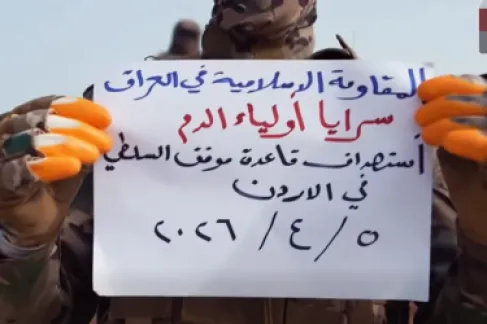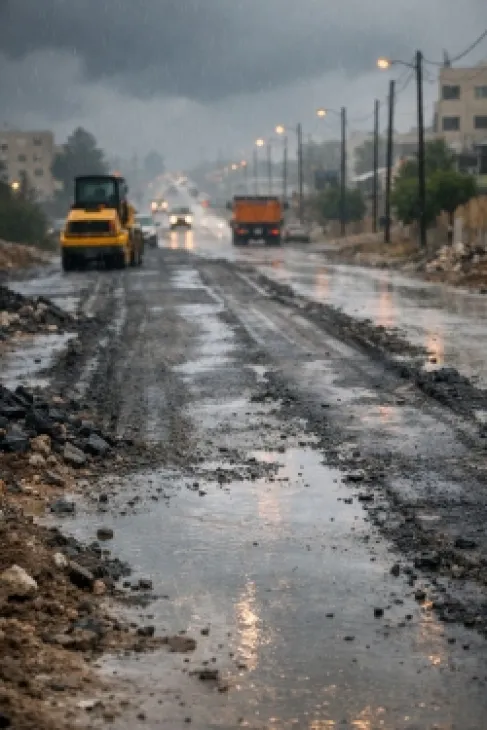
Khaberni - The cabinet decided, in its session held today, Sunday, presided over by Prime Minister Dr. Jafar Hassan, to compensate citizens whose homes or businesses were damaged, or their vehicles, due to the fallout of debris and unmanned drones because of the current regional events, according to the assessment of technical committees formed by the Interior Minister in provinces for this purpose.
The decision aims to compensate the affected citizens, enabling them to perform necessary home maintenance or vehicle repairs, and sustain their businesses.
In terms of securing energy supply and enhancing strategic reserves amid the current regional crisis, the cabinet decided to exempt the imports of Jordan Petroleum Refinery's heavy fuel oil sold to the National Electric Power Company from all taxes and fees.
This decision aims to enable the company to bolster the strategic reserves and alleviate the burdens due to global price fluctuations resulting from the current regional events.
Additionally, the cabinet decided to exempt the contract of the floating storage unit (FSU) leased by the National Electric Power Company, expected to arrive in the fourth quarter of this year, from all taxes, fees, and charges during its docking period at Sheikh Sabah port for liquefied natural gas in Aqaba.
This decision is part of the Ministry of Energy and Mineral Resources' strategy to achieve energy supply security and diversify its sources, and prepare infrastructure to sustain the electric power sector, especially under the current regional circumstances.
The cabinet directed, in this regard, the Jordan Maritime Authority, the Aqaba Special Economic Zone Authority, and the Aqaba Development Corporation to take necessary actions to facilitate obtaining all permits required to operate the vessel during its docking period.
Relatedly, the cabinet decided to approve the exemption of liquefied natural gas shipments contracted by the National Electric Power Company from all taxes and fees.
This comes as part of the shift from leasing a previously rented shore-based regasification ship to a less costly floating storage unit, following the hire-purchase model for a duration of 10 years; which contributes to the sustainability of the infrastructure for energy and liquefied natural gas.
Concurrently, work proceeds to build the permanent shore-based regasification unit in Aqaba; aimed at creating a permanent infrastructure owned by the government, enabling the import of liquefied natural gas from global markets, thereby ensuring sustained energy supply security from various sources.
This measure aims to enable the National Electric Power Company to raise and maintain the strategic gas reserve.
Furthermore, the council approved the Ministry of Energy and Mineral Resources to proceed with measures required to implement the seventh special power generation project (IPP7) with the wholly-owned Union for the Development Company by the Emirates Water and Electricity Company, and to approve the special agreements for the project ahead of signing them.
This is part of the National Electric Power Company's expansion plan to address future increases in electrical energy loads and their provision, involving the construction of a 700 MW capacity power plant using the latest energy technologies.
This is the first cooperation of its kind in such projects with the private sector, involving the registration of a public shareholding company, where the government owns 49% of the shares, providing the Social Security Investment Fund the opportunity to invest in this project as a partner, recognizing its guaranteed profitable ventures.
This power plant will help provide the necessary electrical energy for the national carrier project, within the framework of integrality and connection between strategic essential projects, and in implementing major projects.
In terms of updating media and developing related legislations, the cabinet approved the Digital Media Regulation System for 2026, and several related amended regulations.
The decision included approving an amended system for broadcasting and rebroadcasting license regulations and for licensing visual and audio classifications and monitoring for 2026, and an amended system for fees and compensation for licensing printing houses, publishing houses, distribution houses, publishing and distribution houses, studies and research institutes, public opinion polling agencies, translation agencies, advertising agencies and periodicals for 2026.
The aim of the Digital Media Regulation System for 2026 is to establish a comprehensive legislative framework that regulates digital media on clear bases, enhances the kingdom’s status in the digital media scene regionally and globally, and supports the development of the digital media sector and investment in it.
The new system, and the amendments made to other systems, contribute to developing the media environment by keeping up with technological and digital advancements and regulating them amid fast-paced digital development and their need to serve the media.
Under the system, digital tools belonging to media institutions licensed by the Media Authority before its provisions come into effect are not obliged to be licensed, while these institutions have the option to register their communication tools in the digital space at the Authority, provided their general content aligns with what is published through print or TV or radio stations.
The system contributes to enhancing the protection of digital media work producers in various aspects such as enhancing intellectual property protection, improving the quality of digital content, and providing a legislative umbrella for the ethics of using artificial intelligence technologies.
The system distinguishes between mandatory licensing and optional accreditation at the Media Authority, identifying activities that require obtaining a license from the Authority, exempting individuals who publish personal content on social media platforms, and obliging professional digital content creators to obtain a license if they engage in activities that require it, such as advertising and production sectors, besides granting non-obligatory content creators the right to register their digital communication tools in the Media Authority's records against a service fee.
The Digital Media Regulation System becomes effective thirty days after its publication in the Official Gazette, providing a ninety-day grace period to rectify the conditions of those obliged to obtain a license according to its provisions after it comes into effect.
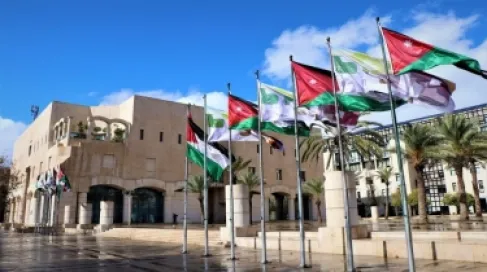
In terms of enabling institutions to sustain their services provided to citizens, the cabinet approved a decision by the Greater Amman Municipality committee, involving the municipality's transition towards Islamic bonds in stages reaching up to a billion Jordanian dinars in different phases, with an initial batch of 400 million dinars this year.
This decision represents an important step as it uses new financial instruments, which contribute to restructuring the municipality’s budget, shifting it to rely on long-term Islamic bonds at lower costs; thereby easing the financial burdens on the municipality and enabling it to sustain and enhance its services provided to citizens.
This step is a strategic transformation that provides the necessary liquidity for the municipality for capital project implementation, especially in the fields of infrastructure and transport, thus directing financing towards capital projects with developmental or revenue returns, enabling enhanced services provided to citizens.
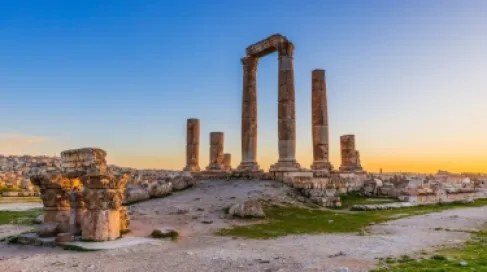
In terms of supporting and revitalizing the tourism sector and domestic tourism, the cabinet decided to extend the exemption from entry fees to archaeological sites as part of the "Our Jordan is Paradise" program, in addition to continuing to cover trip costs until December 31, 2026; which contributes to supporting and empowering local communities and stimulating economic activities within them.
The program aims to invigorate domestic tourism and encourage citizens to frequent the national tourist destinations in various governorates of the kingdom, offering diverse tourist experiences and products at subsidized prices suitable for everyone.
The program is implemented in partnership with tourism offices, tourist guides, hotels, camps, and the tourist transport sector, contributing to the sustainability of the tourism sector and enhancing its readiness, especially under the current regional circumstances.
The program includes organizing monthly events in all governorates, featuring cultural activities and bazaars with local products, aimed at stimulating tourist and economic movement. Additionally, the program provides free transportation using modern buses, accompanied tourist guides, and meals, ensuring well-organized trips for participants.
The program aims this year to reach nearly 220,000 beneficiaries, for the first time including Arab and foreign university students studying in the kingdom, children of Gazans residing, children of Jordanian women, and their spouses, with an emphasis on increasing trips to less visited destinations and supporting regions most affected by the repercussions of current regional conditions, especially the archaeological sites in the Petra Developmental Tourism Region.
The program also aims to expand participation in local projects to exceed 400 projects, including restaurants, hotels, and tourist experiences, supporting local economic activities.
For this purpose, the program has been enhanced with more than 60 tourist itineraries covering various regions of the kingdom.
This year, for t