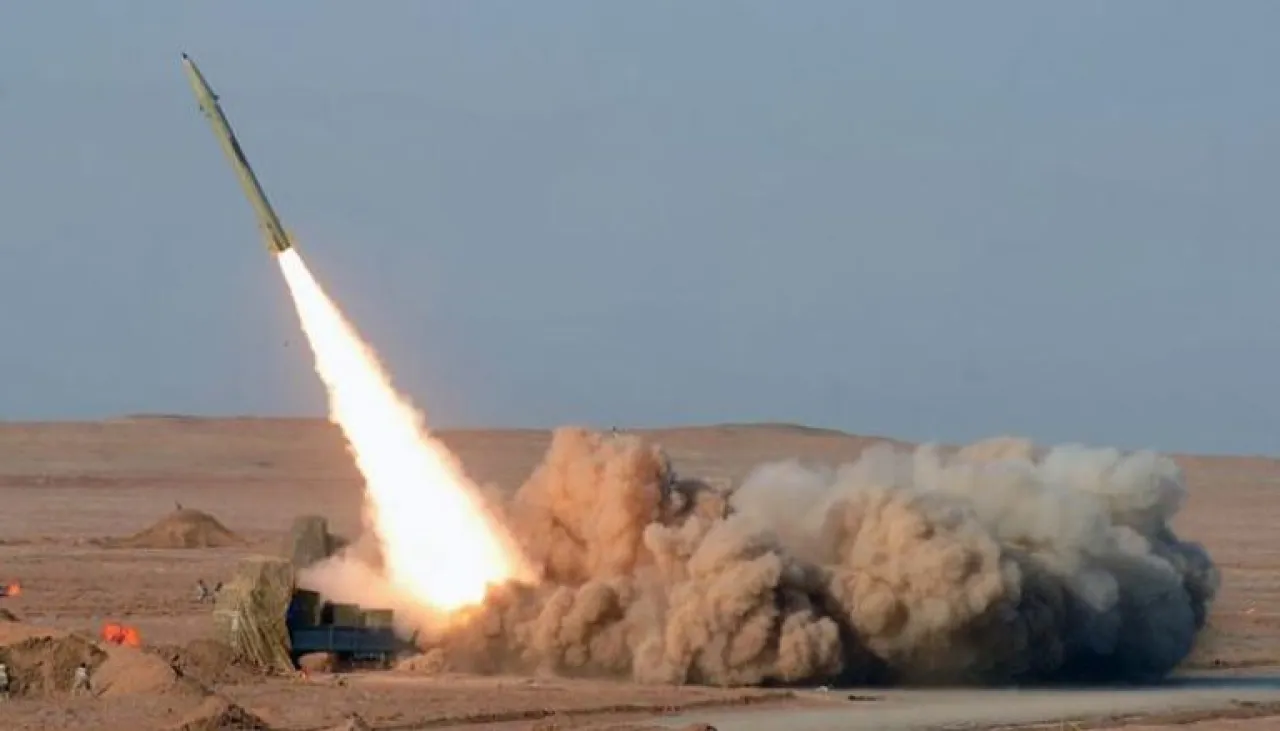
Khaberni - Shipping data analysis shows that China continues to supply Iran with large quantities of chemicals necessary for the production of ballistic missile fuel, despite the widespread military strikes Iran has faced.
According to the analysis published by the British newspaper "Telegraph", four ships flying the Iranian flag and under international sanctions have reached Tehran's ports since the outbreak of the war, while a fifth ship was floating off its coast.
It is believed that these ships were carrying sodium perchlorate, which is the primary raw material for manufacturing solid rocket fuel for ballistic missiles.
The ships set sail from Gao Lan Port in the Chinese city of Zhuhai, which hosts the largest storage facilities for liquid chemicals in China. The analysis, reviewed by specialized experts, indicates that the quantities transported are sufficient to produce hundreds of ballistic missiles.
5 Ships
All five ships belong to the fleet of Iran's shipping lines, which are subject to American, British, and European sanctions, among them the ship "Hamouna" which departed on February 19th, about a week before the outbreak of the war, and arrived at Bandar Abbas on March 26th after a five-week journey.
The other ships, i.e., Barzin, Shapdis, Rayan, docked since March 22nd, while "Zardis" was about to arrive on April 2nd.
Experts estimate that these new shipments are larger than previous ones in early 2025 on the ships "Golban" and "Jiran", which were sufficient to produce between 102 and 157 missiles.
Using those quantities as a benchmark, Iran may have imported enough to produce approximately 785 additional missiles, which means, according to war observers, that Tehran is capable of launching between 10 and 30 missiles per day for another full month.
Addressing the Acute Shortage
According to Miad Maliki, a former official at the US Treasury and a consultant at the Foundation for Defense of Democracies, these shipments are a clear indication that Iran is trying hard to replenish and address the acute shortage in missile fuel and munitions stock.
Professor Jeffrey Lewis, an arms control expert at the James Martin Center, noted that the presence of these shipments indicates that Iran still retains missile production capabilities despite ongoing bombing. Meanwhile, Isaac Cardon, a fellow at the Carnegie Endowment for International Peace, described China's continued allowance of these shipments as a "steady flow".
He explained that Beijing takes advantage of the fact that these are commercial goods and not ready-made weapons, allowing it to plausibly deny while offering implicit support for the Iranian regime.
This approach resembles China's previous support for Russian war production, and although tracking ships is difficult due to the disabling of automatic tracking systems and changes in names and declared destinations, the analysis confirms that China is facilitating the arrival of raw materials to Iran by sea, and possibly by land through Pakistan in the future.