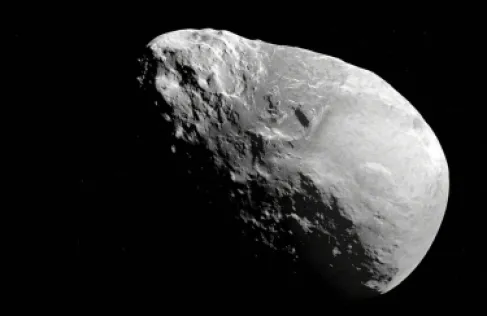
Khaberni - A team of scientists discovered that the fundamental components inside asteroid Bennu are not distributed evenly as previously thought.
They found that organic materials and minerals cluster in three completely different chemical regions.
This discovery is important because it helps scientists understand how the presence of liquid water altered the asteroid's composition over millions of years.
Bennu is known as a carbonaceous asteroid, meaning it is rich in carbon-based materials, including organic compounds. These compounds are important because they mirror the chemical ingredients necessary for life.
The asteroid itself is made up of fragments from a much larger parent body that broke apart long ago. Since Bennu orbits relatively close to Earth, it became a primary target for NASA's OSIRIS-REx mission.
One of the most valuable aspects of the Bennu samples is that they have been kept away from the Earth's atmosphere and environment. This makes them particularly useful for scientists studying the conditions of the early solar system.
By examining these samples, scientists can see how water, minerals, and organic materials originally formed and interacted billions of years ago.
During this study, Roketsan Yshiltaş and his team focused on a specific sample labeled OREX-800066-3. This sample was collected directly from Bennu by the OSIRIS-REx spacecraft and returned to Earth in September 2023. Because the sample was tightly sealed and carefully protected, it provides a rare and reliable record of Bennu’s original chemistry.
To investigate the sample, scientists used advanced techniques called nano-scale infrared spectroscopy and Raman spectroscopy.
These methods allow scientists to identify chemical compounds by measuring how they interact with light. Most importantly, they can do this at very small scales, down to about 20 nanometers (for comparison, a nanometer is a billionth of a meter, much smaller than anything that can be seen with the naked eye).
This level of detail revealed that Bennu's inner chemistry is not uniform. Instead, the material forms three recurring types of organic-mineral regions, each with its distinctive composition.
The study identified three main types of regions within the sample. One type contains high amounts of aliphatic organic compounds, which are simple carbon-based molecules consisting of chains of carbon and hydrogen. Another region is rich in carbonate minerals, which often form in the presence of water and can provide clues about ancient aquatic environments. The third region contains nitrogen-containing organic compounds, an element playing a crucial role in biological molecules like amino acids.
This variation shows that Bennu's chemistry greatly differs from place to place, even on extremely small scales.
The uneven distribution of these chemical regions suggests that water did not affect Bennu in a single, uniform way. Rather, liquid water likely interacted with different parts of the asteroid under varying conditions, creating a mosaic of chemical environments. This process is known as "nano-scale heterogeneity," meaning that the composition changes based on the exact location being studied.
Despite this history of interaction with water, the scientists found that fragile organic molecules are still preserved. This is a significant discovery because it shows that the key chemical ingredients can survive even when exposed to water-related changes.
Overall, the results offer new insight into how water, minerals, and organic materials interacted on primitive asteroids like Bennu.
These interactions are believed to have played a major role in the formation of the early solar system and may have contributed to delivering the building blocks of life to Earth.
By studying Bennu at this precise scale, scientists gain a clearer picture of how complex chemistry evolved in space long before planets like ours fully formed.