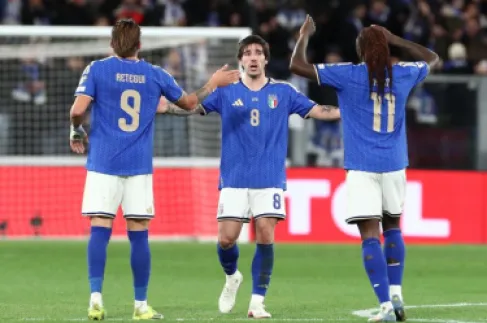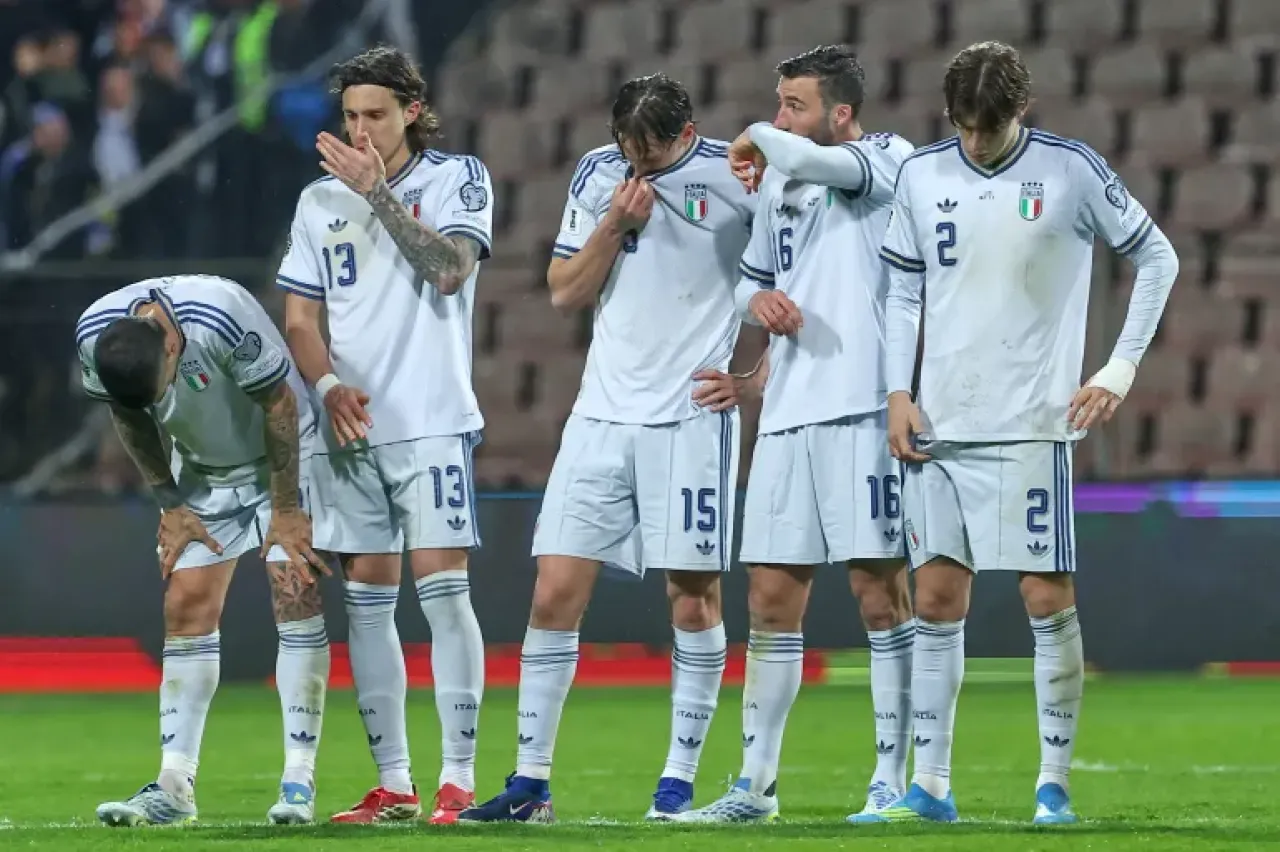
Khaberni - The Italian national team failed to secure a spot for the 2026 World Cup, following its loss to the Bosnia national team in penalty shootouts (4-1), after the end of regular and extra time ended in a tie. Despite a good start by the Azzurri and taking the lead in the first half through Kean, the team was unable to maintain its superiority, especially after playing with ten men, retreating to its own territories and defending for the remainder of the match.
This elimination raises deep questions about the reasons for failure, which can be summarized in several intertwined factors:
Absence of a decisive striker
Italy missed several clear opportunities that could have settled the game early, but haste and lack of effectiveness in front of goal prevented them from translating into goals, as happened in Kean's breakaway and Esposito's chance. This problem is not new but has existed for many years since the retirement of prominent figures, with Italian football suffering from a lack of a striker capable of decisive moments.
Impact of the red card
The red card received by Bastoni was a turning point in the match, as the Italian team was forced to play with ten men since the final minutes of the first half. This numerical deficit forced the team to retreat and lost its ability to impose its style, reflecting a lack of focus at a critical moment.
High psychological pressure
The Italian players entered the match under immense pressure, both from the media and the fans, in addition to the negative legacy of missing the last two editions of the World Cup. In contrast, the Bosnia team played comfortably and confidently, benefiting from its previous qualification at the expense of Slovenia, which gave them a clear morale boost. It seems that the technical staff failed to mentally prepare the players adequately for such decisive encounters.
Tactical and administrative shortcomings
The match showed a lack of clear vision in managing the minor details: squandered opportunities, weak utilization of set-pieces, and a lack of efficiency in counter-attacks. Furthermore, the randomness in selecting penalty shooters, along with poor execution, suggests inadequate preparation for this scenario, for which the technical staff bears responsibility.
Decline in talent quality
The Italian team was unable to impose its control or style against a historically lesser team. On the contrary, the Bosnia team appeared more organized and dangerous, particularly through flanks and aerial balls effectively used by Dzeko.
This reflects a decline in the quality of Italian talents, as the team no longer has the same caliber of players capable of making a difference in various lines, with few exceptions like Donnarumma.
An ongoing crisis in Italian football
This failure cannot be considered an isolated incident but is an extension of a structural crisis that has plagued Italian football for years, specifically since the generation that won the World Cup in 2006. The decline in talent production, poor national team performance, and fluctuating presence of Italian clubs in European competitions are all indicators of a deep-seated imbalance that requires a comprehensive review.
In conclusion, Italy stands at a pivotal moment that calls for a serious pause to rebuild the football system, through strategic reforms encompassing training, investment, and technical planning, so it can regain its status among the game's greats.