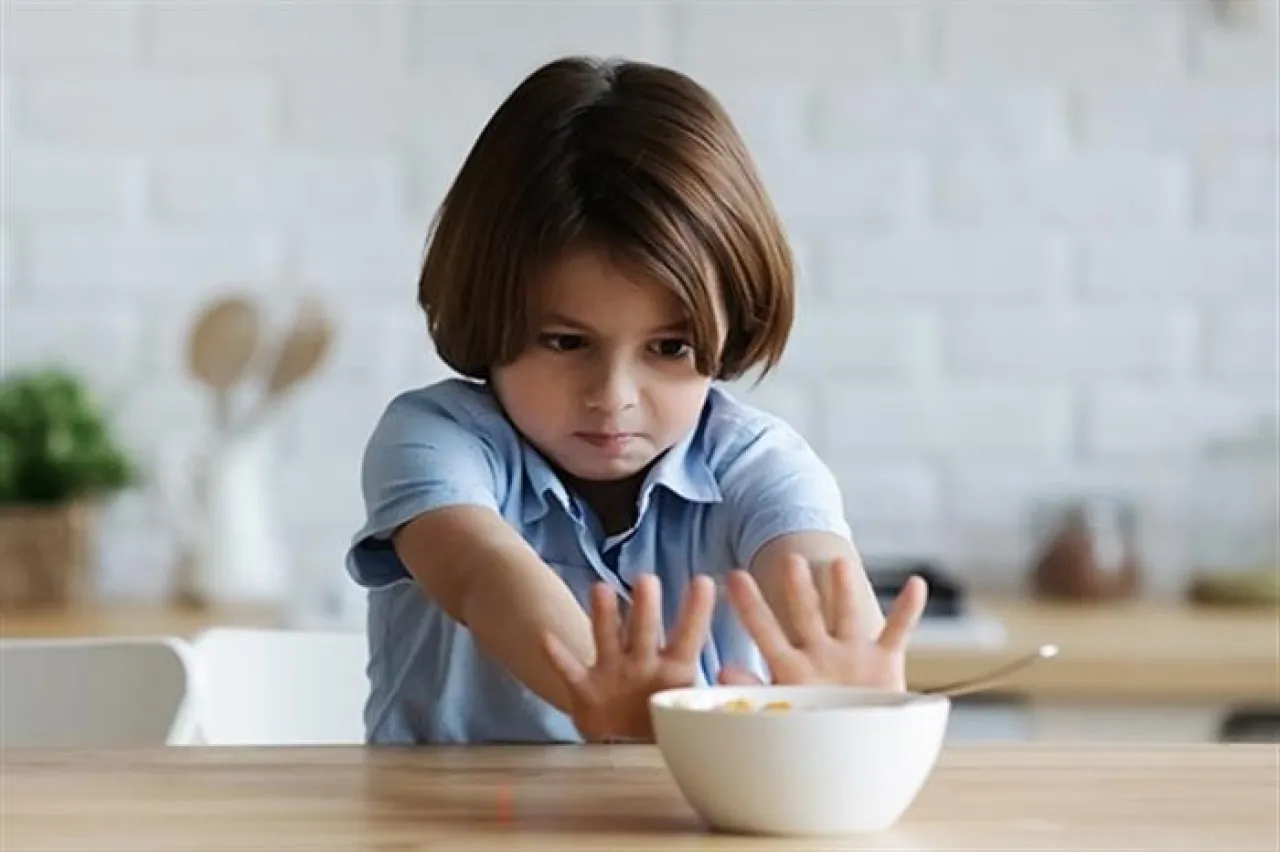
Khaberni - The issue of food selectivity is a widespread challenge faced by families; studies indicate that it affects more than 80% of families with young children, leaving parents anxious and frustrated.
However, behavioral change specialist Alicia Eaton assures the "Independent" newspaper that this challenge is not inevitable and can be prevented by focusing on creating a calm and predictable eating environment rather than turning the dining table into a "battlefield".
Eaton believes that today's children live in a highly complex and stimulating food environment filled with choices, which may lead to confusion and loss of appetite.
To overcome this, the specialist advises:
Avoid coercion, bribery, or negotiation tactics
as they often lead to counterproductive results and increase the child’s resistance. Instead, start by allowing sufficient time gaps between snacks and main meals to allow real appetite to build, as a hungry child is more willing to try new foods.
Use neutral language when talking about food
Avoid labels such as "good" or "bad" or "reward", as this reduces the anxiety associated with eating. It is also essential to serve one family meal to everyone to avoid turning parents into "chefs with special orders", as seeing everyone eating the same food enhances their gradual acceptance.
Pay attention to the child’s sensory preferences
Some children prefer crunchy or visually arranged foods, and understanding these preferences makes the food experience safer for them.
Allow space for curiosity to evolve before expectations
by allowing the child to touch or smell the food without the pressure to taste it, in addition to maintaining a daily routine of times and places to enhance the child's sense of security.
In conclusion, the specialist emphasizes that role modeling is the strongest tool; when children see adults eating a variety of foods calmly and enjoyably, they naturally tend to mimic this behavior over time, transforming meals into a time for human connection rather than psychological pressure.