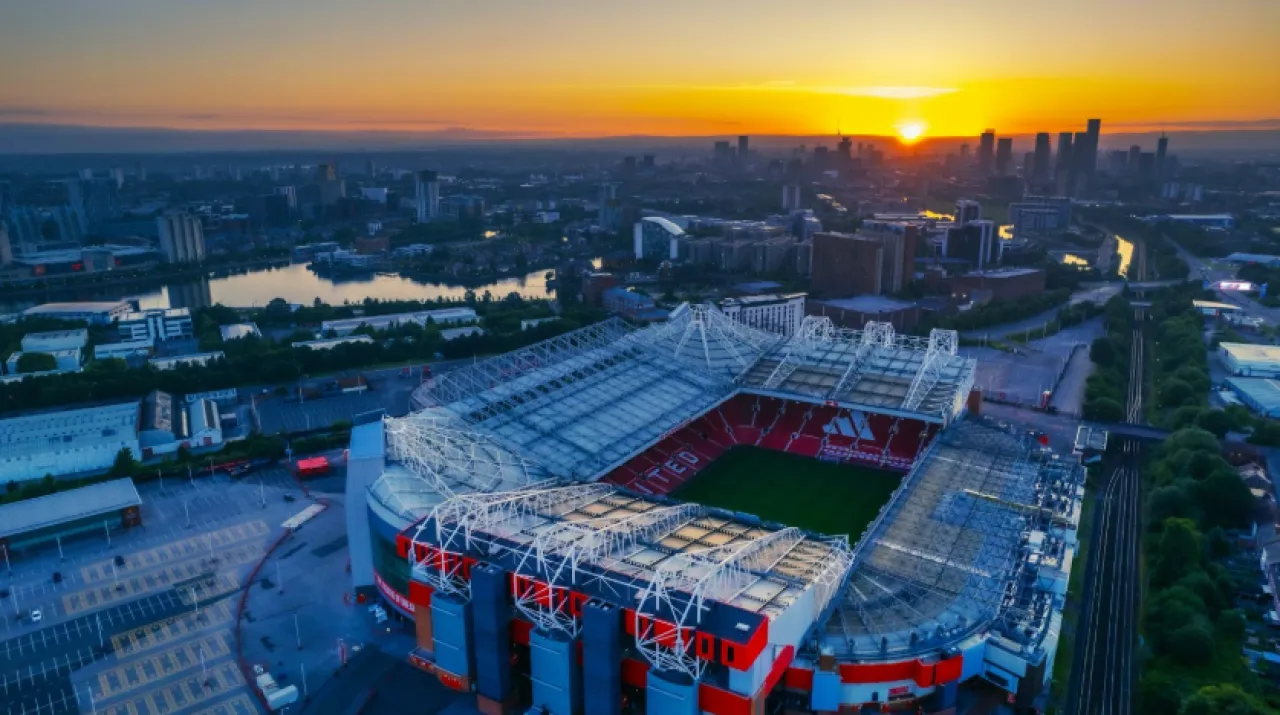
Khaberni - In the Premier League, a single ascent moment is not enough to declare you’ve “returned”, because the table only remembers what happens next, and because being among the top four is not a reward for intentions but for the club’s ability to survive a busy month without leaving scattered points behind. Manchester United has lived this meaning more than once in recent years, and this season they have returned to the heart of the debate more realistically than in dreams, then the question started to change: A temporary return is nice news, but the return expected by the end of May is what restores the club’s prestige and rhythm, financial and sporting alike. As of early March 2026, the scenario seems believable, but it is still prone to upheaval in two weeks if the team loses its solidity at the first bump.
Where does United stand now… and why don’t the numbers look comfortable?
After midweek games on March 4, 2026, Manchester United was third with 51 points from 29 matches, tied with Aston Villa in points, while Chelsea and Liverpool stand just behind them at 48 points, making the “dividing line” between safety and worry so fine that goal difference might end up a silent foe in the end. This closeness prevents any early celebration: one draw at the wrong time could rearrange the rankings, and one win could buy a week of calm, but the calm itself does not last long in a season where postponed matches and injury pressures intertwine with the cup schedule.
A temporary coach… and an impact that doesn’t seem temporary
When a coach changes mid-season, the “shock effect” is usually mixed with genuine improvement, but United under the leadership of Michael Carrick—appointed until the end of the season according to British media—has delivered a series of results that have brought the team back to the forefront of the race rather than remaining trapped in a “rebuilding” narrative. The idea here is not about the coach’s name as much as it is about the change in tone: the team is now winning matches where it was losing balance before and recovering points from games that had started against them, which is a sign that the problem was not solely the quality of the player list but how the game details are managed when things get complicated.
Crystal Palace match: A mode of return tested under pressure
One of the matches that summarize this meaning was United’s comeback against Crystal Palace (2-1) in early March, where they fell behind early but later managed the game with greater composure, benefiting from pivotal moments created by decisions and discipline not just pure beauty. Bruno Fernandes scored from a penalty and assisted Benjamin Sisco with the winning goal, while the turning point came after the expulsion of Maxence Lacroix following an intervention on Matheus Cunha, proving that the team does not always need full control as much as it needs a correct reading of the pivotal moments. Such victories not only grant three points; they give the team confidence that the return is not a fleeting circumstance, and that recent memories can be written in their favor.
Nearest competitors: Villa chases, and Chelsea and Liverpool refuse to be absent
Aston Villa is not just a “nice surprise”, because it has a point tally shoulder to shoulder with United, meaning any slip could quickly switch roles. Behind them, Chelsea and Liverpool press from a distance of only three points, a small gap in a single month’s calculations, especially if one match turns into a series: a team winning twice consecutively closes in, and a team drawing twice discovers they’ve lost more than it seems on paper. This type of race is not decided by the name of the club as much as by the “middle matches” that seem easy until you remember that the Premier League doesn’t grant matches without cost.
What does United truly need to finish the season within the top four?
The way doesn’t lie through slogans, but through three practical questions: Does the team have enough depth not to collapse when the matches pile up, can it protect its lead when it scores first instead of opening the door for the opponent's comeback, and can it turn its ground into a steady source of points and not a nerve-wracking showdown? And with roughly nine games remaining for most teams at this time, each point becomes a “rare currency” to be collected cautiously, because late stumbles don’t give time for compensation, and because a tally like 51 points guarantees nothing if a 48-point chase comes with swift feet.
Betting and digital reading: The top four race on a second screen
In fiercely competitive seasons, many of us undergo a dual experience of the match: the first is the play ending on the field, and the second is what’s mentioned before and during the final whistle, saying an incident or suspension in the last moments alters the lineup. Some of us turn to Melbet to track betting odds updates with the lineup announcements, and see how the markets react to a key player’s last-minute entry or exit. This doesn’t spoil the pleasure of watching, but adds another dimension, and raises discussions within fan groups. We talk not only about “who was the best player”, but about “when the flow of the game shifted”, and how we noticed it before it was reflected in the score. In a race for the top four such as this, this digital dimension is an extension of the viewing culture in the 21st century and not just a marginal aspect of the story.
In conclusion: The return has occurred… but will it be completed?
If the definition of “return” is reaching the top four, then Manchester United has reached the third place in early March. But the question is: will they maintain this position when things go wrong? The struggle with Aston Villa, the pressure from Chelsea and Liverpool, and the usual spring fluctuations all make the answer dependent on their ability to continue gathering points and avoiding a spiral of bad results. In such years, the difference between competing for a high rank and sitting idle in July could just be a trick, hesitation, or a well-timed choice.