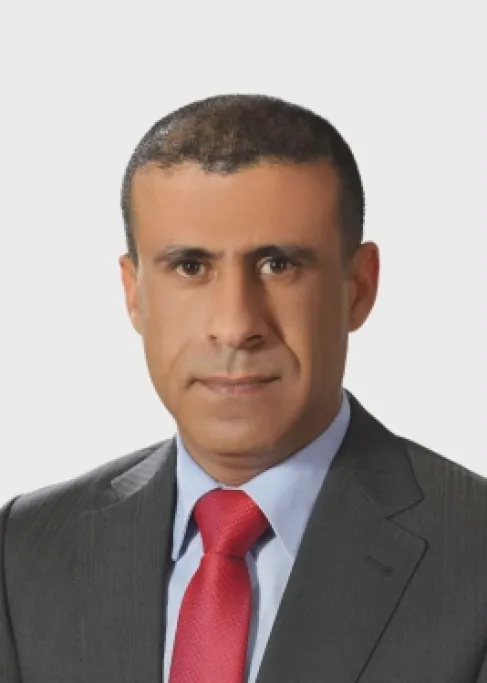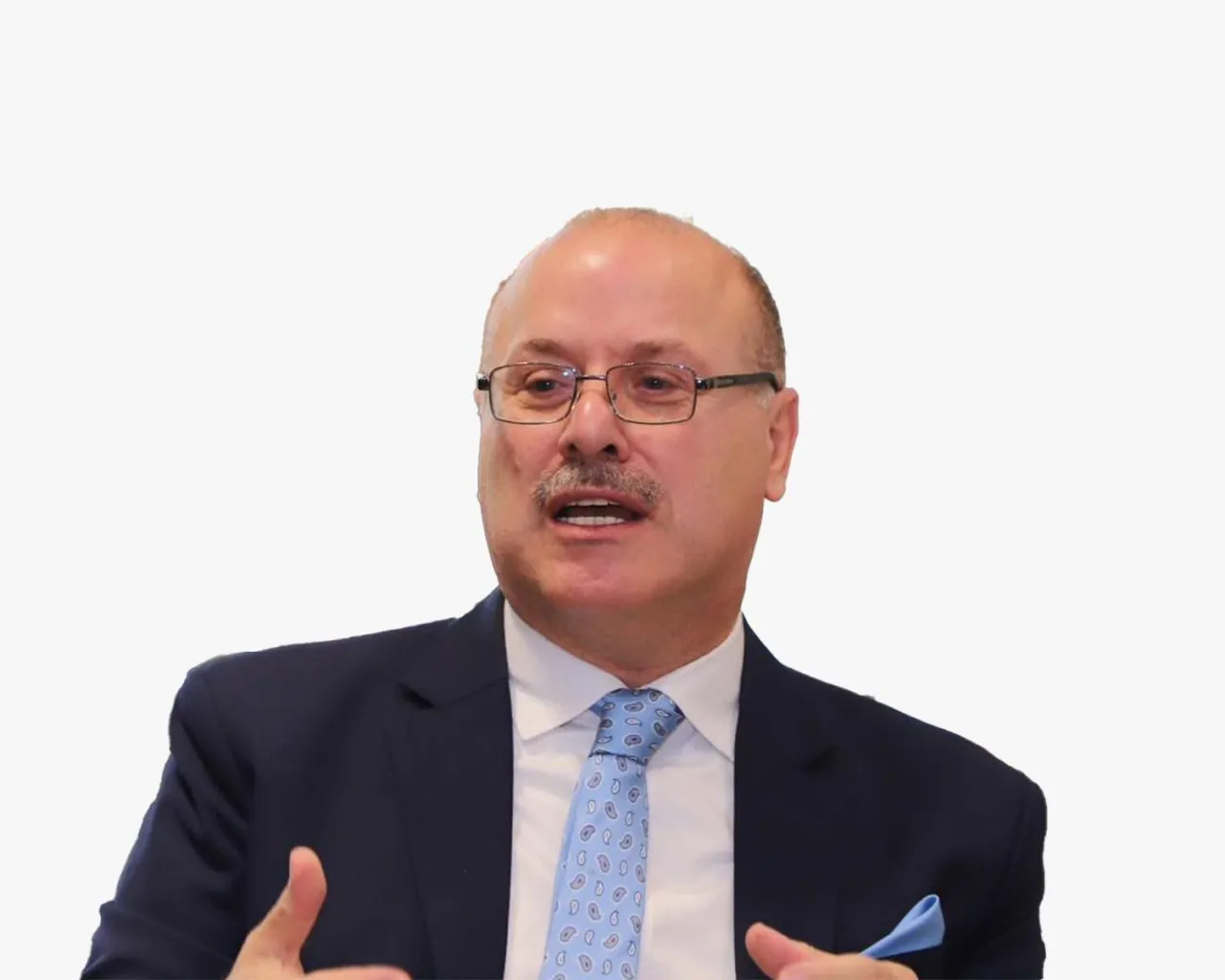
Professor Dr. Amjad Al-Fahoum
Where major intellectual and social transformations in the world demonstrate the need for books capable of addressing humans in a language that is simple yet profound at once, books that go beyond the boundaries of reading to shape consciousness and rearrange the relationship between the individual, themselves, and the world around them. In this context, the book "The Pistachio Theory" by the Saudi writer Fahd Amer Al-Ahmadi emerges as a simplified intellectual experience that managed to evolve from a self-development book into a notable cultural phenomenon in the Arab world. This work has succeeded in reaching a wide audience because it did not just offer general advice, but also tried to awaken individual awareness and place humans in front of their responsibilities in shaping their lives with their own consciousness and will.
The core idea of this work is that humans generally live within inherited or acquired thought patterns without clearly understanding them. Daily behaviors and fateful decisions are not always the product of conscious thinking, but are often the result of social and cultural programming accumulated over time. From here, "The Pistachio Theory" comes as a symbolic metaphor indicating that the simplest ideas can open wide doors to understanding the self. Just as the pistachio shell appears small and simple, yet it conceals a valuable essence inside, so too can simple ideas carry great potential to change the course of thinking if a person properly contemplates and understands them.
The spirit of this theory begins with self-awareness; a human cannot change their reality unless they first recognize the nature of their thoughts and beliefs. Many of the constraints that hinder humans are not external constraints as much as they are mental restrictions formed through upbringing, habits, and the fear of failure. Thus, this approach invites the reevaluation of inherited ideas and the re-posing of fundamental questions: Who am I? What do I want? And what are the values that I truly believe in? These questions are not a luxury of thought but are the first step towards freeing oneself from rigid thinking patterns.
The second phase is represented by reshaping the mind through continuous learning. The human mind is not a fixed structure but a system capable of evolving with every new cognitive experience. Every reading, every experience, and every dialogue adds a new layer of understanding and reshapes our view of the world. Thus, knowledge becomes more than just an accumulation of information; it is a continuous process of rebuilding human consciousness and expanding its horizons.
The third stage confirms that knowledge alone is insufficient; it must be transformed into practical behavior reflected in a human's daily life. The real value of ideas lies in their ability to influence reality. When consciousness turns into practice, humans become more capable of making conscious decisions and are more prepared to take responsibility for their choices. Here, thought moves from the sphere of theoretical contemplation to an active force that drives humans towards change.
However, the deeper value of this theory lies not only in its individual content but also in its social spirit. When individual awareness spreads within a society, the features of collective transformation begin to emerge. Societies that encourage critical thinking, stimulate reading, and value knowledge are more capable of facing economic and cultural challenges. From this perspective, this kind of literature can be seen as part of the process of building cultural consciousness in the Arab world.
In the specific context of the Arab world, the importance of this intellectual spirit becomes apparent because it addresses a young generation living in a time of rapid digital transformations. Modern communication means have provided a massive amount of information, but at the same time, they have created a mental noise that can scatter a person among contradictory ideas. Thus, books like this appear as an attempt to return humans to the starting point through calm self-reflection and a deeper understanding of life beyond just a quick response to events.
Anticipating the impact of this theory in society leads to a broader idea that real change always begins with the conscious individual. Societies do not change with grand slogans alone but through the accumulation of awareness in the minds of their individuals. Each person who succeeds in understanding themselves and managing their life with awareness becomes a part of a more balanced and mature social fabric.
Ultimately, this theory appears closer to a quiet call to rediscover the latent energy of humans. It is a reminder that great transformations in a person's life can begin with a small idea or a moment of sincere reflection, and that the simplest ideas can sometimes be the seed from which the trees of consciousness grow in society.