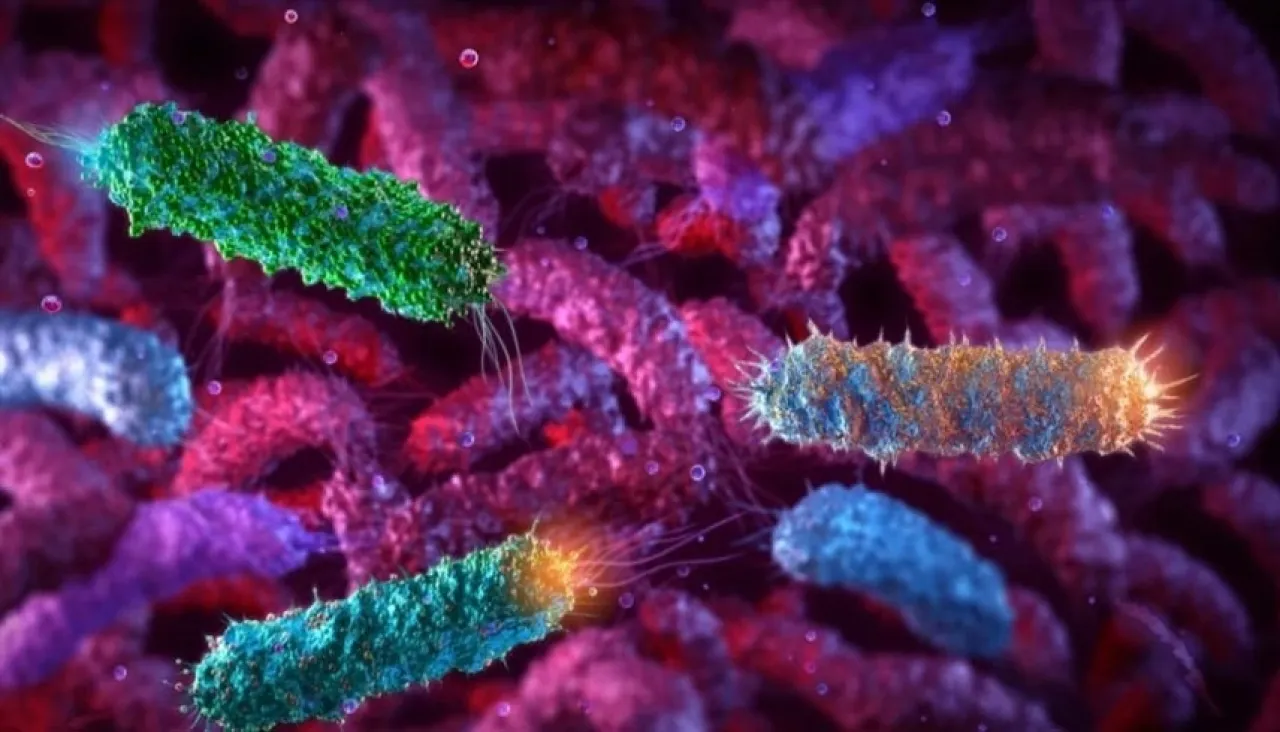
Khaberni - In a significant scientific development, Chinese scientists have succeeded in transforming E. coli bacteria into a therapeutic tool that targets breast cancer tumors from within, by enabling it to produce an anti-cancer drug inside the tumor itself, which may reduce the toxicity associated with traditional chemotherapy.
The study was conducted by researchers from Shandong University in Qingdao, eastern China, and was published in the journal "PLOS Biology". It was based on experiments conducted on mice with breast cancer, where the team considered that the results pave the way for developing targeted treatments for tumors in the future.
The idea relies on a probiotic strain of E. coli known as E. coli Nissle 1917 (EcN).
Although E. coli bacteria are typically found in the intestines, and most strains are harmless, some can cause watery diarrhea, vomiting, and fever; however, the strain used in the study is relatively safe for medical use, according to the "South China" website.
Accumulation and proliferation inside solid tumors
The researchers explained that this strain demonstrated the ability to accumulate and proliferate inside solid tumors, making it a "promising live carrier" in bacterial cancer therapy, noting that its genetic modification allows it to manufacture drugs inside the body and deliver them precisely to the tumor site, providing it with a strong anti-cancer activity.
As part of the study, the scientists genetically modified the strain to produce the drug Romidepsin, also known as "FK228", which is an FDA-approved medication for treating lymphoma cancers, one of the types of blood cancers. The drug has also been used in preclinical studies for treating solid tumors such as breast cancer and pancreatic cancer.
To simulate the disease, the researchers created a mouse model injected with breast cancer cells capable of forming tumors, then treated it with the modified bacterial strain. The findings showed that the bacteria did indeed colonize the tumors and began releasing FK228 within them, both in live animal experiments and in lab-cultured cells, making it an effective targeted treatment for the tumor.
Six modified strains
The team wrote that six modified strains demonstrated their effectiveness due to their restricted colonization within the tumor, managing to release Romidepsin directly inside it, achieving targeted treatment effects.
Four of these strains showed an inhibitory effect on tumor growth almost identical to that of the traditional drug, while one strain surpassed the drug itself, recording a lower level of toxicity. The sixth strain released the drug for a longer period, but at a concentration described as "very low".
The experiments also showed that some mice in the group treated with the traditional drug "FK228" died during the study, while mortality rates were lower in the groups that received the modified bacterial strains.
The researchers believe that producing and delivering the drug within the precise environment of the tumor could reduce its systemic side effects.
In contrast, the team noted that direct injection of the drug, despite its simplicity, showed efficacy below the optimal level against solid tumors, in addition to causing significant toxicity.
According to the study, the strategy of colonizing the tumor with modified bacteria allows concentrating the therapeutic effect in its location, reducing side effects, and improving the efficiency of drug use.
Despite the promising results, the researchers emphasized that the work is still in its early stages, as the tests have so far been limited to animal models and have not yet been conducted on humans. However, they considered that the results establish a new phase in engineering bacteria capable of producing small anti-cancer drug molecules, and participating in targeted treatments based on bacteria, which may open broader prospects in the field of tumor treatment in the future.