Khaberni - The American president, Donald Trump, is studying plans to take control of the Iranian island of Kharg, in a move aimed at pressuring Tehran to reopen the Strait of Hormuz, according to "Axios" website, citing 4 informed sources.
The significance of these plans is highlighted by Trump's inability to end the war, at least on his terms, unless what the American administration considers Iran's monopoly over navigation through the strait is broken, in a time when global energy prices are witnessing a sharp rise.
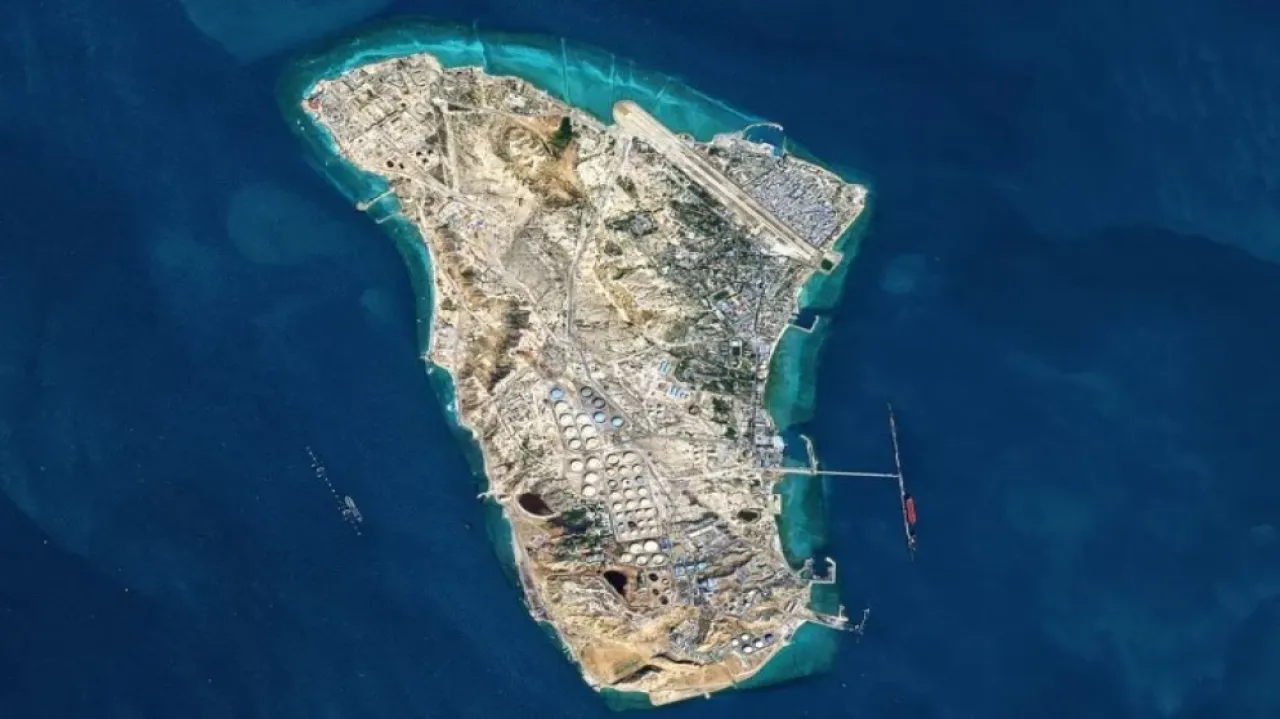
Kharg Island, located about 15 miles off the Iranian coast, is a vital point for oil exports, processing about 90% of Iranian crude oil exports, making any military move towards it a highly sensitive step that might put American forces in direct confrontation.
According to sources, any operation to take control of the island would only be executed after the American military works to weaken Iran's military capabilities around the Strait of Hormuz, where a source familiar with the White House thinking said: "We need about a month to weaken the Iranians more with strikes, take control of the island, then press them hard and use it in negotiations."
In case of moving forward with this operation, it would require sending additional military reinforcements, with three units of American Marines already headed to the region, while the White House and the Pentagon are considering sending more forces in the coming period, as confirmed by an American official.
A senior American administration official told Axios: "He wants to open the Strait of Hormuz. If he has to seize Kharg Island to achieve that, he will do it. If he decides to launch a coastal invasion, he will do it. But this decision has not been made yet."
Meanwhile, another American official said: "We have always had ground forces in conflicts under every president, including Trump. I know this attracts media attention, and I understand the political aspects, but the president will do what is right," confirming that no final decision has been made yet.
In this context, Senator Tom Cotton, the chair of the Senate Intelligence Committee, stated that Trump was "wise" in not ruling out the option of a land invasion, without clarifying his personal stance on supporting this step, considering the closure of the Strait of Hormuz a "desperate act" on the part of Iran.
He noted that Trump has "many plans" to face this scenario.
Conversely, observers believe that controlling Kharg Island, despite its importance to the Iranian oil industry, does not necessarily guarantee prompting Tehran to accept American peace terms.
In this regard, retired American Admiral Mark Montgomery, in a statement to Axios, warned that such an operation could expose American forces to significant risks without guaranteeing positive outcomes, saying: "If we seize Kharg Island, they would turn off the tap from the other end. It's not as if we control their oil production."
Montgomery added that a more likely scenario might involve, after about two weeks of additional strikes to weaken Iranian capabilities, deploying American destroyers and aircraft to escort oil tankers in the strait, which might obviate the need for a land invasion.
Returning to previous developments, Trump was initially seeking to end the war before his planned visit to China at the end of March, but the escalating crisis in the Strait of Hormuz led him to postpone the trip and extend the duration of military operations, according to two informed sources.
In the context of the escalation, the American military launched intensive air strikes last Friday targeting dozens of military sites on Kharg Island, where American officials described this strike as an "early warning" to force Iran to reopen the strait, and considered it a preliminary step to weaken Iran's military capabilities in preparation for a possible ground operation.
Trump said, on Thursday, "We can destroy the island whenever we want. I call it the little island sitting there unprotected. We removed everything except the pipelines. We kept the pipes because rebuilding them would take years."
In other statements to journalists, Trump said he "won't send forces anywhere," before adding: "If I were going to do that, I certainly wouldn't tell you."
Three sources revealed that the option of controlling the island via a land operation is under serious consideration inside the American administration, alongside an alternative option of implementing a naval blockade preventing oil tankers from reaching the island.
It was reported that consultations with Pentagon lawyers have been made to provide legal assessments regarding these potential moves.
Regarding the next steps, an exploratory force of about 2500 Marines is expected to arrive within days, while two additional units of similar size are heading to the region, at a time when the White House and the Pentagon are discussing sending more reinforcements, without a final decision being made yet.
One source cautioned that the Marines might be tasked with other missions outside Kharg Island, including evacuating personnel from American embassies in the region if needed.