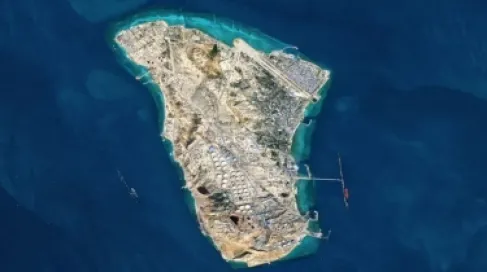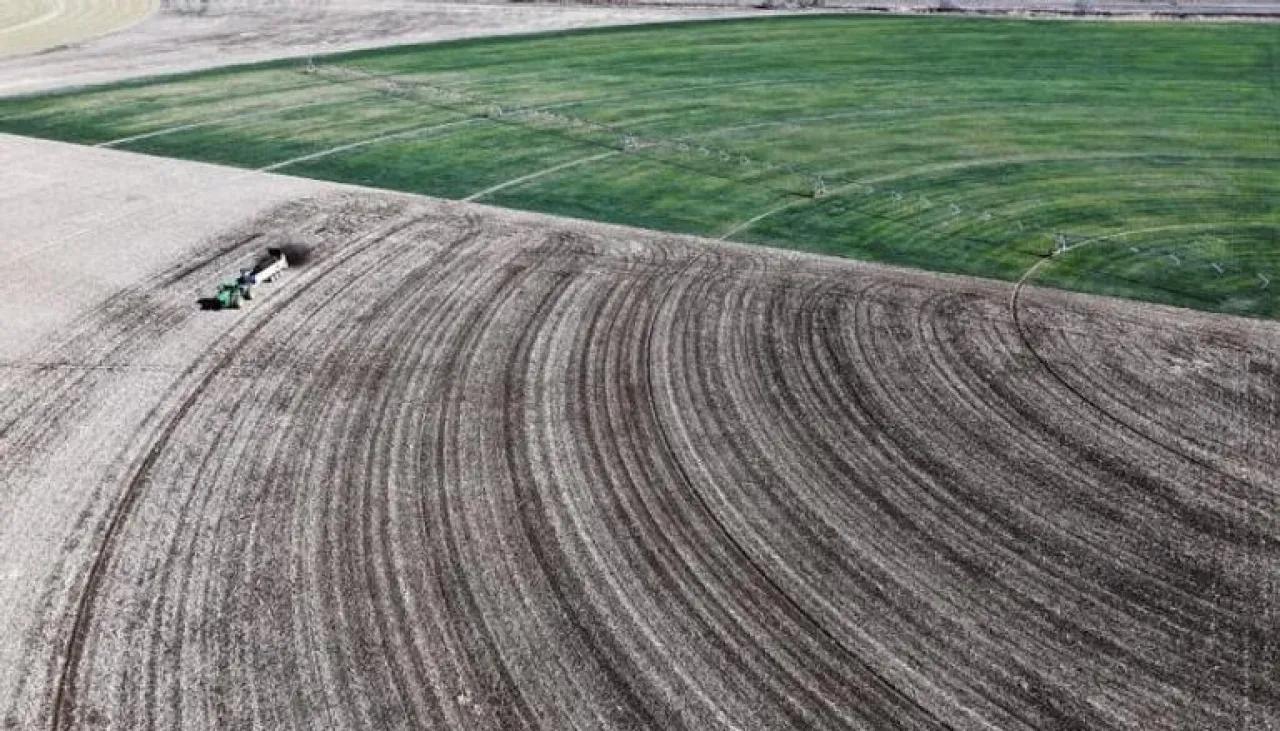
Khaberni - The closure of the Strait of Hormuz, resulting from the war in Iran, has caused an increase in fertilizer prices, negatively affecting the income of farmers around the world, and threatening the rise in food prices, and the United States is not immune to this crisis.
Now, the Democrats aiming to win the midterm elections for the US Congress in November see a new opportunity to address the fertilizer affordability crisis and to turn the tables after years of losses in crop-producing and livestock-wealth states.
The Strait of Hormuz is a vital passage for fertilizers, including about 50% of the world's nitrogen-rich fertilizers, according to the Fertilizer Institute, the trade association for the industry.
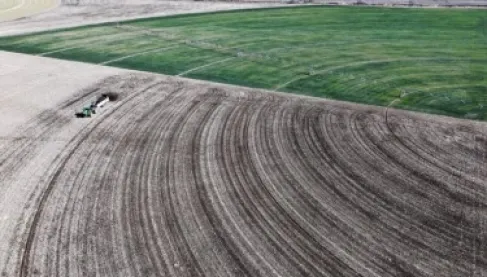
The closure of the strait due to the war's ramifications in Iran has caused a sharp increase in fertilizer prices ahead of the planting season, which could disrupt decision-making processes for farmers across the United States.
This comes at a time of prolonged low commodity prices, which has negatively affected farmers' profit margins.
Stage of uncertainty
Matt Frostick, a farmer from Michigan and a member of the National Corn Growers Association board in America, said in an interview with CNBC, "We are in a stage of uncertainty, the situation is akin to an alert".
Frostick explained that he bought nitrogen fertilizer, a basic element for corn crops, in January at a price of about 350 dollars per ton, adding that the price of the same product is now approaching 600 dollars per ton because of the war.
These murky agricultural forecasts come 8 months before the midterm elections that could see Trump lose control of both the House and Senate.
Democrats, who are seeking to win competitive seats in key farming states like Iowa, Minnesota, and Nebraska, are using the rise in fertilizer prices as a new example of the affordability problem that still plagues Trump and the Republicans.
A teacher running for Congress in Minnesota's First District, Jake Johnson, facing the current Republican representative Brad Finstad, said, "There are many people like me in our region saying, we don't understand, we don't comprehend, it was already tough, and now they're making it even tougher, and no one knows why,"
Johnson added, "Our first mission as a campaign, and what we want to talk about with everyone we meet, is that we need ways to make things less costly."
These appeals from Democrats to win support in rural areas come after years of their declining popularity in agricultural rural states in the middle of the country.
Trump won in the 2024 elections in almost all the Midwestern states except for Minnesota and Illinois.
He also dominated the competition at the county level, according to the Policy Center, winning in 2660 counties compared to 451 counties for former Vice President Kamala Harris, which were concentrated in the most densely populated areas of the United States.
Changing the situation in rural America has long been a primary goal for Democrats, but it has often been elusive.
In Iowa in 2018, the Democrats won three out of four congressional seats.
Now, the Republicans control all four seats, but with Trump's economic popularity waning and the Democrats advancing in the general elections, the Democrats have high hopes this year.
Johnson said that farmers are particularly negatively impacted by Trump's campaign to impose tariffs, which saw the White House approve an approximately $12 billion bailout plan last year, and this war now adds a new inflationary dimension.
He said, "Voting for me is a vote to end the tariffs, a vote to end the war, we need to start fixing the obvious damage imposed on us by the current situation."
In the meantime, Republicans are striving hard to pass more aid for farmers just months after pumping last year’s aid.
An additional farm bailout plan, estimated at about 15 billion dollars, was discussed before the outbreak of the war to address crop prices, and lawmakers are now seeking to attach it to a possible supplemental war spending bill to face Iran, while the White House is proposing a war spending request of 200 billion dollars.
Senator John Hoeven, a Republican from North Dakota, who chairs the Senate Appropriations Subcommittee responsible for funding the Agriculture Department, said in an interview, "It's clear there will be supplemental funding for the conflict in Iran."
Hoeven added that to gain Senate approval for such a package, he expects it will require the inclusion of items other than war spending.
Finding a solution to the fertilizer price problem
Senator John Boozman, a Republican from Arkansas and chairman of the Senate Agriculture Committee, said he is working with the administration to find a quick solution to the fertilizer problem.
Boozman added in an interview, "The good news is that everyone realizes how serious this problem is for our farmers, and that's why all options are on the table, we're considering all available alternatives, and we hope to come up with a plan soon."
His counterpart in the House, Representative G.T. Thompson, a Republican from Arkansas, said Trump is making determined efforts to reopen the Strait of Hormuz.
Thompson pointed to Trump's efforts to woo "other countries to enable transport ships and oil tankers to pass safely through this narrow passage."
He emphasized the need to lift any tariffs on fertilizers before the planting season.
He said, "We should not impose tariffs on fertilizers or any of their components."
Treasury Secretary Scott Piesent, in an interview with Fox Business on Thursday, stated that Agriculture Secretary Brook Rollins "is likely to issue a statement on fertilizers in the coming days."
Piesent noted that the tariffs imposed by Trump largely exempt nitrogen fertilizers, a key element for corn cultivation.
But opening the strait to allow the flow of fertilizers is a challenging task for the administration, despite efforts to free the stuck cargo ships, and the risks facing American farmers and food consumers continue to escalate.
Zippy Duvall, president of the American Farm Bureau, said in a recent letter to Trump, "Without giving strategic priority to delivering essential agricultural inputs such as urea, ammonia, nitrogen, phosphate, and sulfur products, the United States risks a crop shortage, which not only threatens our food security and therefore our national security but such a production shock could contribute to inflationary pressures on the American economy."