Khaberni - Astronomical estimates indicate that Friday, March 20, will be the first day of Eid al-Fitr in most countries, with possibilities for a date change depending on sighting conditions.
The majority of Arab and Islamic countries are heading towards announcing Friday, March 20, 2026, as the first day of the blessed Eid al-Fitr, according to astronomical calculations supported by legitimate sighting, amid difficulties in observing the crescent of Shawwal on Wednesday evening, which enhances the chances of unifying the Eid date in a large number of countries, despite varying start dates for Ramadan.
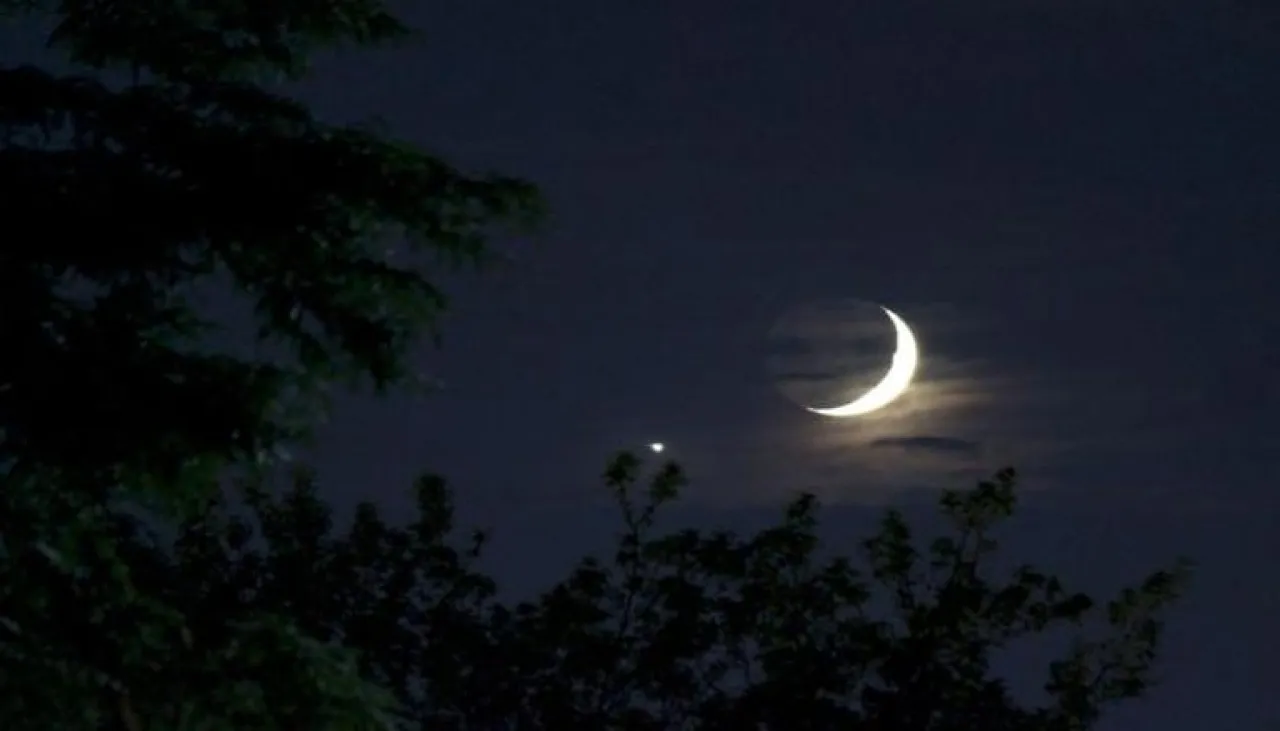
Astronomical data indicate that the appearance of the Shawwal crescent on Wednesday evening faces difficulties, making Friday, March 20, the most likely date for the beginning of Eid al-Fitr, whether by astronomical calculations or according to the results of legitimate investigation, with wide expectations of agreement among Islamic countries on this date.
However, there remain possibilities for a date difference in some countries, which may announce Saturday, March 21, as the first day of Eid, associated with the conditions of crescent sighting and the criteria adopted in proving it from one country to another.
In the same context, some countries such as Sweden, several European countries, and Turkey, have officially adopted astronomical calculations to determine the Eid date, announcing that Friday, March 20, 2026, will be the first day of Eid al-Fitr for them.
According to astronomical calculations, the central conjunction, known as the conjunction, will occur on Thursday, March 19, 2026, at exactly 04:23 AM Mecca time, corresponding to 01:23 UTC, at which time the moon is in a position between the Earth and the Sun, followed by the stage of forming the new crescent.
The beginning of Ramadan witnessed differences among Islamic countries, as fasting began in three different periods; 28 countries announced the start of fasting on Wednesday, February 18, which are the countries that adopted astronomical calculations or confirmed early crescent sighting, including Saudi Arabia, Qatar, Yemen, Kuwait, Lebanon, Palestine, Sudan, Bahrain, and Somalia.
Conversely, other countries began fasting on Thursday, February 19, after the failure to observe the crescent on Wednesday evening, among them Jordan, Sultanate of Oman, Morocco, Syria, Egypt, Iraq, Algeria, Libya, and Tunisia, meaning that Thursday, March 19, represents the twenty-ninth day of Ramadan in these countries.
Meanwhile, in Fiji and New Zealand, the month of Ramadan began on Friday, February 20, making them among the few countries with a significantly different start time compared to others.
The difference in the date of Eid al-Fitr between Friday and Saturday relates to factors concerning the possibility of crescent sighting, wherein estimates suggest that observation will be possible using telescopes in most Arab countries, supporting the announcement of Eid on Friday.
Conversely, some countries that began fasting on Thursday, February 19, and were unable to confirm the crescent sighting on Thursday evening, March 19, may announce that Saturday, March 21, is the first day of Eid al-Fitr, according to the legitimate criteria adopted by them.