Khaberni - Southern and central areas of Israel endured a difficult night due to the missile waves launched by the Iranian Revolutionary Guard in response to the assassination of the Secretary-General of the National Security Council Ali Larijani and the commander of the Basij forces, Gholam Soleimani, in an Israeli raid last Tuesday.
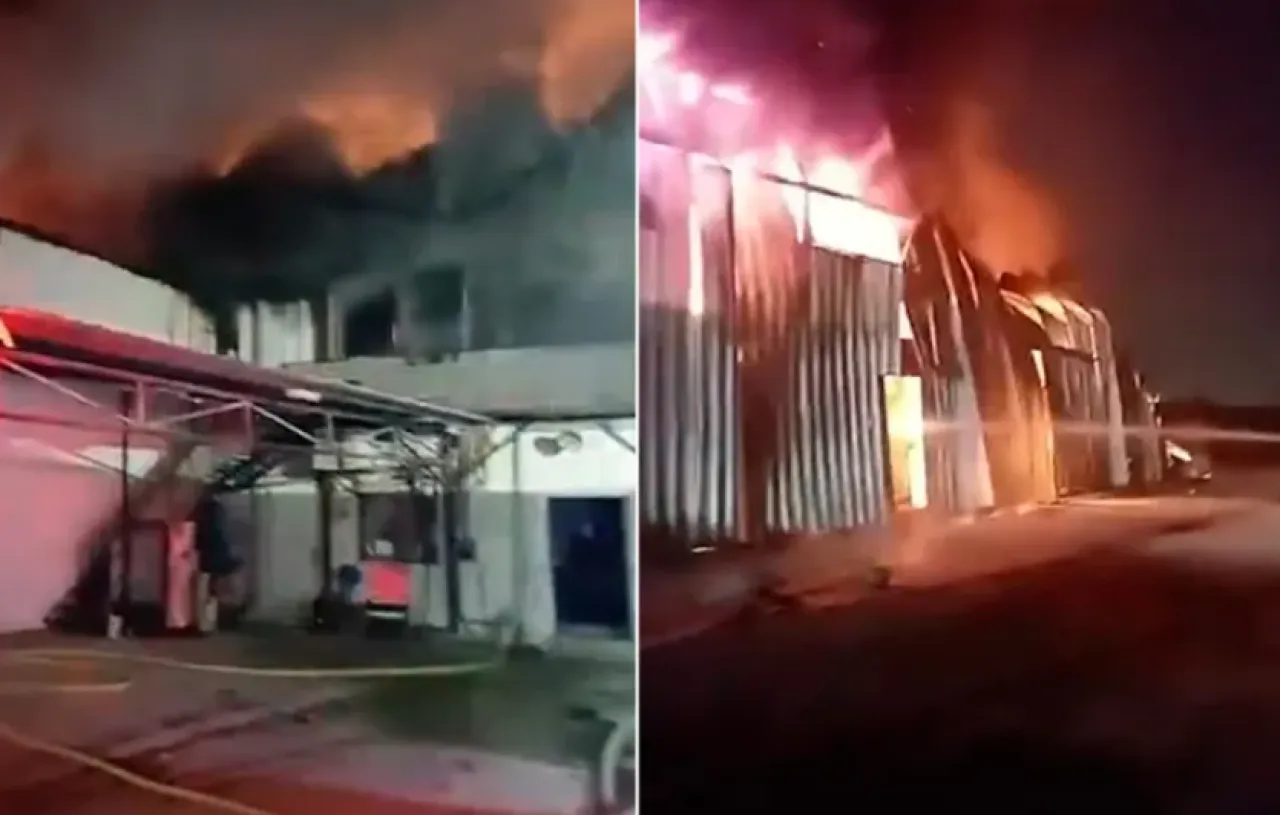
Images showed extensive destruction and blazing fires in buildings and vehicles due to the Iranian missiles falling in the Holon area in central Israel.
Last night was the fiercest in terms of the Iranian missile waves, which occurred at a rate of about one wave per hour, according to what Al Jazeera's Tehran correspondent Abdel Fattah Fayyad reported.
Last night's waves relied more heavily on heavy missiles, especially the "Khorramshahr 4" type, which carries an explosive warhead weighing two tons, and also included new cluster missiles that had not been used before, reaching speeds of up to Mach 13, according to Fayyad.
Fars news agency quoted sources in the Revolutionary Guard that it targeted a prominent figure in the Israeli ministerial council, and that the latest strikes affected more than 100 Israeli sites.
These strikes were a practical and swift response to the threat of Iran's retaliation for the assassination of Larijani and Soleimani, and also to affirm that its stockpile of missiles and launch platforms is still abundant, according to Fayyad.
Political and military messages
Through these intense waves, the Iranians wanted to send a message that they are continuing to defend their country and sovereignty, as Al Jazeera's correspondent reported from Tehran officials that they are prepared to continue the war indefinitely and on any battlefield.
With the United States and Israel resorting to assassinating political leaders and diplomats after the end of the target bank, the Iranian responses convey messages that the new leaders are more radical and believe that the Americans are not interested in peace, as Fayyad said.
In Israel, authorities pushed more forces and civil defense to deal with the fires and destruction caused by the Iranian missiles in Holon and Mishmar Hashivah in the central part of the country.
A massive fire broke out in a building in Holon as a result of the fall of a warhead from an Iranian cluster missile with heavy explosive heads, according to what Al Jazeera's correspondent Mohammed Khairy reported from Israeli media.
Al Jazeera broadcasted images showing the fires and the rising smoke in buildings and vehicles, where the central area was subjected to at least four rocket barrages on Tuesday night, while civil defense and firefighting teams were trying to deal with the damage and search for injured, according to Khairy.
The Iranian attacks included Southern Israel and the occupied city of Jerusalem, where alarm sirens repeatedly sounded that night, while the Israeli ambulance service announced the death of two people and injuries in rocket attacks on "Ramat Gan" south of Tel Aviv.
After the assassination of Larijani and Soleimani, the commander of the Iranian Revolutionary Guard's aerospace force, Brigadier Majid Moussavi, announced the start of what he described as a "fast pace of devastating and effective strikes in the region against the American-Zionist enemy."
In turn, the Guard announced the launch of the 61st wave of operation "True Promise 4", and said it was a response to the assassination of the two prominent figures.