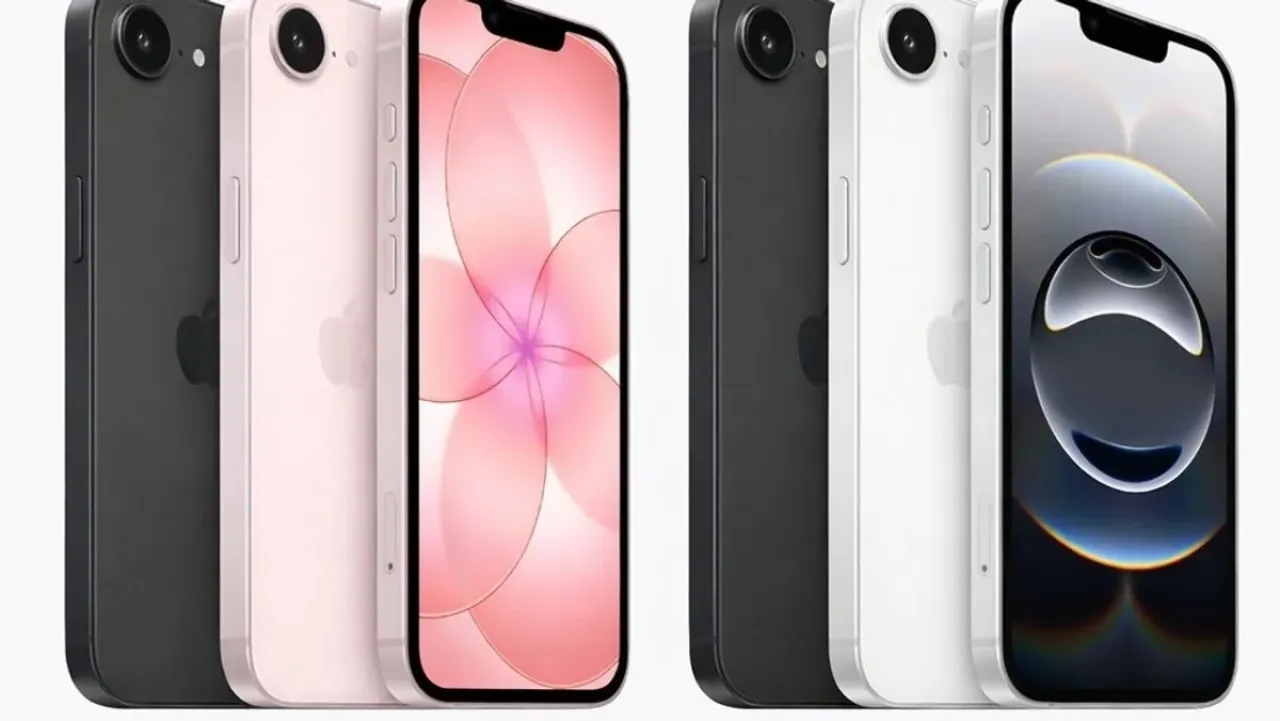
Khaberni - With the arrival of the iPhone 17e to Apple stores and its distributors, the company opens a new chapter in its economical phone category, as the device comes as a direct successor to the iPhone 16e with a package of enhancements targeting value enhancement versus price without moving away from the iPhone identity.
Apple introduced the iPhone 16e as the most economical option within the iPhone 16 series, incorporating some higher-tier features into a more economical experience. The new version maintains the same approach, but aims to further narrow the gap with higher models through significant improvements in performance and manufacturing quality.
When comparing the two phones, it is clear that they share the same design philosophy and a number of core specifications, yet the iPhone 17e excels in several areas, including improvements in the screen, increased durability, enhanced performance and connectivity efficiency, as well as updates to camera capabilities, charging technologies, and storage options.
Screen and Display Experience
Both phones maintain a 6.1-inch Super Retina XDR screen based on OLED technology, which Apple relies on in most of its modern phones to provide a high-quality viewing experience whether watching HDR video content or playing games, or reading texts with precision and clarity.
In iPhone 17e, Apple has made clear improvements in this aspect, as the phone relies on the new generation of Ceramic Shield 2 glass protection which provides up to three times the scratch resistance compared to the previous generation, in addition to an anti-reflective layer that reduces glare when using the phone in bright environments.
Furthermore, the peak brightness of the screen in HDR content reaches 1200 nits, making the use of the phone and reading content clearer in daylight.
Conversely, the iPhone 16e features an edge-to-edge screen with HDR video support, and the screen relies on Ceramic Shield protection that provides good resistance to shocks and scratches compared to traditional glass used in smartphones.
Practically, the iPhone 17e advances in this area because it provides a more suitable screen for intensive use outside the home, especially for those who often watch content or use the phone in strong lighting or care about a higher degree of scratch resistance.
The iPhone 16e remains suitable for users who want a very good screen for daily use without the priority of the latest protection layers or additional visual enhancements.
Design
Apple maintains a known design philosophy for the iPhone series in both phones, focusing on durability and manufacturing quality.
In the iPhone 17e, the company relies on an air-grade aluminum structure, which provides a mix of sturdiness and lightness. The phone also comes with an IP68 standard for water and dust resistance, in addition to the more scratch-resistant Ceramic Shield 2 front interface, with an anti-reflective layer on the screen.
The phone is available in three colors: black, white, and soft pink.
Meanwhile, the iPhone 16e also comes with IP68 standard for water and dust resistance, with the Ceramic Shield front interface providing a good level of protection, and was available in just two colors: black and white.
In terms of actual use, the iPhone 17e provides a more complete look in terms of durability and flexibility in choice, and is better suited for users who care as much about the external appearance as they do about the specifications, or those looking for an economical phone that feels closer to higher-end models.
Conversely, the iPhone 16e remains suitable for those primarily focused on the essence of the experience and do not consider a variety of colors or slight improvements in manufacturing materials a decisive factor in their purchase decision.
Performance and Artificial Intelligence
The iPhone 17e comes equipped with the A19 chip built with 3 nanometer technology, providing higher performance and better energy efficiency. The six-core central processing unit delivers fast performance for daily tasks and running artificial intelligence applications.
The chip also includes a quad-core graphics processing unit supported by Neural Accelerators technology which helps speed up artificial intelligence operations and the operation of machine learning models.
The 16-core neural engine works in integration with these accelerators to provide faster performance for Apple Intelligence applications.
Conversely, the iPhone 16e relies on the A18 chip which also provides strong performance with high energy efficiency. The chip includes a six-core central processing unit that delivers up to 80% faster performance compared to the A13 Bionic chip, along with a quad-core graphics processing unit that supports the running of advanced games and hardware-based ray tracing technology for improving lighting and reflections within games.
Additionally, the phone includes a 16-core neural engine for running artificial intelligence models up to six times faster compared to the A13 chip.
In this area, the iPhone 17e is notably more powerful and sustainable for users looking for the longest operational lifespan in terms of performance, those interested in artificial intelligence applications and heavy games, or those planning to own a device that maintains its efficiency for years without significant degradation.
Conversely, the iPhone 16e remains a suitable choice for a wide range of users who need fast and reliable performance for daily tasks, such as browsing, photography, and using popular applications, without necessarily possessing the latest processing capabilities or the strongest graphical performance offered by Apple in its latest generation.
Connectivity and Modem Technologies
In terms of connectivity, Apple introduces the new C1X modem with the iPhone 17e, promising speeds up to twice the performance of the C1 modem used in the previous generation, alongside an energy efficiency that is about 30% higher compared to the modem adopted in the iPhone 16 Pro, positively reflecting on battery life and daily usage experience.
Conversely, the iPhone 16e relies on the C1 modem, the first cellular modem developed by Apple, providing fast and stable 5G connectivity with good energy efficiency.
Based on this, the balance clearly tips in favor of the iPhone 17e, especially for users who heavily depend on cellular data, frequently move between networks, or seek the best possible balance between connectivity speed and battery preservation.
Conversely, the iPhone 16e remains a sufficient choice for those who will not notice a significant difference in most conventional usage scenarios, especially with more reliance on Wi-Fi networks or non-intensive use of cellular connectivity.
Camera and Shooting Capabilities
The iPhone 17e maintains the 48 megapixels main Fusion camera, but offers improvements in image processing that allow for capturing more natural portrait photos with smoother background blurring effects.
Additionally, the phone can automatically recognize different elements within photos, retaining depth information so that images can later be converted to portrait photos and refocus after the fact.
The phone also supports shooting video at 4K resolution with Dolby Vision up to 60 frames per second, plus recording spatial audio and noise reduction technologies using machine learning algorithms.
Meanwhile, the iPhone 16e also uses a 48 megapixels main Fusion camera with two-level optical zoom, providing the user with a two-camera experience in one camera.
The phone supports night mode and portrait mode shooting, in addition to 4K Dolby Vision video recording and spatial audio recording with the ability to edit sound using Audio Mix.
When looking at the practical difference, the iPhone 17e appears more attractive for the user interested in personal photos, shooting family members and pets, and wants smarter and more flexible results in post-capture processing.
On the other hand, the iPhone 16e remains a suitable choice for those wanting a strong and reliable camera for capturing daily photos and high-resolution video without needing the latest software enhancements in portrait photography.
Battery and Charging
The iPhone 17e offers improvements in battery and charging technologies thanks to the efficiency of the A19 chip and the C1X modem, also supporting fast wired charging that can charge the battery to 50% in about 30 minutes.
The phone also supports MagSafe technologies alongside the Qi2 standard for wireless charging at speeds up to 15 watts, allowing the use of a wide range of magnetic accessories.
Meanwhile, the iPhone 16e offers a long battery life thanks to the efficiency of the A18 chip and C1 modem, and supports standard Qi wireless charging at 7.5 watts, plus charging via the USB-C port.
In this aspect, the iPhone 17e is more suitable for users who care about charging speed, accessory diversity, and ease of use with chargers and magnetic mounts, especially since MagSafe is introduced to this category for the first time.
Meanwhile, the iPhone 16e remains appropriate for users who do not see fast wireless charging or the magnetic system as a primary priority, and are satisfied with a good battery life with more traditional charging methods.
Artificial Intelligence Features and System
The iPhone 17e comes with the iOS 26 system that introduces a new design called Liquid Glass that gives the system interface a more vibrant appearance, also offering additional artificial intelligence features such as Live Translation inside messages and FaceTime and the phone, expanding the capabilities of Visual Intelligence to operate directly on the screen content. The system also offers features like Call Screening and Hold Assist for managing calls.
Conversely, the iPhone 16e runs with the Apple Intelligence ecosystem that provides features such as the removal of unwanted elements from photos using the Clean Up tool, searching within photos using natural language, creating custom emoji Genmoji, in addition to smart writing tools and integrating ChatGPT within Siri.
This ecosystem also runs most artificial intelligence models directly on the device to maintain user privacy.
In terms of suitability, the iPhone 17e fits more for the user who wants to take advantage of the latest system features and artificial intelligence, especially in instant translation, interaction with on-screen content, and managing calls and daily tasks more smartly.
Meanwhile, the iPhone 16e remains a good choice for those who want to enter the world of Apple Intelligence and benefit from basic artificial intelligence tools without necessarily needing the latest additions that came with the newer system.
Value for Money
The iPhone 17e starts with a storage capacity of 256 gigabytes, which is double the base capacity of the previous generation, with a 512 gigabyte version also available, while Apple has kept the starting price of the phone at $599.
Meanwhile, the iPhone 16e was offered in three storage capacities: 128 gigabytes, 256 gigabytes, and 512 gigabytes, also starting at a price of $599.
In terms of purchase value, the iPhone 17e appears to be a better deal for the user who wants the most benefit from the same amount because it offers a higher storage capacity from the start with clear improvements in several other aspects.
Conversely, the iPhone 16e may be suitable for those who find lower price offers from some distributors, or do not need 256 gigabytes initially, and just want to enter the iPhone economic category at the lowest possible cost when discounts are available.
What is the best choice?
If the user is looking for the latest, strongest, and most future-ready phone with a better screen, latest charging, broader artificial intelligence, and faster connectivity, then the iPhone 17e is the best choice.
But if the goal is to get a modern iPhone experience with strong performance, a very good camera, and important artificial intelligence features, without the necessity of having the latest Apple has offered in this generation, then the iPhone 16e remains a suitable option, especially if available at a lower price than its official launch price.