Khaberni - Bluetooth technology is one of the most widespread wireless protocols, connecting billions of devices around the world. However, this broad prevalence has made it an attractive target for cybercriminals, as the main danger lies in the fact that this technology operates in the open radio frequency range (2.4 GHz) and relies sometimes on complex protocols that contain software vulnerabilities in encryption or authentication methods.
While users increasingly focus on passwords and encrypted Wi-Fi networks, Bluetooth remains constantly active in their pockets, broadcasting signals in the air, often open and unguarded. This contradiction makes it one of the most appealing vectors for attack and one of the least noticed in contemporary digital security.
The Old Protocol in a Fast-Paced World
Bluetooth was introduced in the late 1990s as a wireless alternative to short cables. Since then, it has accumulated multiple protocol versions and extensions, creating what security researchers describe as structural vulnerabilities that are difficult to fix without breaking compatibility with older devices. The deeper structural problem is that Bluetooth was not originally designed with security as a priority.
What makes matters more concerning is that when Bluetooth is enabled, it continuously broadcasts advertising pulses that reveal the presence and type of the device, even if it is in a non-discoverable mode, allowing attackers to identify their target and choose appropriate vulnerabilities.
Technical Risk Angles in the Bluetooth Protocol
The security risks in Bluetooth vary based on the protocol version and how it is implemented in the mobile device, and can be divided into three main categories:
1. Implementation Vulnerabilities
These vulnerabilities do not exist in the Bluetooth "design" itself but in the way companies write the software that operates it.
- BlueBorne Vulnerability: The American security company Armis revealed this vulnerability that allows attackers full control over devices without needing pairing or even having the device in discoverable mode, where its danger lies in its ability to spread from one device to another like a virus through the air.
- BrakTooth Vulnerability: Research from the Singapore University of Technology and Design uncovered a set of vulnerabilities affecting more than 1400 commercial products, leading to device crashes or the remote execution of malicious software.
2. Pairing Protocol Weaknesses
During the pairing process, encryption keys are exchanged; if this process uses outdated methods like "Just Works," an attacker can intercept the keys.
According to a report from Oxford University, this vulnerability allows an attacker to trick the device into establishing a secure connection with a malicious device by forging the identity of a previously paired trusted device.
3. Location Tracking and Privacy
Even without breaching data, Bluetooth can be used to track users, as devices emit signals informing other devices of their presence. Retailers or attackers can use these signals to precisely map your movements within buildings.
Practical Protection.. What You Should Do Now
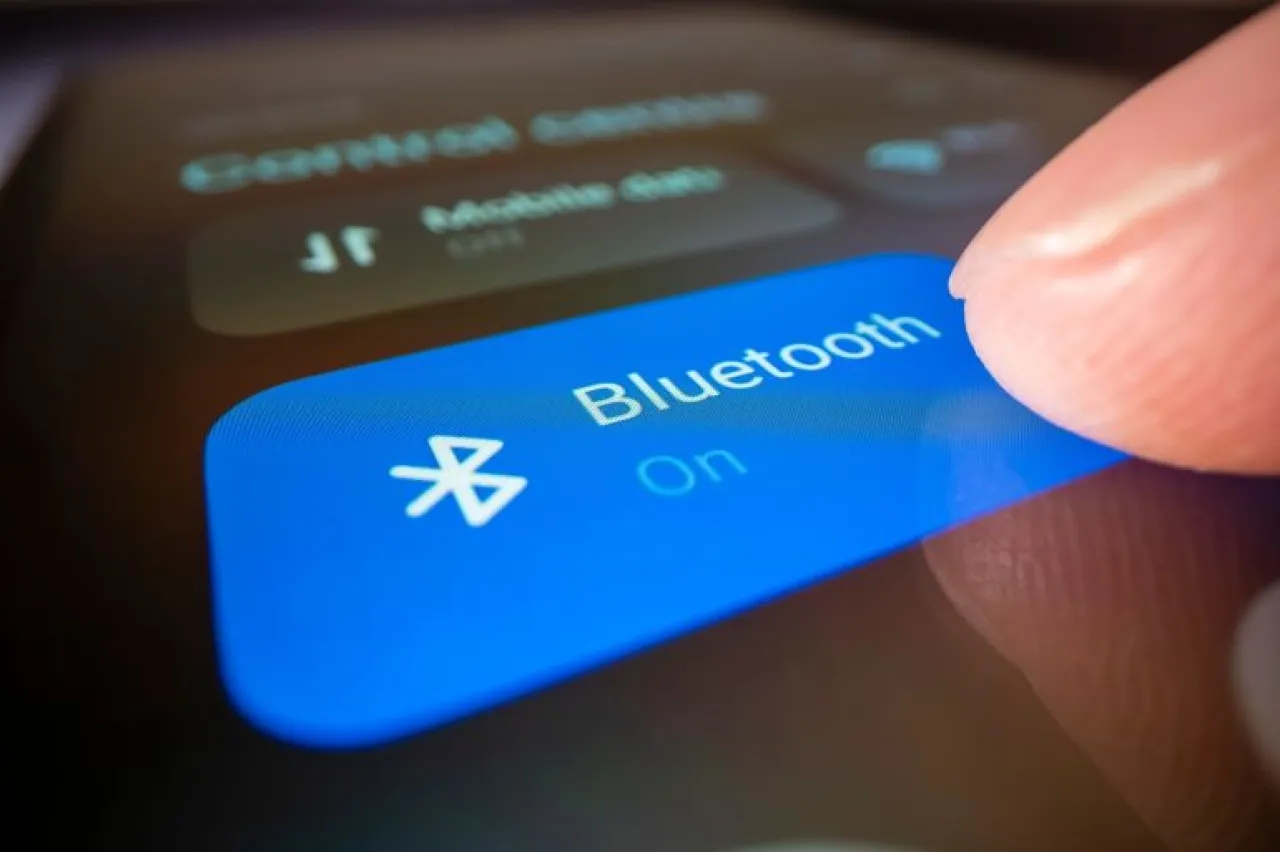
- Turn off Bluetooth when you don't need it—this simple and most effective advice, as no protocol can be attacked when disabled.
- Update your system immediately without delay, as most major vulnerabilities are patched by updates from Google, Apple, and Microsoft.
- Do not accept pairing requests from unknown sources, as any unexpected request in a public place should be immediately rejected, especially in airports, hotels, and shopping centers.
- Regularly review the list of paired devices and delete any device you do not remember, as old devices can be an open vulnerability if they fall into the hands of others.
- Pay attention to your headphones, as Airoha vulnerabilities have proven that headphones are not just a sound tool, but can also be a bridge to hacking your phone.
- Use the "non-discoverable" mode in public places.
- Pay attention to your car as well, as vulnerabilities remind us that Bluetooth is not limited to the phone;