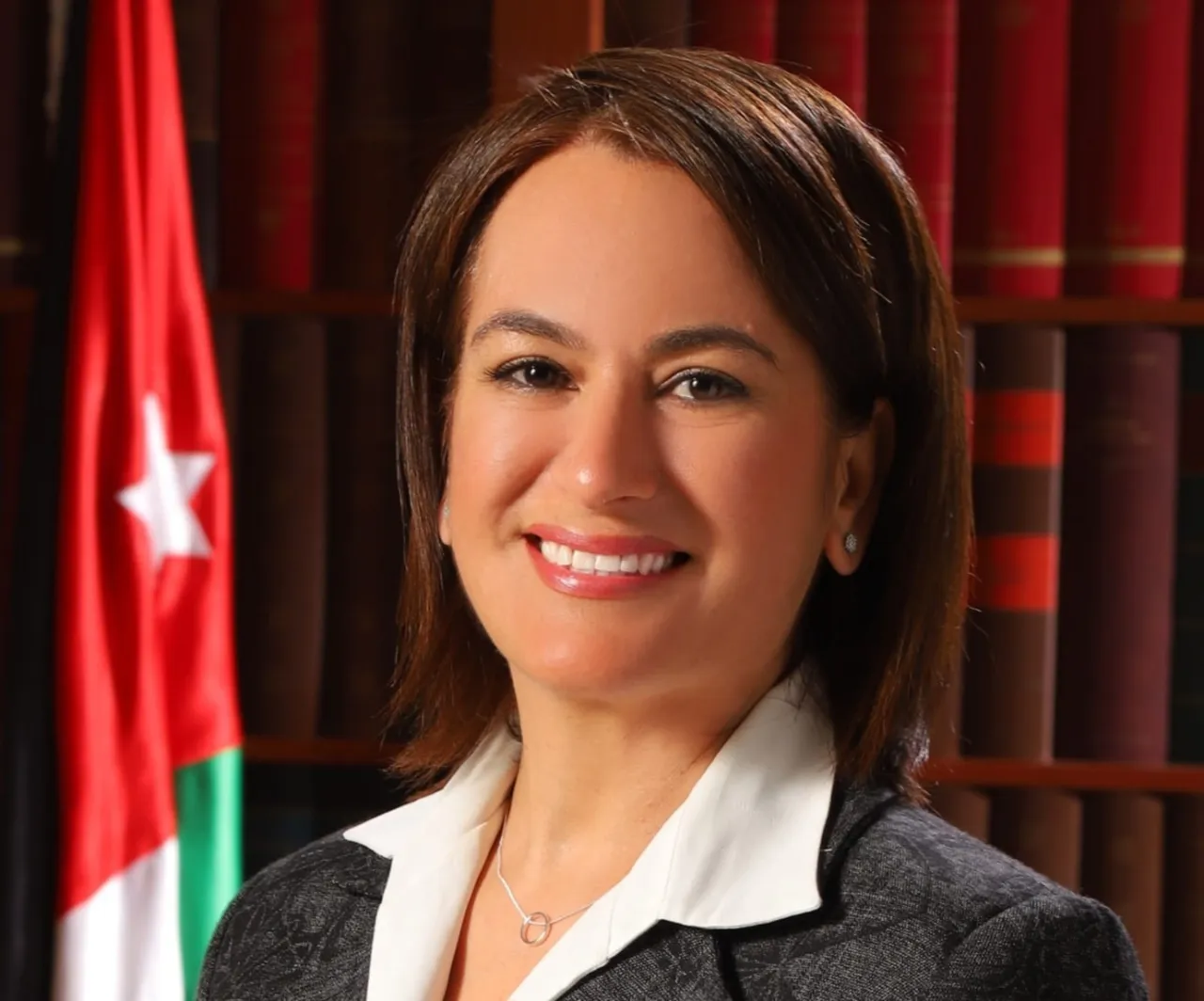
By Dr. Amal Jabour
In recent weeks, the Moroccan Sahara dossier has returned prominently in the political debate in Washington, but from a different angle this time. There have been calls within Congress to study the possibility of classifying the Polisario Front, the main party in the Sahara conflict, a terrorist organization. Ten members of Congress joined a bill requesting the U.S. administration to consider this classification, a step that not only relates to developments in the Sahara conflict but also extends to considerations of regional security in North Africa and the Sahel area.
What is striking is that these calls coincided with rising tensions in the Middle East and the confrontation between the United States and Israel on one hand, and Iran on the other hand. This raises a question: Why now? And is the debate on classifying the Polisario connected to these tensions, or does it primarily relate to North Africa and the Sahel region?
This discussion has moved to the U.S. Senate following a similar initiative in the House of Representatives, reflecting that the topic is beginning to take on a legislative character in Washington. Three members of the Senate, Ted Cruz, Tom Cotton, and Rick Scott, introduced a bill calling for the designation of the Polisario Front as a terrorist organization. Therefore, this step gains its significance from the accompanying statements, as Cruz warned that Iran might seek to turn the front into a “West African Houthis” by providing drones and logistical support. This reflects a belief among some U.S. politicians that there may be potential links between the front and Tehran, warning of Iran's attempts to expand its influence in North Africa and the Sahel by supporting local parties, alongside other powers like Russia and China. Consequently, these statements lend a political dimension to the debate, not only related to the Sahara conflict but also to broader security and geostrategic concerns in the region.
Although these claims are still part of the political controversy in Washington, they can be interpreted from more than one angle. The first of these angles relates to the situation of the Sahara conflict within a wider security context, linked to the developments in the Sahel region and the spread of armed groups. With the escalating security challenges in this region over the past decade, some political circles in Washington are starting to view the conflict in the Sahara not merely as a political issue revolving around negotiations sponsored by the United Nations, but also as a file intersecting with equations of stability and security in North Africa and the Sahel, as part of a broader regional security system.
The American focus on the security dimension of the conflict explains the acceleration of the unannounced negotiations recently sponsored by Washington among the conflict parties to discuss details of implementing autonomy in the Moroccan Sahara, where handling the file has moved beyond mere political dialogue to become a strategic tool to ensure stability and contain any threats linked to regional security.
And if the American focus on the security dimension explains the acceleration of negotiations and their sponsorship, these moves cannot be understood apart from the broader context of international competition in Africa. The U.S. interest in the Moroccan file falls within a strategic reading of the international influence equations on the continent, where multiple regional and international powers, most notably China and Russia, seek to expand their political, economic, and military presence. Iran attempts to exploit vacuums to enhance its presence in some areas, making the Polisario Front part of a larger influence equation that goes beyond the borders of North Africa and the Sahel.
What unites all these moves in Washington is a new and clear vision of the conflict in the Sahara as a strategic security issue, not just a regional political dispute. From this perspective, it seems that the acceleration of negotiations, U.S. sponsorship, and limiting the tasks of the United Nations Mission for the Referendum in Western Sahara (MINURSO) to monitoring the ceasefire, are all steps aimed at controlling the arena and pressuring the funding sources of the Polisario, as the Moroccan proposal for autonomy is reinforced as affirmed by the UN resolution number 2797 from another side.
Here, this situation poses a set of important questions linked to the contexts of the American-Israeli war on Iran: Does the escalating debate over classifying the Polisario reflect American concern about Iran's ability to expand its influence, especially with its control over the Strait of Hormuz and its disruption of maritime navigation, and its adoption of militias in strategically important areas? How does this threat reflect on the stability in North Africa and the Sahel, and on the American calculations in the Moroccan Sahara? And does the building of large ports and maritime outlets, like the large Dakhla port being built by Morocco to act as a gateway to the African continent, become a pivotal factor in protecting regional security and preventing any attempt at threatening influence expansion? And does all this mean that merely proposing the classification of the Polisario is not a passing political debate, but an indicator of changing priorities and Washington's approach in dealing with the conflict?
In my assessment, the American concerns about Iran have expanded beyond the direct military conflict to include control over vital passageways and ports defining the regional balance of power. Iran's geographical advantage in controlling the Strait of Hormuz, thereby affecting global maritime navigation and the global economy's lifeline, gives Washington exceptional importance to all strategic points globally, including the large Dakhla port, potentially a future gateway to the African continent. In this context, the presence of armed militia forces near these points becomes a threat to regional and global security, which explains Washington's approach to classifying the Polisario as a terrorist organization, and its support for the Moroccan initiative for autonomy to ensure regional stability and enhance Moroccan sovereignty.
But the matter doesn't stop here; today's international files are closely interconnected. The American-Israeli war on Iran, the Russian-Ukrainian conflict, the decline in European influence, along with the expansion of Russian and Chinese influence in Africa and competition for managing this planet, are all factors making the management of regional security by Washington linked to global geopolitical calculations. Therefore, classifying the Polisario and supporting Morocco as a reliable partner is not just a local action, but an indicator of a broader shift in the way the conflict is approached: from dealing with it as a limited negotiation file to including it within strategies to control influence, secure sea passages, and protect the stability of North Africa and the Sahel and its need for various African resources over the long term, marking an indicator of the new game rules that will govern the region in the coming years.