Khaberni - The World Food Programme announced the suspension of monthly food assistance provided to refugees outside the camps starting from April (April) next, in a move that reflects the depth of the funding crisis facing humanitarian programs in the kingdom.
The program clarified that the decision comes as a result of what it described as "the ongoing funding crisis that forces the program to make difficult decisions due to limited available resources," noting that the suspension of assistance will include all refugees benefiting from the program outside the camps, of various nationalities and in all Jordanian provinces.
The program had informed the refugees that March would be the last month this assistance is provided for them, according to Al-Ghad.
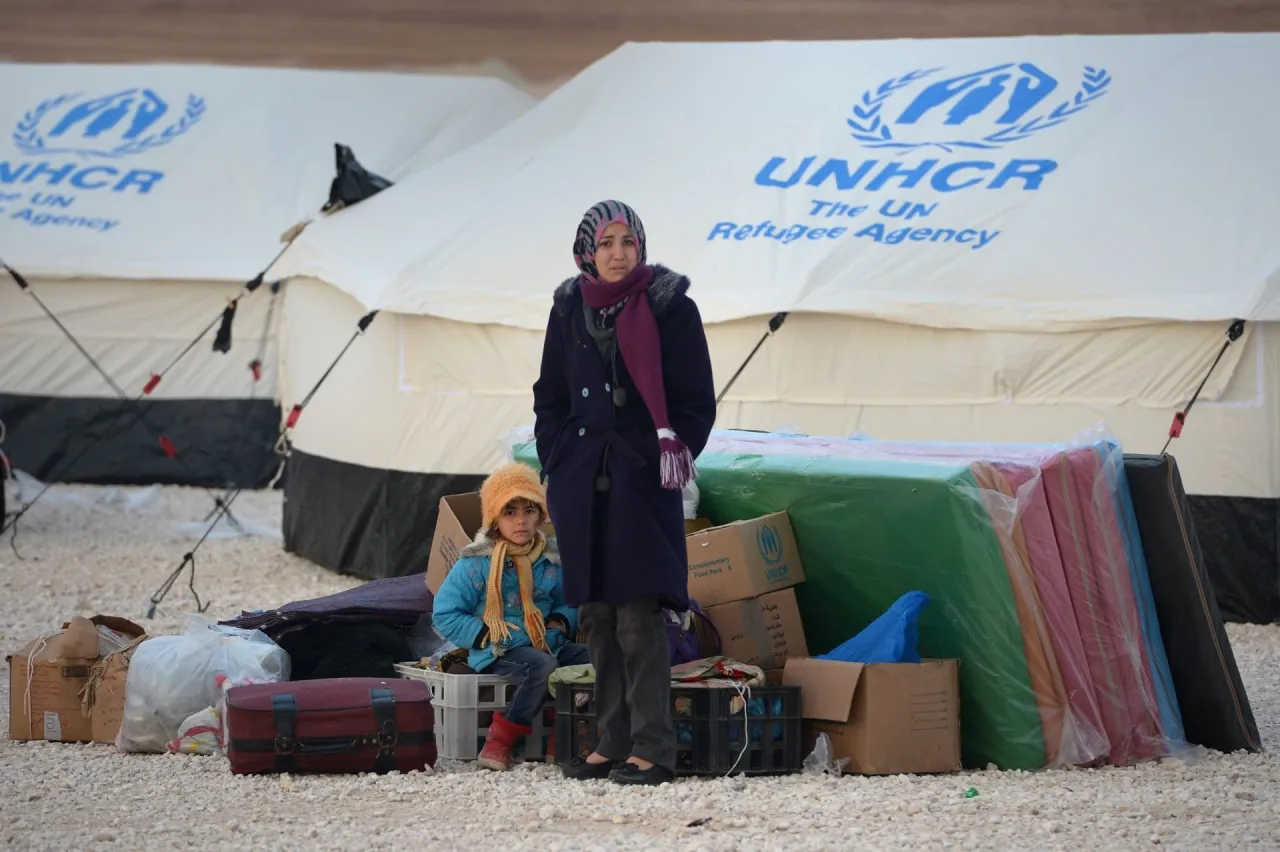
The decision comes at a time when hundreds of thousands of refugees in Jordan are living in difficult economic conditions, where many depend on food and cash assistance to meet their basic needs, while the decision reflects the increasing challenges that humanitarian organizations face in maintaining support programs amid declining international funding allocated for protracted refugee crises.
The program indicated in its report last month that severe funding restrictions had already limited the scope of aid in recent months, with reduced monthly food assistance valued at 15 dinars (21 dollars) per person for approximately 220,000 refugees in both camps and local communities in January 2026, noting that this level of support "was only sufficient to cover the minimum basic food needs".
According to the program, the current priority is concentrated on securing the necessary funding to meet the urgent food needs of refugees in Jordan. However, the resources currently available are only sufficient to continue providing monthly cash assistance to all refugees in camps and host communities until April 2026, which means that food programs are at risk of stopping in case additional funding is not available.
Field indicators reflect a decline in purchasing power among many refugee families, which has even affected their daily food pattern.
Days ago, the United Nations High Commissioner for Refugees published a message on its social media account reflecting the reality of many families, which read: "The Ramadan table for many refugee families is no longer as full as it was before. With decreased funding, the foods they used to buy… many of them can no longer afford them".
In light of these developments, refugee families expressed deep concern about the decision to halt food assistance, as a group of families sent "an urgent humanitarian appeal" to the High Commissioner for Refugees in Jordan and the World Food Programme in Jordan.
The appeal stated: "We raise this urgent appeal to you on behalf of thousands of refugee families who received with great concern the news about the decision to cut off food assistance (the coupons). We implore you with hearts filled with hope in your human conscience and high morals, to reconsider this decision which puts thousands of families directly at risk of hunger".
The families added in their message: "The current living situation of refugees in Jordan can by no means bear the discontinuation of this essential support, which represents the only lifeline for many children, women, and elderly".
The appeal urged the concerned organizations "to work on finding alternative solutions and provide an urgent safety net to ensure the continuation of support for refugees who fully rely on these aids".
According to the program estimates, the World Food Programme in Jordan needs about 46 million dollars to meet the basic needs of refugees until the end of 2026. It also needs an additional 9.3 million dollars to ensure the continuation of the school feeding program throughout the kingdom until the end of the year.
The school feeding program benefits about 90,000 children from the most vulnerable groups, providing them with nutritious meals that contribute to improving their health and supporting their regular attendance at school and enhancing their academic achievement.
With the ongoing funding gap, humanitarian organizations warn that the reduction in food assistance may push more refugee families into harsh living options, at a time when a broad segment of them relies on these programs as a main source for securing the minimum daily food.