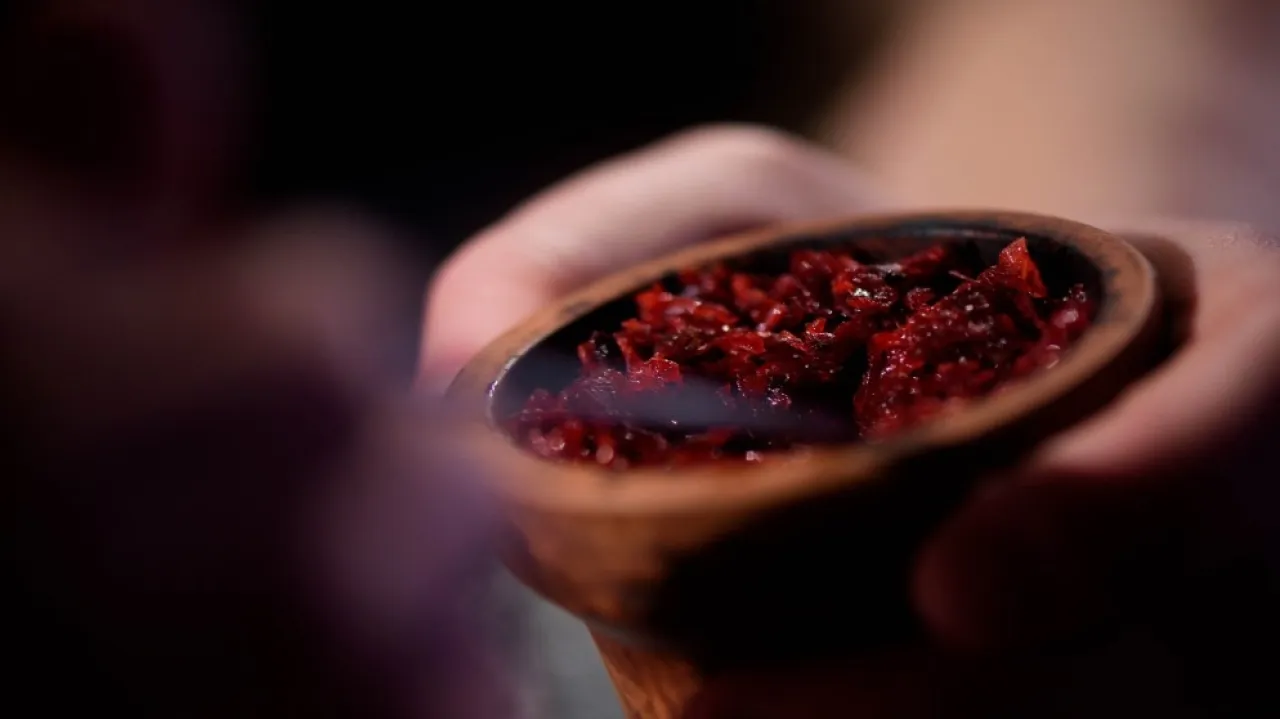
Khaberni - The Income and Sales Tax Department would like to remind hookah tobacco merchants in the Kingdom of the necessity to comply with the prohibition of bulk sales in the local market starting from the first of April 2026, based on the foundations, controls, and conditions for licensing and operating hookah tobacco factories for the year (2025).
The department confirmed that the sale of hookah tobacco in the local market from this date will exclusively be through standardized packages approved according to the conditions set by the Income and Sales Tax Department and the General Customs Department, and its bulk sale or circulation will not be allowed thereafter.
The department explained that this measure falls within the framework of regulating the manufacturing and circulation of hookah tobacco in the Kingdom, enhancing various forms of control, and ensuring compliance with prevailing legislation and instructions.
The department calls on all hookah tobacco merchants to take the necessary measures before the implementation date, to ensure compliance with the defined controls and instructions.
The department explained that in order to control and regulate the manufacturing processes of hookah tobacco in the Kingdom, and in a way that specifies the executive, legal dimensions and the tax obligations and requirements that must be met in hookah tobacco factories, it is decided to adopt foundations, controls, and conditions for licensing and operating hookah tobacco factories for the year (2025) pursuant to the provisions of paragraph (b) of Article 75 of the 1994 General Sales Tax Law and its amendments.
Here are these foundations, controls, and conditions:
First: Location: The licensed location for establishing a hookah tobacco factory must be within industrial cities or industrial areas that allow this, and not within areas classified (agricultural or residential) or classified for an activity other than industrial activity.
Second: Factory space: The factory's production-equipped area must not be less than 1000 square meters, which is considered sufficient for the production requirements within the public safety standards.
Third: Employees: The factory must employ permanent Jordanian employees, with no less than (10) employees, and they must be enrolled in social security according to the law.
Fourth: Production: The production of hookah tobacco must be in accordance with the conditions, foundations, and standards issued by the specifications and standards to their lowest limit.
Fifth: Records and Documents: The factory must organize computerized accounting records, documents, and the necessary paperwork to organize financial entries and prepare the final financial statements, which must be audited by a chartered accountant according to regulations.
Sixth: The factory must adhere to submitting monthly specialized sales tax declarations and general sales tax every two months, and comply with paying the tax on time without delay.
Seventh: The factory must register systems that allow tax control procedures and all other control procedures.
Eighth: The factory must have inventory systems for production supplies and inputs and their outputs as per regulations, enabling tax auditing.
Ninth: Damaged goods: Must be proven by actual entries, matching the original records, and can only be disposed of in accordance with laws and direct supervision from the related authorities.
Tenth: The factory must comply with presenting the guarantees and sureties requested by the government departments from hookah tobacco factories to process their transactions and not violate the legislation and their allocated purpose.
Eleventh: Not to allow bulk sales of hookah tobacco in the local market, and it will be sold in packaging according to the conditions specified by the Income and Sales Tax Department and the General Customs Department starting from the date 2026/4/1
Twelfth: Currently existing hookah factories are given a period not exceeding one year to adjust their status according to these foundations and controls.