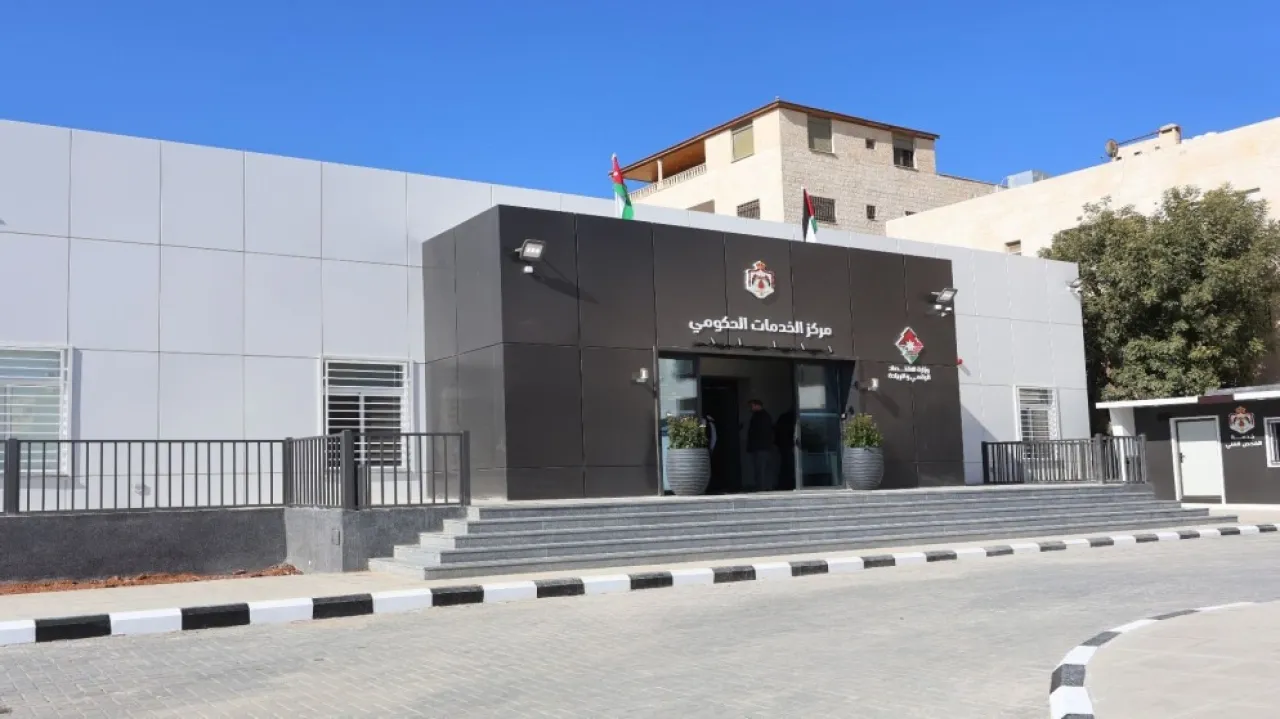
Khaberni - Announced by the Minister of State for Public Sector Development Badriya Al-Balbisi, the launch of the project to evaluate the efficiency of spatial government service centers and their geographical distribution, which is part of the government services and procedures components in the framework of the second executive program for the modernization of the public sector (2026-2029).
Al-Balbisi said during the launch, which was attended by the head of the Civil Service and Administration Agency, Fayez Al-Nahar, on Sunday at the Prime Ministry, that the project aims to develop the system of government service centers and enhance their efficiency in line with digital transformations, placing the citizen at the center of the service provision process.
She pointed out that the project will contribute to enhancing the government's ability to make well-studied strategic decisions regarding these centers that should continue, be developed, merged, reconsidered, and distributed geographically, aiming to enhance the quality of services provided to citizens.
She indicated that the project will contribute to assessing the current network of government service centers in terms of geographic distribution, level of use, the extent of their integration with digital channels, and proposing an improved map of the centers that ensures equal access to services for citizens, while achieving operational efficiency and rationalizing government spending, and improving the business environment.
It will also contribute to providing recommendations based on evidence and an implementation plan that includes identifying the centers that should continue, be developed, merged, or reconsidered and distributed geographically. It will also develop unified tools for collecting and analyzing data covering more than 100 government entities and more than 1100 service centers, and build the capacity of government agencies to ensure the sustainability of using the evaluation model in future planning.
Al-Balbisi also highlighted that there is a widespread network of government service delivery centers scattered across various governorates of the kingdom, noting that although digitization has become the first choice for providing government services, considered as one of the fundamental pillars for developing services and improving their efficiency and ease of access, the nature of some services and the conditions associated with obtaining them still require their provision in person in several cases.
She emphasized that the adoption of a multi-channel system for service delivery is one of the important principles to ensure comprehensive service and equitable access to it, stressing that the goal of developing the government service delivery system is not to replace one channel with another, but to achieve integration among the various service delivery channels, including digital channels and spatial centers, so that the citizen can obtain the service in the easiest and most appropriate way for their needs.
Al-Balbisi concluded by affirming that the project to assess the efficiency of spatial government centers is a strategic investment in the future and a clear path towards modern government management, more responsive and more transparent. She said, "With the spatial map, we move together towards government services that meet the aspirations of citizens and reflect the vision of His Majesty King Abdullah II in modernizing the public sector and enhancing its efficiency at the level of every governorate in the kingdom."
During the launch, Al-Balbisi listened to a briefing from the concerned parties and experts about the project, which will determine the mechanism for evaluating spatial service centers and the method of collecting data about these centers, finding the most effective ways to take actions that contribute to enhancing their efficiency and redistributing them geographically, which will reflect on providing the best services to the citizens.