Khaberni - With the advent of Ramadan, the movement of Syrian refugees returning from Jordan to their homeland has taken on a quieter curve, reflecting the complexities surrounding the decision to return, which is not only linked to political or security developments, but is also affected by living conditions, seasonal factors, and the refugee families' calculations regarding stability, education, and work.
According to the United Nations High Commissioner for Refugees (UNHCR) in Jordan, more than 350 Syrian refugees registered with the UNHCR returned from Jordan to their homeland between February 22 and 28, representing a 65% decrease compared to the previous week, which saw around a thousand refugees return.
This decline coincides with an overall reduction in return rates since the beginning of Ramadan, as many refugees prefer to postpone their movements during this period for social and subsistence reasons.
The UNHCR closely monitors regional developments and recent escalations in the area, while ensuring that refugees have sufficient and reliable information about the return conditions, enabling them to make informed decisions about voluntary return to their countries.
Despite this weekly decline, the number of returnees since the end of 2024 remains relatively high. According to UNHCR data, more than 185,000 Syrian refugees registered with it have returned from Jordan to Syria since December 8, 2024, reflecting the continuing return movement, albeit at an inconsistent pace, affected by seasonal, economic, and security factors.
In a broader regional context, the UNHCR estimates that about 1,488,667 individuals have returned to Syria from other countries since the same date. Damascus Governorate remains the main destination for returnees, followed by the governorates of Aleppo, Idlib, Homs, and Rural Damascus, reflecting the continued return of many Syrians to the areas they originate from or where they still have family or residential networks.
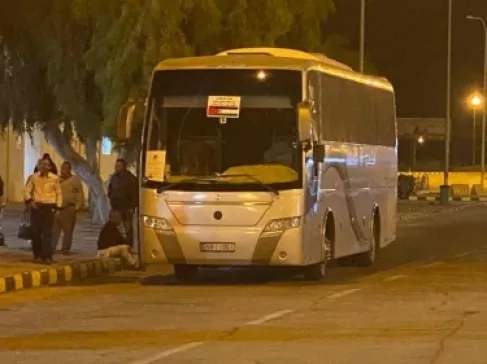
According to the UNHCR, more than 5,000 refugees have received cash assistance as part of the pilot program for voluntary return launched in September last year, in an attempt to support refugees during the initial transition phase after their return. More than 10,500 refugees have used buses provided by the UNHCR to return to their homeland from Jordan since January 2025, as part of transport arrangements that help families arrive at the borders safely and in an organized manner.
The latest post-distribution monitoring assessment, conducted between September 30, 2025, and February 25, 2026, among beneficiaries of cash assistance for return, revealed that returnee refugees primarily spend this assistance on basic needs, including buying food, water, and clothing, in addition to transportation costs within Syria and debt repayment accumulated over the years of displacement.
The UNHCR supports some organized return movements in coordination with the International Organization for Migration (IOM), where in-depth interviews are conducted with refugees willing to return voluntarily within the camps, and advice is provided to them regarding procedures and available options before referring eligible cases to the IOM to arrange transportation.
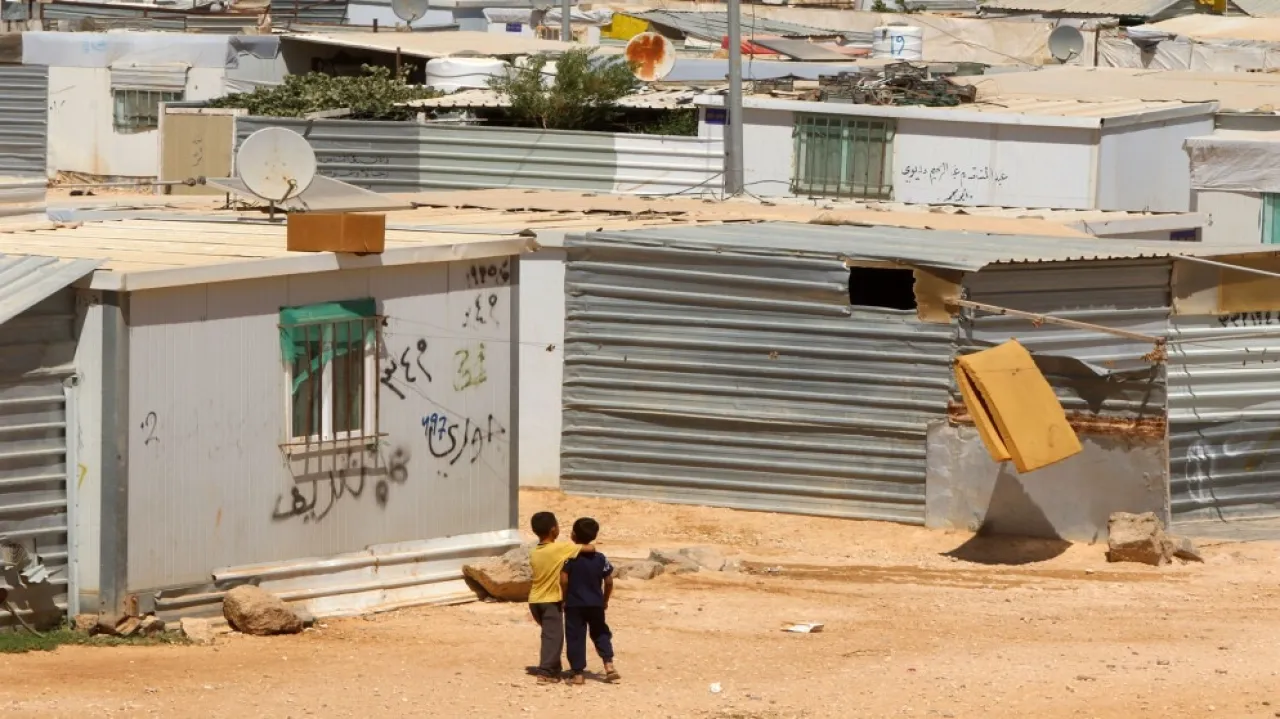
In one of these operations, the IOM supported a return movement involving 27 refugees from the Azraq camp, after the UNHCR conducted interviews with them and provided the necessary advice in preparation for this step, with the IOM covering the transportation costs and logistical coordination for the departure process.
The UNHCR reports that during 2025 alone, it assisted more than 55,000 refugees to voluntarily return to Syria, while more than half a million people received information related to the return through various digital channels, in an attempt to ensure that the return decisions are based on sufficient knowledge of the conditions inside Syria, and that the return operations are closely coordinated with the UNHCR offices inside Syria, to ensure support for the refugees upon their arrival at their final destinations.
On another note, the UNHCR expressed concern about the repercussions of the military escalation in the Middle East resulting from the war between the United States and Iran, which has resulted in civilian casualties and caused extensive damage to vital infrastructure, and has forced hundreds of thousands of residents to flee their homes.
Estimates indicate that the conflict-affected areas were already hosting approximately 25 million people, including refugees, internally displaced persons, and those newly returned to their homes, many of whom already live in difficult humanitarian conditions, so any new escalation exacerbates the fragile humanitarian situation and increases the need for a wide-ranging humanitarian response.
In this context, the UNHCR confirmed that it "will take charge of coordinating the refugee response on behalf of the United Nations and the broader humanitarian community, supporting national governments in the affected countries." Humanitarian teams are working on providing urgent relief aid and maintaining essential services for refugees and displaced persons.
The UNHCR emphasized the importance of ensuring safe passage for all civilians who need to move or cross borders in search of safety, stating that it is deeply concerned about the safety of civilians, refugees, and displaced persons in various countries affected by the recent attacks.
The organization added that it is intensifying its response to complex displacement movements and related protection needs by providing essential humanitarian aid, including the distribution of relief materials and support in the shelter sector, in addition to possessing the infrastructure necessary to rapidly expand emergency cash assistance programs as needed.
At the same time, the UNHCR warned that its humanitarian operations in several affected countries still face significant funding gaps, calling on donors to provide more financial support to ensure the continuation of humanitarian aid for refugees and displaced persons in the region.