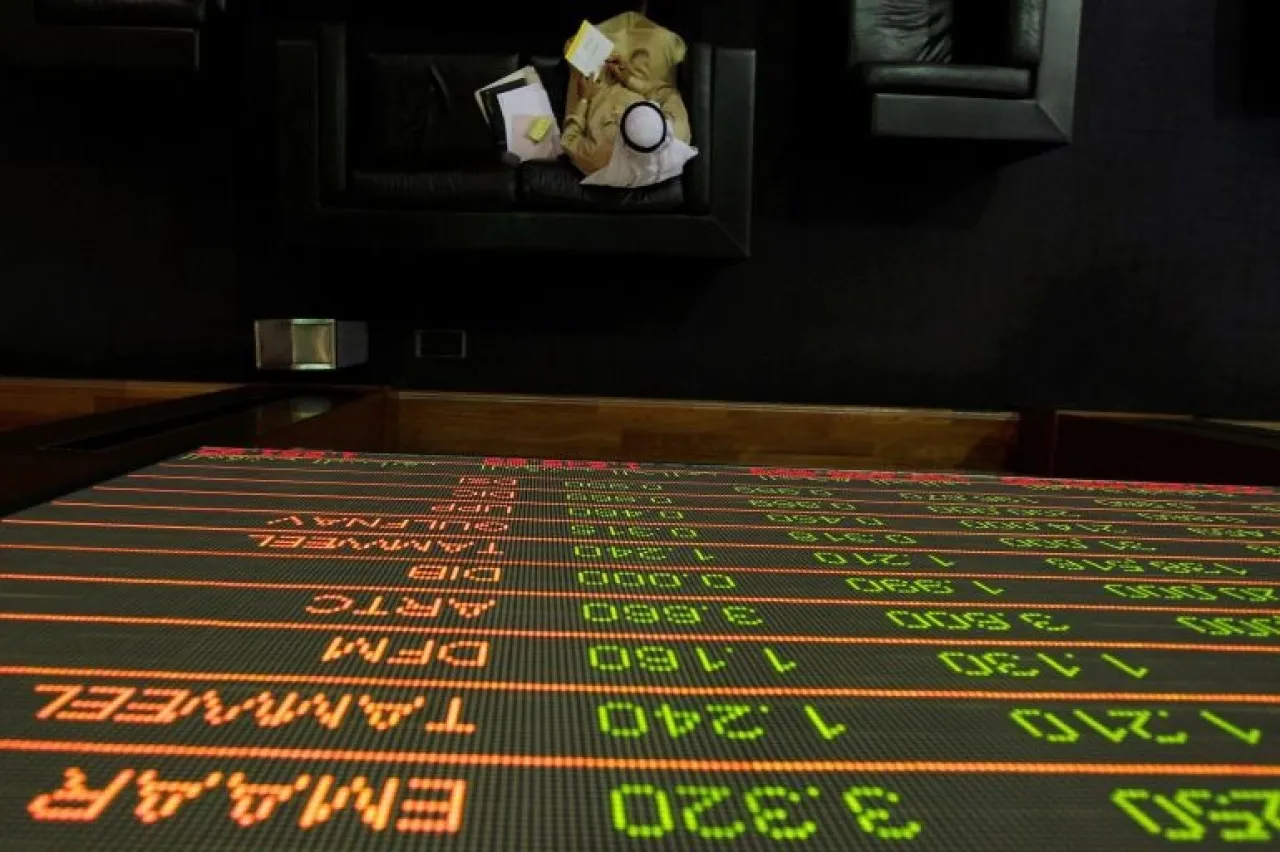
Khaberni - Most stock markets in the Gulf countries declined at the close of trading on Monday, while the Dubai stock exchange incurred sharp losses amid the ongoing US-Israeli war on Iran and an oil price surge of over 11% with dwindling supplies and escalating fears of long-term disruptions in shipping through the Strait of Hormuz.
According to Reuters, geopolitical tensions in the region directly impacted investor appetite in Gulf financial markets, at a time when traders are closely monitoring conflict developments and the potential for these to extend to global energy routes.
In this context, US President Donald Trump said on Saturday that he is not interested in negotiating with Tehran, adding that the war with Iran will only end when "this country no longer has an effective army or any remaining leadership in power," as reported by Reuters.
As political developments within Iran further dampened hopes for imminent de-escalation, after Mojtaba Khamenei was chosen as the successor to his father Ali Khamenei as the leader of the Islamic Republic, analysts considered this a sign of the continued dominance of the conservative hardline current in power.
There are significant concerns in global energy markets regarding the escalating tension around the Strait of Hormuz, through which about a fifth of the world's oil supplies typically pass, making it one of the most crucial supply points in the global energy system.
Steep Losses in Dubai and Abu Dhabi
In the Gulf markets, Dubai's main index recouped some of its earlier losses during the session and closed down 2.8%. Emaar Properties' stock dropped by 4.7%, and Salik's shares fell by 4.9%.
According to market data reported by Reuters, the index lost more than 11% in just four sessions since trading resumed last week after a two-day suspension, bringing its year-to-date losses to about 5%. Arabia for Aviation shares also dropped by 5%.
In Abu Dhabi, the general index decreased by 0.4%, marking its sixth consecutive decline, with Abu Dhabi Commercial Bank's shares dropping 4.9%.
Last week, the Dubai and Abu Dhabi stock markets decided to set a temporary minimum limit for daily declines in stock prices at 5%, in a move aimed at mitigating sharp market volatility.
Rising Credit Risks in the Region
Parallel to the stock decline, the cost of insuring against sovereign debt defaults in several countries in the region saw a noticeable increase, indicating a rise in financial risks associated with the geopolitical situation.
S&P Global Market Intelligence data, according to Reuters, showed that Bahrain registered an increase in five-year credit default swap contracts by 23 basis points compared to last Friday's closure, reaching 281 basis points, the highest level in more than three years.
Credit default swap contracts in Egypt rose by 12 basis points, while those in Saudi Arabia, Qatar, Abu Dhabi, and Dubai increased by about four basis points each.
Pressure on the Saudi Market
In the Saudi market, the benchmark index fell by 1.6%, ending a five-session streak of gains, with Al Rajhi Bank's shares dropping by 3.9% and National Commercial Bank's shares by 4.5%. Additionally, Nas Airlines shares fell by 4.4%.
Conversely, Saudi Aramco's shares rose by 0.7% ahead of its anticipated annual results, to be announced on Tuesday.
Analysts believe that Gulf markets are becoming more sensitive to any developments in the regional conflict, especially since the region's economies are closely linked to energy markets and maritime trade.
Junaid Ansari from Kamco Invest said that investors tend to favor less risky sectors in such circumstances.
He added that the Saudi market remains relatively attractive, as both the Saudi Financial Market Index and the Muscat Securities Market Index are the only markets that have remained in the green since the start of the crisis, supported by Saudi Arabia's low direct exposure and the gains made by Aramco stocks.
George Pavil, General Manager of Naga.com Middle East, said Saudi efforts to divert crude oil exports through Yanbu's port on the Red Sea have helped alleviate concerns related to potential shipping disruptions through the Strait of Hormuz.
He added that the markets could benefit more if oil prices continue at high levels and local sentiment remains strong.
Decline in Most Gulf Markets
In other regional markets, the Qatari index fell by 2.6% with nearly a collective decline in listed stocks, including Qatar National Bank's shares which fell by 2.7%.
The Bahraini index also dropped by 1.4%, while the Kuwaiti index decreased by 0.5%.
Conversely, Oman's index rose by 3.1%, making it the only market in the Gulf that ended Monday's session with gains.
According to estimates reported by Reuters, the continuation of the war and its possible expansion continues to put intense pressure on the financial markets in the region, especially with global energy flows depending on the stability of navigation in the Gulf.