Khaberni - Oil prices continued their rise, recording their highest levels since mid-2022 amid cuts by some major producers and concerns about the ongoing disruption of shipments due to the expansion of the war in Iran.
During today's trading, Brent crude futures reached $105.71 per barrel at 1:17 PM Abu Dhabi time, up 14% or $13.02, while West Texas Intermediate crude climbed to $103.06 per barrel, up 13% or $12.16.
Earlier in the session, Brent reached a record level at $119.50 per barrel, while West Texas Intermediate reached $119.48 per barrel, marking the biggest absolute rise in a single day ever. Over the past week, Brent increased by 28% and the US crude by 36%.
Economics and Energy Professor Dr. Wafaa Ali said that global markets, particularly oil and gas markets, have already begun to adjust to the implications of the ongoing war, by repricing geopolitical risks in an unprecedented manner.
She explained that the markets seem to have read between the lines, as oil prices exceeded the $100 per barrel mark, indicating that investors are actually pricing the likelihood of supply disruptions.
The Strait of Hormuz is effectively closed, through which typically about one-fifth of global oil and liquefied gas supplies pass, due to military operations, threatening consumers and companies with higher fuel prices for weeks or months even if the conflict ends quickly, as a result of halted production and disrupted logistics services and heightened risks to shipping.
The energy professor added that the risk premium has strongly imposed itself amid a state of geopolitical panic, pointing out that the current conflict is no longer just a transient tension, but has turned into something resembling a demolition of the global energy equation, as risks have become a structural element in the oil pricing mechanism.
Oil Production
Ali pointed out that the reality on the ground reveals a partial paralysis in oil production, at a time when the situation of "force majeure" dominates the scene in the energy markets, reflecting the magnitude of the turmoil facing global supplies.
On the production side, Iraq's production from its main southern oil fields decreased by 70% with storage tanks being full, while Kuwait Oil Company began reducing production and declared a state of force majeure on shipments.
Saudi Aramco announced the sale of more than 4 million barrels in rare bidding rounds. Bahrain also declared a state of force majeure after an attack on a refinery, while Saudi Arabia closed its largest refinery.
Reshaping the Energy Market
Ali confirmed that the prolongation of the conflict may redefine the features of global energy security, especially with rising insurance costs on oil shipments, describing what is happening as an economic earthquake affecting the global economy, amid oil tankers congesting at the Strait of Hormuz.
She emphasized that what is happening transcends a mere political dispute, as it represents a comprehensive reshaping of the global energy market landscape and economic power balances, stating that the oil market is particularly sensitive to geopolitical developments.
She also affirmed that the markets are experiencing a crucial moment, as they no longer only price realities but have started pricing potential catastrophic scenarios, amid concerns about supply chain bottlenecks, especially given the vital role of the Strait of Hormuz, which at peak times saw an oil tanker passing every six minutes, making a scenario of $150 per barrel highly probable as the war escalates.
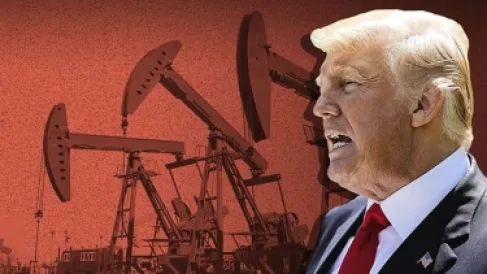
In the American market, gasoline contracts jumped to their highest levels since 2022, reaching about $3.22 per gallon, despite attempts by President Donald Trump to calm concerns about the impact of rising prices on citizens before the midterm elections in November.
Oil Price Forecasts
Financial Times reported Qatar's Energy Minister Saad al-Kaabi saying that crude oil prices might rise to about $150 per barrel in the coming weeks if oil tankers cannot pass through the Strait of Malacca, warning that such a scenario could have serious repercussions on the global economy.
Barclays Bank mentioned in a report issued on Friday that Brent crude prices could rise to about $120 per barrel if the conflict in the Middle East continues for several more weeks.
The bank clarified that these levels might seem high amid the pessimism that prevailed in oil market forecasts at the beginning of the year, but it emphasized that the fundamental factors of the market have become stronger, while the risks are greater than the Ukrainian war, making oil prices tend towards an increase.