Khaberni - Observation
During his visit to a number of medical facilities and centers today, Sunday, March 8, 2026, Iranian President Masoud Bazshakian said, "Tehran has repeatedly stated that 'we are brothers with neighboring countries and we want to maintain good relations with them.'"
He warned that his country "will have to respond" if the territories of neighboring countries are used to launch attacks against it, affirming that his statements "were distorted by the enemy who seeks to sow discord with the neighbors."
He continued: "It has been said repeatedly that we are brothers and our relations with our neighbors should be good. However, we are forced to respond to attacks, but this does not mean that we have a conflict with a (neighboring) state or that we want to provoke the anger of its people."
Yesterday, Saturday, the Iranian president apologized to the neighboring countries after targeting them with attacks in the past few days, stating that the interim leadership council agreed to suspend the attacks unless an attack is launched from those countries against Iran.
Bazshakian said, "I apologize to the neighboring countries and we have no animosity towards them," adding, "We must work with the neighboring countries with the aim of ensuring and securing peace and security," and he stressed that it is "necessary to apologize to the neighboring countries that were attacked. We do not intend to invade the neighboring countries."
He explained that the attacks carried out by the Iranian forces were based on the instructions to "fire at will," meaning that they (were not ordered by the central command) after the first wave of strikes resulted in the death of senior Iranian leaders and disruption of the central command structures.
Continuation of attacks
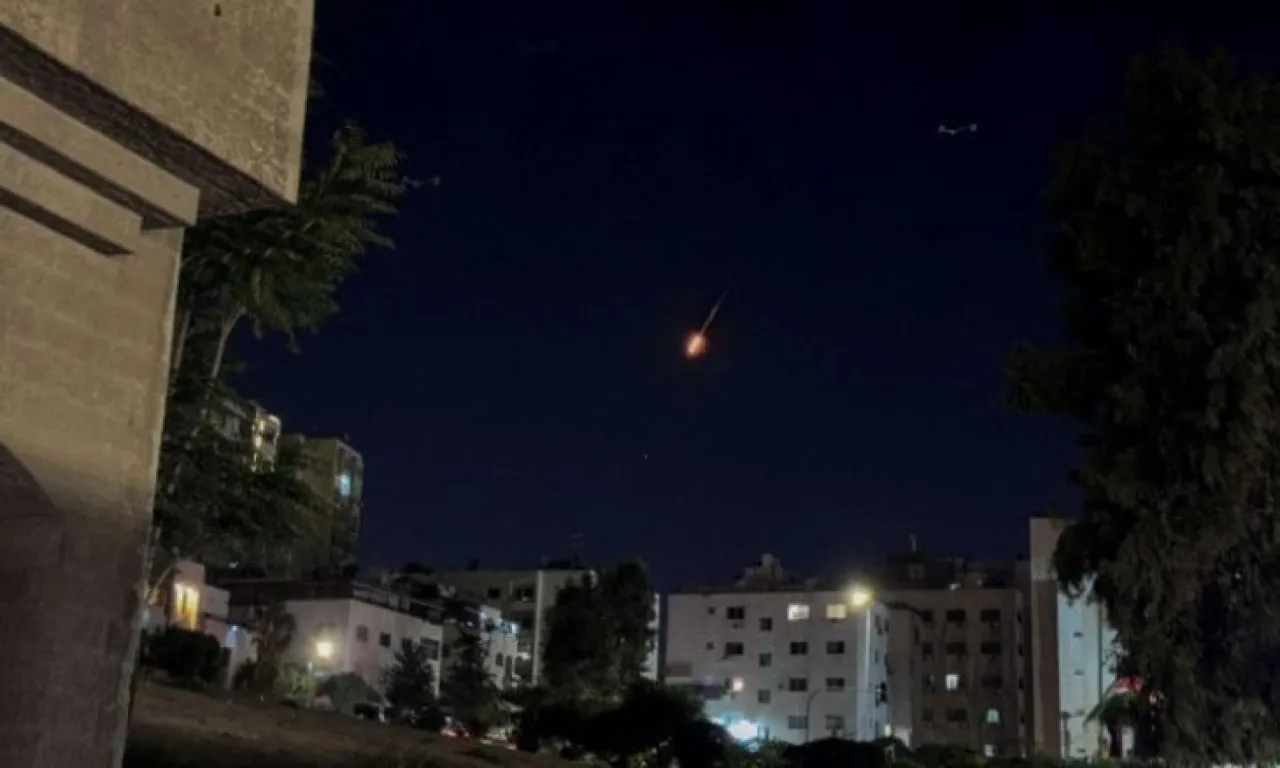
In the meantime, Gulf countries have been subjected to further targeting with Iranian missiles and drones after the apology, and Kuwait announced the death of two members of the Ministry of Interior, while a number of people were injured by shrapnel from an Iranian missile in Bahrain.
The Bahraini Ministry of Interior announced that 3 people were injured and a university building in the Muharraq area suffered material damage due to the falling of Iranian missile shrapnel, noting that "an Iranian aggression targeted a facility near the Salman Port."
The Qatari Ministry of Defense reported the air defenses intercepted 6 ballistic missiles, with two falling in territorial waters and two others in an uninhabited area without losses.
The UAE Ministry of Defense stated today, Sunday, that it had detected 117 drones, with 113 drones being intercepted, while 4 drones fell within the country's territory.
The statement mentioned: "Since the onset of the overt Iranian aggression, 238 ballistic missiles have been detected, where 221 missiles were destroyed, 15 fell into the sea, and 2 missiles fell on the state’s territory. In addition, 1422 Iranian drones were detected and 1342 of them were intercepted, while 80 drones fell within the country’s territory. Eight cruise missiles were also detected and destroyed."
These aggressions, according to the statement, "resulted in 4 deaths of Pakistani, Nepali, and Bangladeshi nationals, and 112 cases of moderate and minor injuries of Emirati, Egyptian, Sudanese, Ethiopian, Filipino, Pakistani, Iranian, Indian, Bangladeshi, Sri Lankan, Azerbaijani, Yemeni, Ugandan, Eritrean, Lebanese, Afghan, Bahraini, Comorian, and Turkish nationality."
Does the President Control?
The Gulf states being attacked after the president's apology has raised many questions about his control over the internal situation following a week of joint military operations by Israel and the United States against Tehran.
In this context, BBC Arabic in an analysis suggests that the continuation of "such attacks raises a deeper question about control within the fractured Iranian leadership structure."
It added that "since the first wave of attacks resulted in the death of key figures, including the Supreme Leader Ayatollah Ali Khamenei, decision-making has shifted to an interim leadership council." It also mentioned that "practically, there is no confirmed information about the new leadership's ability to control strong military and security institutions like the Revolutionary Guard." It continued: "If attacks linked to Iran continue on neighboring countries despite the president’s statement, then this either points to a breakdown in communications or a refusal by factions in Iran to reduce the military confrontation."
And in response to the president’s apology, Chief Justice Gholam Hossein Mohseni Ejeh stated that evidence from the Iranian armed forces indicates that "the geography of some regional countries was explicitly or secretly put at the disposal of the enemy, and that these areas are being used for aggression against Iran." He added that "severe attacks on these targets will continue." He affirmed that "this strategy is currently being implemented and the government and other pillars of the system agree on it."
The command of the "Khatam al-Anbiya headquarters," the joint operations room of the General Staff, announced that "all bases and interests of the United States and Israel on land, sea, and air in the region will remain primary targets for the Iranian armed forces."
And stated that the armed forces "respect the interests and sovereignty of the neighboring states and have not yet committed any aggression against them," but confirmed that if offensive actions continue, all military bases and interests of the United States and Israel in the region will be subject to powerful strikes from the armed forces of the Islamic Republic.
Variation in Attacks
Meanwhile, it was notable during the attacks on Gulf states by Iran, the variation between states in the aggressions, a step considered by observers to carry political messages, as the variation in the level of targeting between Gulf capitals is not only read militarily but also as an indication of rearranging priorities of influence and pressure centers.
From here, official data revealed that the United Arab Emirates was the most exposed to attacks among the Gulf states, and the UAE Ministry of Defense announced Sunday: "Since the onset of overt Iranian aggression, 238 ballistic missiles have been detected, where 221 missiles were destroyed, 15 fell into the sea, and 2 missiles fell on the state’s territory. In addition, 1422 Iranian drones were detected and 1342 of them were intercepted, while 80 drones fell within the country’s territory. Eight cruise missiles were also detected and_DESTROYEDIsrael."
The data confirms that targeting vital facilities in the UAE does not achieve a military or political gain for Iran, but it serves the battle of reputation and standing in the regional influence race.
As it comes amid a conflict over the Gulf's economic center, the Kingdom of Saudi Arabia, which has historically been Iran's enemy in the region, emerged without sensitive targeting since the start of the attacks, suggesting a possible temporary alignment of interests or temporary rules of engagement resetting priorities.
Observers point to the coordination of the Iranian-Saudi rapprochement in Yemen, which means that transitioning from confrontation to negotiation management with the Houthis accompanied an internal rearrangement of anti-Houthi forces, in a scene preceding the regional explosion.
This was confirmed when the Saudi transitional forces in Yemen attacked the Southern Transitional Forces in January, which were fighting the Houthi militia, Iran's arm in Yemen.