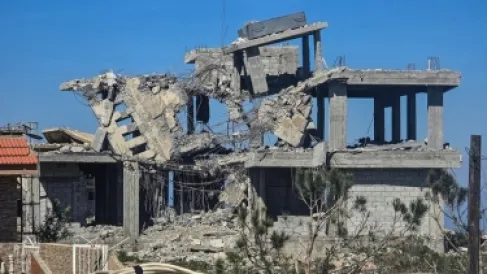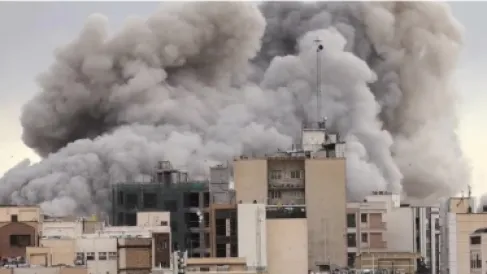
Khaberni - Supplies from 4 Arab countries among the largest energy producers in the world, were subjected to a series of emergency measures including production cuts, declaring a state of "force majeure," and damage to export routes following Iranian attacks.
According to official stances and media reports from Kuwait, Qatar, Iraq, and Saudi Arabia.
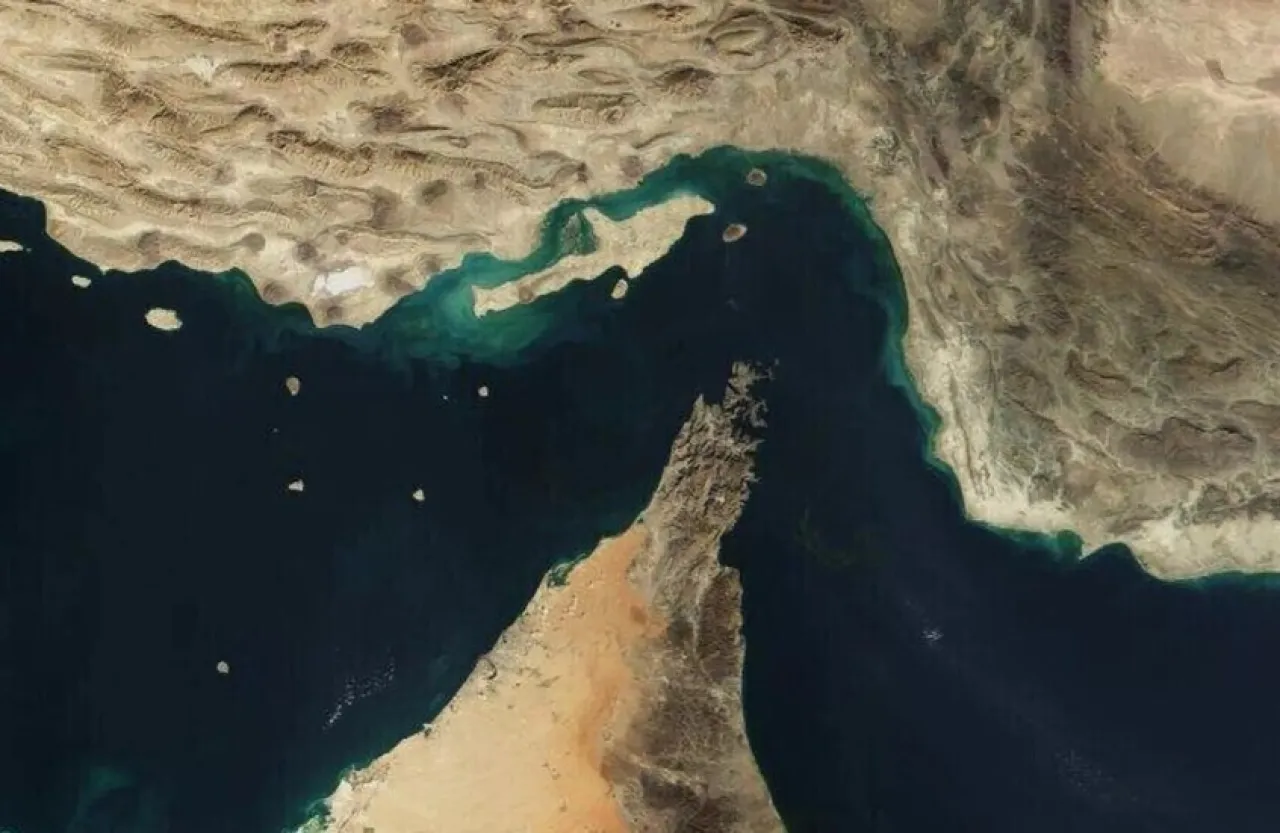
The ongoing Israeli-American war on Iran since February 28 and Tehran's response targeting regional countries have damaged global energy supplies amid a sharp decline in traffic through the Strait of Hormuz, through which about 20 million barrels of oil pass daily.
Media reports have spoken of hundreds of ships accumulating on both sides of the Strait due to increased security risks in the region, heightening concerns about supply disruptions.
UAE and Kuwait
Bloomberg reported on Saturday that the UAE and Kuwait have started reducing oil production, as the imminent closure of the vital Strait of Hormuz will impact energy markets and global supplies.
Petroleum Abu Dhabi National Company (ADNOC) stated in a statement that it "manages offshore production levels to meet storage requirements," without going into details.
The United Arab Emirates, which pumped more than 3.5 million barrels per day as the third largest producer in OPEC in last January, uses export capacity beyond the Strait of Hormuz and its international storage facilities to ensure supply to global markets.
ADNOC operates a pipeline with a capacity of 1.5 million barrels per day to Fujairah on the west coast of the UAE to bypass the strait.
ADNOC confirmed that its onshore operations continue normally.
In contrast, the Kuwait Petroleum Corporation announced that it would reduce production in its oil fields and refineries after Iranian threats concerning the safety of ship passage through the Strait of Hormuz.
Bloomberg reported, quoting a person familiar with the plan who requested anonymity because the details are confidential, that Kuwaiti oil production began to decrease by about 100,000 barrels per day starting Saturday morning, and is expected to triple approximately on Sunday, with more gradual cuts depending on storage levels and the situation in the Strait of Hormuz.
Force Majeure
Kuwait Petroleum Corporation has declared force majeure, a legal provision that allows the company to not fulfill its contractual obligations due to circumstances beyond its control on oil sales and refining products.
The country's production was about 2.57 million barrels of oil per day in January, according to data collected by "Bloomberg".
The Strait of Hormuz is the only passage for exporting these supplies, and Saudi Arabia, the largest oil producer in the region, has diverted part of its crude oil production away from this passage toward Yanbu on the Red Sea.
It is worth noting that Kuwait earlier began reducing refining rates at its refineries due to full tanks, with the total production capacity of the country's Zour, Al-Ahmadi, and Abdullah ports reaching about 1.4 million barrels per day, and Zour being one of the largest oil refineries in the Middle East.
Iraq.. Saudi Arabia.. Qatar
The production cuts by the members of OPEC follow a series of other cuts in the region.
Iraq began reducing production earlier this week as storage tanks began filling, while Saudi Arabia closed its largest refinery, and Qatar shut down the world's largest liquefied natural gas export station after drone attacks.
On Tuesday, Iraq announced a reduction in its crude oil production due to cuts and cessation of exports after the closure of the Strait of Hormuz.
The Iraqi Ministry of Oil said in a statement that reducing crude oil production will not affect the continuous operation of refineries and the production of various oil derivatives to meet domestic oil needs.
It added that all refineries in the south, center, and north are operating continuously and at full capacity, to produce various oil derivatives which provide the required quantities for daily local uses, and store the surplus.
Media reports at the time indicated that Iraq reduced its production by about 700,000 barrels per day from the Rumaila field, and 460,000 barrels per day from the West Qurna 2 field, both of which are among the largest fields in the south.
Saudi media reported that Aramco began diverting oil shipments to the port of "Yanbu" on the Red Sea as a sign of damage to export routes.
The sources mentioned that this line has the capacity to pump most of Saudi Arabia's daily crude oil exports of about 7 million barrels.
The Yanbu line, also known as the "East-West Pipeline," connects between the oil fields in the eastern region and the port of Yanbu on the Red Sea coast in the western region, aiming to reduce the dependence on exporting oil through the Gulf through the Strait of Hormuz, and bring the distance closer for ships heading towards the Suez Canal and Western markets.
Ras Tanura refinery in Saudi Arabia, north of the city of Dammam on the eastern coast, was targeted twice causing limited damage following the interception of two drones, as announced by the Saudi Press Agency "SPA" on Wednesday.
On Wednesday, Qatar Energy, the world's largest natural gas producer, announced the cessation of liquefied natural gas exports after Iranian drone attacks.
The company stated in a statement that it "notified the affected purchasing clients of the declaration of force majeure," under the pressure of the war between the United States and Israel on one side and Iran on the other.
The war in the Middle East has led to an almost complete closure of the Strait of Hormuz, the narrow waterway connecting the Gulf with the open seas, following Iranian threats to shipping.
This has disrupted exports from the world's largest oil-producing region, contributing to a rise in oil prices in London to the highest level in more than two years, reaching about $93 a barrel, prompting consumers to look for alternatives.