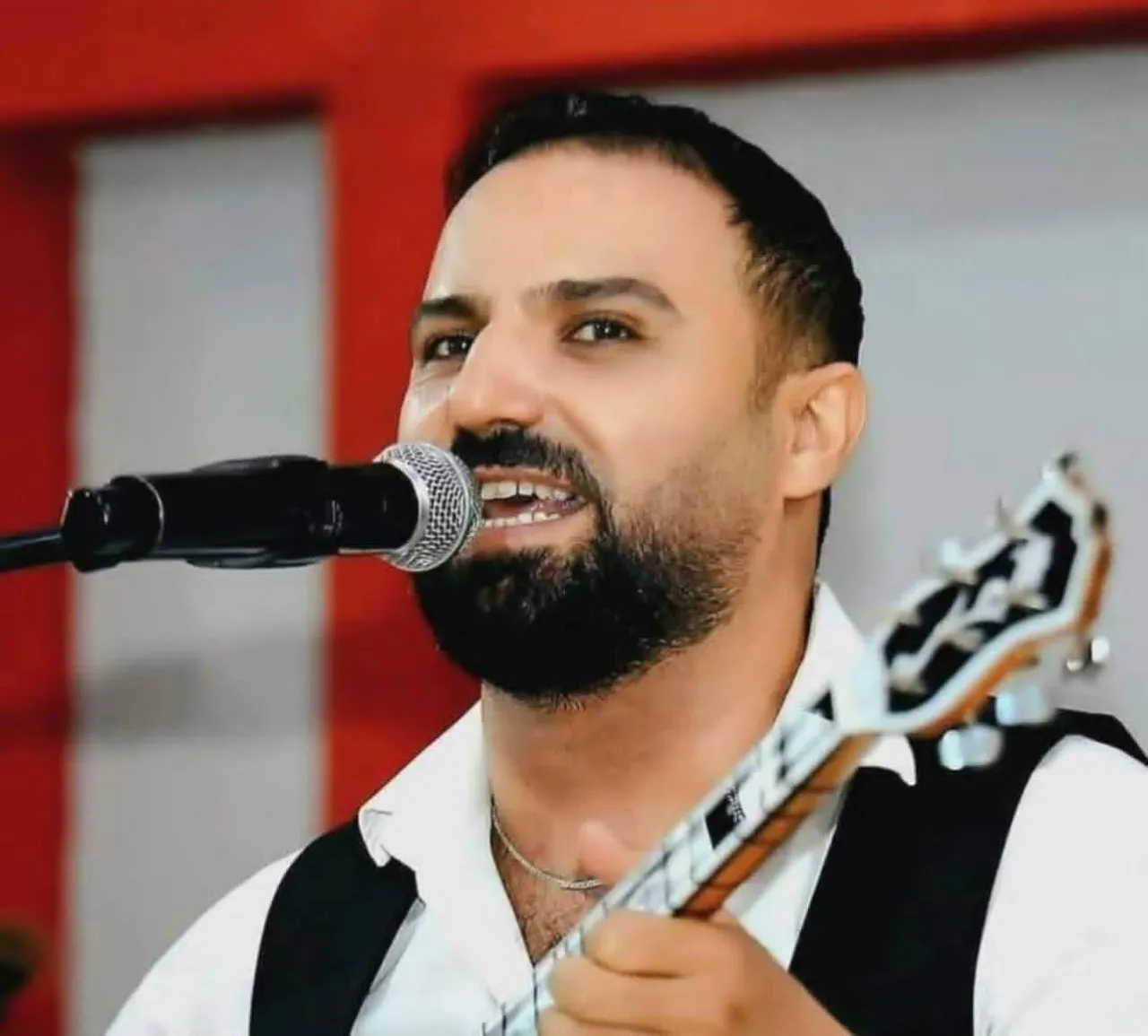
Khaberni - The Kurdish Syrian artist, Emad Suleiman, passed away today, Tuesday, at the age of 44 in Qamishli, northeastern Syria, following a fall accident on the stairs of his house, which led to a brain hemorrhage that caused his death, according to his friends.
Suleiman, known as "Guuj" among his fans, originated from the Qaddourbek neighborhood in Qamishli, and his roots go back to the village of Akooli in the countryside of the city. He was one of the most prominent folk artists in the region, famous for enlivening weddings and parties, and distinguished by his performance of Kurdish folk songs which gained wide popularity among his audience, especially his famous song "Hamu Hamu". He also owned a musical instrument shop in Qamishli, which was a meeting place for artists and friends, according to Al Arabi Al Jadeed.
Ali Saadoun, one of the deceased's friends, said in a post mourning the artist: "The body has departed but the noble legacy remains. We were shocked today by the departure of our dear friend and the refined artist, Emad Suleiman. We lost a human being who colored our lives with his art and refined our souls with his high morals. He was not just an artist, but a school in sophistication and kindness."
For his part, artist Hassan Dierki, one of the deceased's friends, said that the Kurdish artistic community lost "one of its faithful sons," describing Suleiman as "known for his permanent smile, his sociable and cheerful spirit, and his great love for his friends and colleagues". He clarified that the deceased was born in 1980 or 1981, originating from the village of Akooli, from a Kurdish family known for its authenticity and belonging.
Dierki added that "over ten years of joint work brought them together, during which Suleiman left a good mark on the hearts of those who knew him, being an example of a humble artist close to the people, always striving to lend a helping hand". Despite his ordinary financial situation, his home "was open to guests and friends, embodying the spirit of generosity and love".
He indicated that the deceased made a significant contribution to Kurdish art, by re-performing many traditional songs and excelled in singing folklore music, in addition to specializing in playing Kurdish dance music. He also collaborated with a number of artists, participated in several television meetings, and filmed several music videos. He lived for a while in Turkey, but most of his artistic activity was in the city of Qamishli, which embraced his work and activities.
Dierki mentioned that Suleiman, when asked why he did not travel to Europe like other artists, would answer: "This is our land and we must defend it," affirming his attachment to his land, his belief in the rights of his people, and his optimism for the future. The deceased was married and a father of four children, and participated in various events and celebrations, which made him close to the people and connected to their joyful memories.
Regarding the details of his departure, Dierki explained that Suleiman spent the night of his death at a gathering with friends, and the next morning, he went to the hospital with one of his friends for medical examinations, where it was found that he was in good health before returning to his home. While climbing the stairs to his rented apartment on the fourth floor, it is presumed that he suffered a sudden heart attack or lost balance, fell to the ground and sustained a head injury. After twelve noon, one of his children found him and transported him to the hospital, but he had already passed away.
The body of the deceased artist was buried in the Hililiya Cemetery in Qamishli, amidst an atmosphere of sadness, attended by his family, and a gathering of locals and his colleagues in the artistic community.