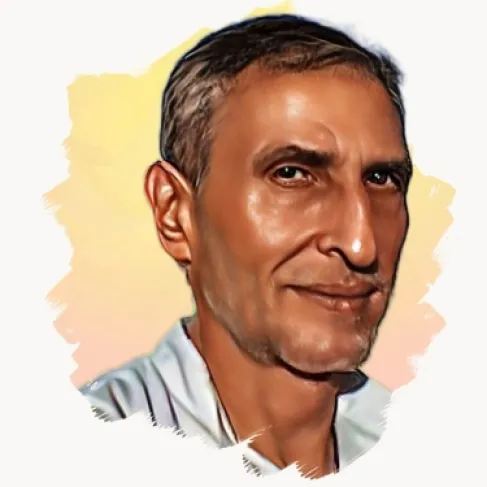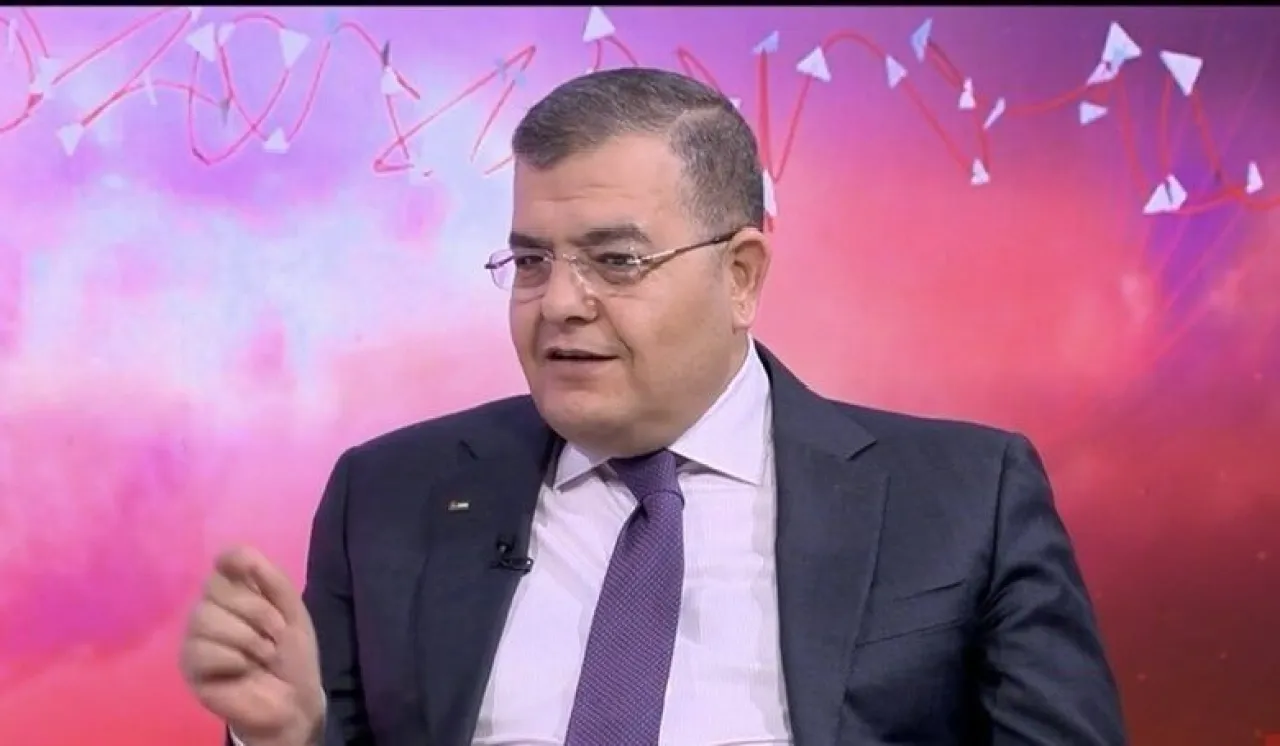
While the world was looking at radar screens during the 12-day war in the summer of 2025, a team of scientists and former officers in Unit 8200 were working on building a digital oracle that does not read palms but reads the collective thought patterns of Revolutionary Guards generals. The results that leaked were not just numbers, they were a declaration announcing the death of traditional theocracy in Iran.
And the simulation conducted by AskIt revealed that 70% of Iran's shadow leaders had implicitly withdrawn their support from the turban in favor of the military suit. At the moment rockets fell over Isfahan, the Iranian general no longer saw in the Guardianship of the Jurist adequate protection, but rather an ideological burden that could cost him his existence. This is not a prophecy, but sociophysics; a science that studies humans as it studies the movement of rivers. Thus, when external pressures intensify, the river of power flows towards the strongest point which in the Iranian case is: the military establishment.
What's shocking in this experiment is the marginalization of the ambitious Mojtaba Khamenei, who has long been portrayed as the natural successor. And artificial intelligence saw him as a symbol of continuity, but the real and virtual generals want crisis efficiency.
But can we trust a digital oracle? Technology does not inevitably determine the future, but it opens a window onto the subconscious of closed systems. In 2026 , the question is no longer who will succeed Khamenei? But how will the generals manage without religious cover? Artificial intelligence predicts a bias towards weapons.
- The reliability of artificial intelligence systems in geopolitical forecasting and political decision-making is among the most complex and vital topics. The transition from traditional strategic analysis based on human intuition to algorithmic analysis relying on big data is not just a technical shift but a redefinition of the concept of political truth. And the reliability lies in the ability of these systems to process informational flows that exceed human cognitive capacity, allowing advanced models to analyze billions of transactions, speeches, and field movements in fractions of a second to extract unseen patterns.
- Firstly, in the forefront of this transition, emerge the concepts of decisions based on probabilities rather than certainties. Artificial intelligence, especially in models like AskIt and Verstand AI, takes a probabilistic approach that identifies the most likely pathways based on current variables. This probabilistic accuracy has reached, in some financial and geopolitical applications, an improvement of 55.8% over standard economic models (like GARCH) in predicting market reactions to political shocks. And this superiority is due to artificial intelligence's ability to detect non-linear relationships between events; for instance, a model might link a slight change in the tone of an Iranian official's speech to a logistic movement in the port of Bushehr to predict an imminent military escalation.
Secondly, the main reliability points face the phenomenon of preference falsification. In closed authoritarian systems like the Iranian regime where