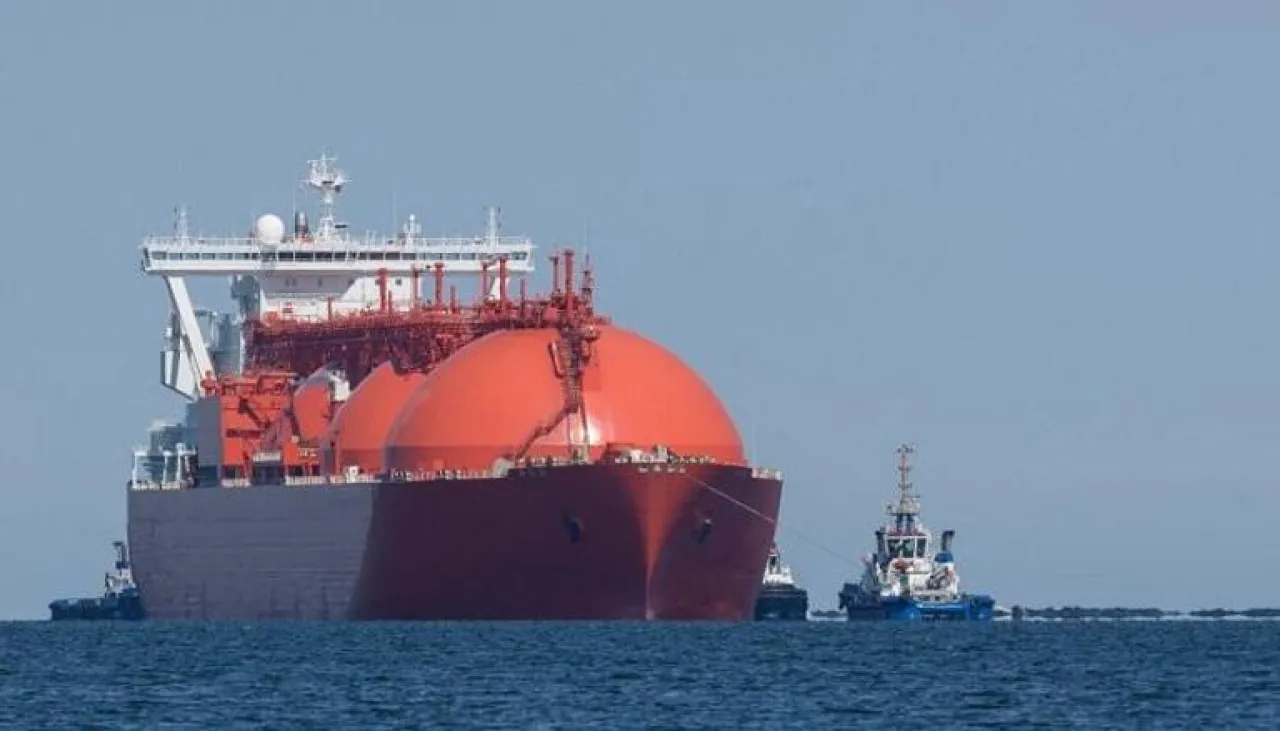
Khaberni - An analysis published by «Economic Times» stated that the conflict in the Middle East threatens the biggest disruption in gas markets since the outbreak of the Ukraine war in February 2022.
The report explained that about 20% of global liquefied natural gas (LNG) exports pass through the Strait of Hormuz, which is now largely halted, according to ship tracking data.
Iran's neighbors, such as Qatar, are among the most important suppliers in the world. Buyers in Asia, who get about a quarter of their imports from Qatar (the world's second largest exporter of liquefied natural gas), are seeking alternative shipments, according to traders. Meanwhile, Egypt is trying to offer its shipments early after Israel shut down some fields.
The analysis quoted Tom Marzec-Manser, head of gas and liquefied natural gas for Europe at Wood Mackenzie: "Any development in the Strait of Hormuz will be price-directed, and any development in Qatari liquefied natural gas production will affect prices. Qatar exported 82.2 million tons of liquefied natural gas in 2025. One of the production units in Qatar's Ras Laffan complex was under planned maintenance until last week, according to traders, which will lead to lower flows."
The war in Ukraine has caused unprecedented disruption in international gas trade, with Moscow being cut off from its largest export markets, causing significant volatility and pushing prices to record levels in Europe and elsewhere. According to the analysis, Asia is particularly exposed to similar impacts as a result of the crisis in the Middle East. More than four-fifths of Qatari liquefied natural gas was delivered to Asian buyers last year, with China being the largest buyer, importing almost a third of its imports from Qatar, followed by India as the second largest importer.
Shipments to Asia and Europe pass through the Strait of Hormuz, and at least 11 Qatar-linked gas carriers have halted their voyages to avoid passing through the strait, according to ship tracking data.
Anne-Sophie Corbeau, a researcher at Columbia University's Global Energy Policy Center, said: "There is no alternative. Will prices rise more in Asia or Europe? Europe is less exposed, but its stocks are low. It also depends on how much it turns towards Asia."
Nippon Yusen, one of Japan's largest gas carrier owners and managers, has directed its vessels to avoid the area around the Strait of Hormuz, according to a company spokesperson. Mitsui OSK Lines directed its carriers to wait in safe waters, while Kawasaki Kisen Kaisha confirmed that its ships in the Arabian Gulf were on standby.
If the conflict continues and shipping operations are disrupted, risks will quickly increase on liquefied natural gas production, and countries will be forced to cut production. Traders noted that buyers in China are among those making last-minute contacts this week to assess alternative options if Iran continues shipping restrictions, although QatarEnergy has not postponed any shipments for its purchases.
Traders in India and Japan, as well as other places, are also preparing for price increases, which is opposite of a year of relative price stability at a time when new supply was plentiful. It's not just spot market prices; long-term gas contracts are usually linked to crude oil prices, so any increase in Brent crude will make gas more expensive for consumers in Asia.
The analysis mentioned Turkey, which imports gas through pipelines from Iran, may have to buy more liquefied natural gas if the main flows are restricted due to ongoing conflict, adding more pressure on prices for supercooled sea gas shipments. Iran exports gas to Turkey under an annual contract of 9.6 billion cubic meters, although the actual amounts delivered were recently less, according to Columbia University's Global Energy Policy Center.
Iran's imports accounted for less than 15% of Turkey's total gas imports in 2024, according to data from the Oxford Institute for Energy Studies.