Khaberni - Beijing is rapidly advancing towards shaping a new technological reality that is redrawing the global power map, where recent developments have revealed a decisive Chinese move towards full technological independence away from American dominance.
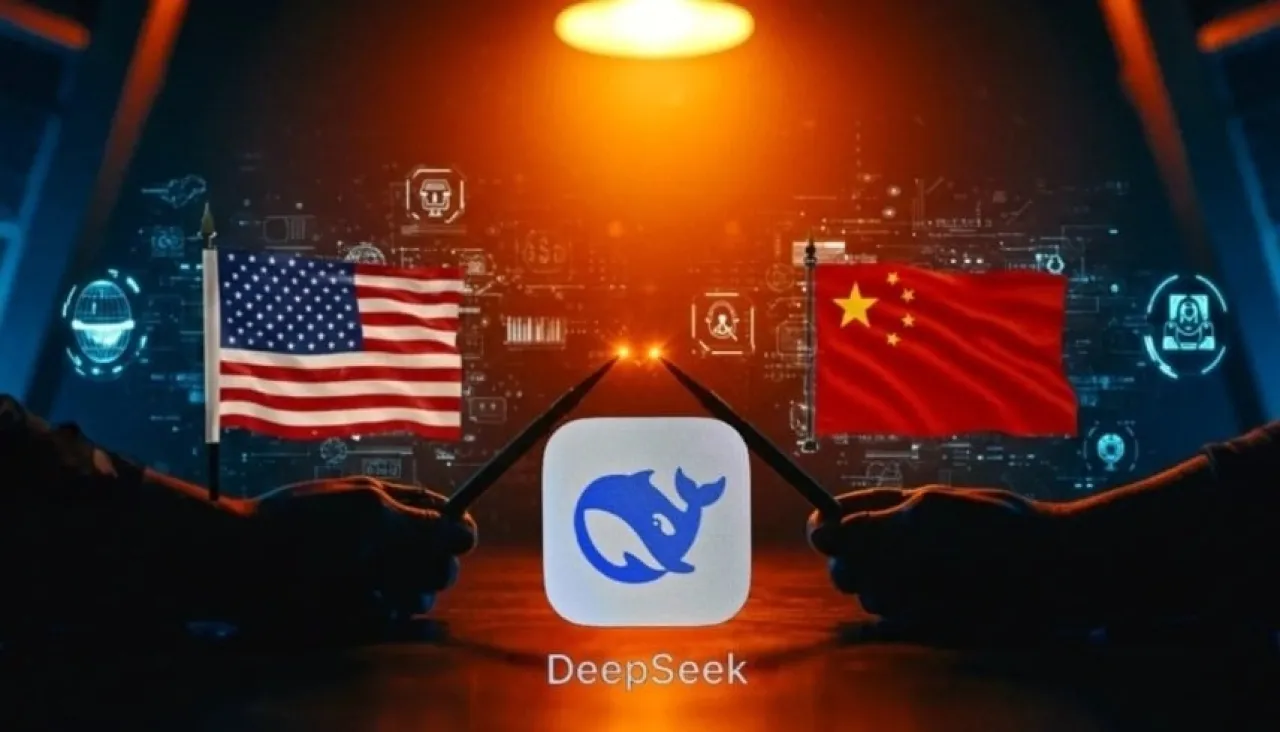
In a surprising move that disrupted the calculations of Silicon Valley, the rising Chinese artificial intelligence lab "DeepSeek" made a strategic decision to prioritize access to its new flagship model to "Huawei" and other local partners, denying major American chipmakers early access to it, like "Nvidia" and (AMD).
This step is widely read as a clear indicator of the rise of Chinese "technical nationalism," and Beijing's efforts to build an independent and potentially closed technological system from the West.
An unprecedented shift in the rules of the game
The decision marks a notable departure from traditional practices in the artificial intelligence industry, where major model developers traditionally share early versions of their technologies with chip manufacturers like Nvidia and AMD to improve performance on globally used hardware.
But informed sources revealed that this time the Chinese lab chose to withhold the new model expected to be released with the V4 update, giving priority to local partners, a step experts see as having political and strategic dimensions that go beyond technical considerations.
Analysts say that new AI-supported coding tools might mitigate the impact of this move on American companies, but the political message remains clear: "China is no longer just competing, but seeks to reshape the global technological system rules."
Beijing considers artificial intelligence a strategic sector for national security, as Chinese President Xi Jinping has called for building an "independent and controllable" ecosystem that includes the entire technology chain from chips to software and models.
Estimates indicate that China aims to achieve more than 70% self-sufficiency in the semiconductor chain by 2028, through a network of thousands of local companies led by Huawei.
The state's technical arm
"DeepSeek," which was established more than two years ago as an arm for "High-Flyer Capital Management," is no longer just a startup specializing in high-frequency trading algorithms, but has become a spearhead in the struggle for technical nationalism and a strategic tool in the state's hands to face pressures and restrictions imposed by Washington.
Statistics show that "DeepSeek" achieved what was thought impossible under the sanctions; on January 20, 2025, the lab launched the "R1" model, which caused a seismic shift in global markets, leading to a loss of more than $600 billion in Nvidia’s market value in a single day.
This success was not by chance, but is a result of huge investments starting from 2015, when the parent company moved from owning one graphics processing unit (1 GPU) to owning over 10,000 Nvidia A100 chips by mid-2022, at a cost exceeding $180 million.
Experts believe that China's success in building its closed system relies on two pillars: preventing widespread smuggling of U.S. chips, and the success of the duo "Huawei and SMIC" in providing a real alternative to "Nvidia and TSMC."
According to "Epoch AI" estimates, AI performance is growing at a rate of 13.8 times annually, meaning that even a few months' delay in catching up could mean years of technological regression.
The chip economy.. the real battlefield
Despite China's progress, chips remain the major weakness, as Chinese companies can develop advanced models, but they heavily rely on foreign chips for training and operating them.
Huawei tries to bridge this gap by developing local chips, but they remain less mature than their American counterparts, both in terms of performance and accompanying software systems.
Nevertheless, the close cooperation between DeepSeek and Huawei is seen as part of an effort to build an integrated alternative to the Western technological system, while Huawei leads efforts to develop chips (Ascend 910B) and (910C) as alternatives to Nvidia chips, its close cooperation with (SMIC), currently the only Chinese company able to produce chips with 7-nanometer precision, aims to ensure self-sufficiency exceeding 70% across the full semiconductor value chain by 2028.
A possible split in the world of artificial intelligence
According to experts, we are now facing the contours of an "Iron Curtain" in technology that divides the world into two never-intersecting poles:
- The Western camp: Led by the United States, relying on the integration of (Nvidia) devices and (OpenAI/Anthropic) software with open global supply chains (TSMC).
- The Eastern camp: Led by China, based on the concept of "digital sovereignty," where a purely Chinese "Tech Stack" is built including Huawei chips, (CANN) software platforms as alternatives to (CUDA), and linguistic models like (DeepSeek).
The reports confirm that this division is not only technical but is "sovereign" par excellence, as during a meeting held in February 2025, "Ren Zhengfei," founder of Huawei, assured Chinese President Xi Jinping that recent breakthroughs have mitigated the effects of U.S. export controls, enhancing confidence in China's ability to build a closed and independent system.
An unstoppable race
Despite U.S. restrictions, reports indicate that China continues to make rapid progress in artificial intelligence, supported by massive government funding, a huge database, and an abundance of energy, in addition to a regulatory environment that stimulates the rapid adoption of technologies.
Western analysts warn against underestimating this progress, asserting that technological restrictions may slow China down but will not stop it.
So far, all indicators suggest that DeepSeek's recent decision may be the beginning of a new stage in the "Digital Cold War" that will redraw the global technology map for years to come.