- Abu Aqula: Syria's decision to adopt the "back to back" system has deprived Jordan of the advantages of time and cost.
- Abu Aqula warns of a sharp decline in the movement of goods through Jordan with traders heading to the ports of Latakia and Tartus.
- Abu Aqula: The "back to back" system has confused the sector and increased costs by $800 per truck.
- Abu Aqula: The rise in transportation costs by an additional $700 per truck after the application of "back to back".
Khaberni - Diafallah Abu Aqula, the head of the clearing and freight companies syndicate, affirmed that Syria's decision to operate under the "back to back" system instead of "door to door" still confuses the transport sector, causing trucks to stall and operational costs to rise.
Abu Aqula pointed out that the situation is still ongoing despite official meetings and correspondences with the ministries of transport, foreign affairs, industry and trade, according to the kingdom.
He mentioned that the additional cost per truck ranges between $500 and $800, aside from the losses due to delays and breakdowns, adding that cement was transported at a rate of 150 trucks daily that would unload and return on the same day, which means using about 300 trucks within 48 hours, while the new system requires about 1,000 trucks to meet the required quantities and contracts, causing significant confusion in the sector.
He also noted that exceptions had been requested for construction materials, especially cement, ceramics, and building materials, as well as expensive, perishable goods, and heavy machinery, but so far, there has been no concrete response from the Syrian side, confirming that the situation remains the same without any signs of reduction or exceptions.
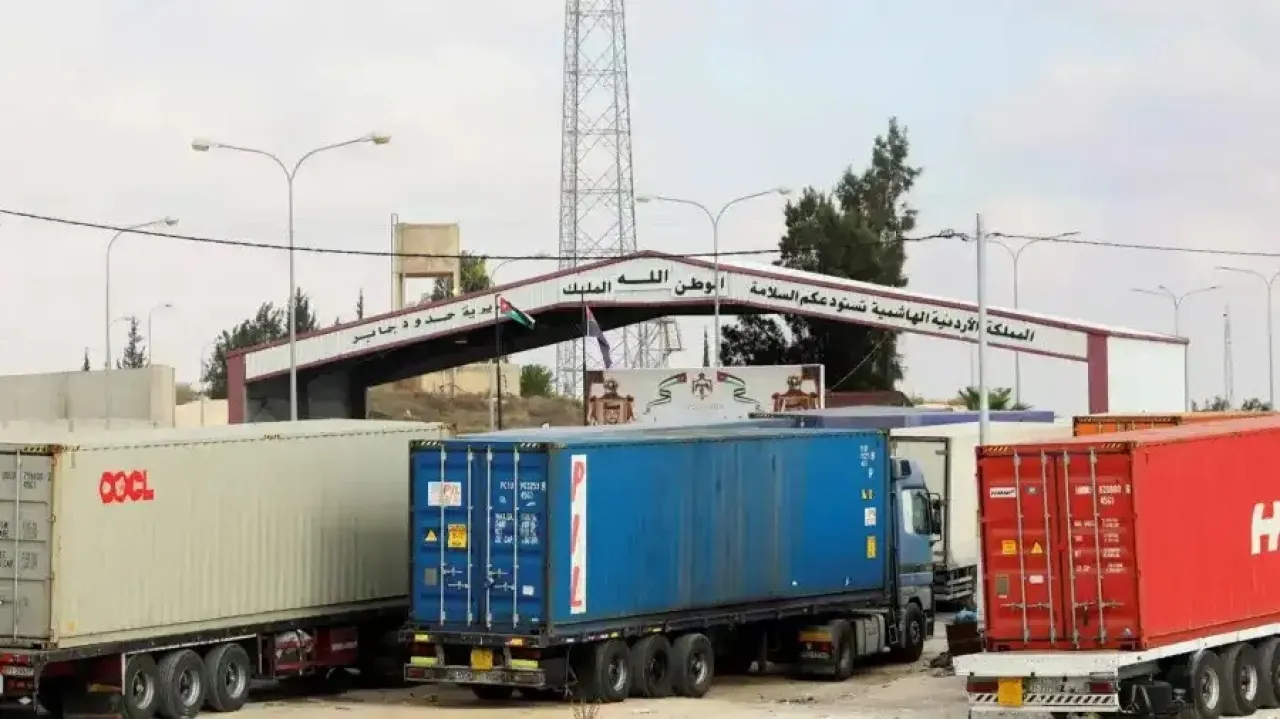
Abu Aqula pointed out that the infrastructure at Nassib customs does not support the implementation of the “back to back” system, and there is a lack of sufficient equipment and labor to handle some sensitive goods such as batteries, tires, food products, and heavy machinery that require lifting mechanisms with high capacities, increasing the likelihood of damage and malfunction.
He added that the Syrian trucks – in his words – are old and not well-equipped, noting that transportation costs have risen significantly; it used to be about $2,000 from Aqaba to Damascus, whereas now the fare from Nassib to Damascus is about $1,000 under the new pricing, meaning an additional increase ranging between $500 to $700, aside from breakdowns.
Abu Aqula confirmed that Jordan used to enjoy two main advantages in the transit of goods through its territory, namely time and cost, but the new system has deprived the kingdom of these advantages.
Abu Aqula warned of a sharp decline in the movement of goods through Jordanian territory to Syria if the situation continues as it is, especially with some traders turning to the ports of Latakia and Tartus.
The Ministry of Transport had previously confirmed that the Syrian decision to bar foreign trucks from entering Syria did not affect transit movement, and that Jordanian trucks are continuing to operate under the "back to back" system.
The Secretary-General of the Ministry of Transport, Fares Abu Dannah, said that the ministry would discuss with the Syrian side the issue of Jordanian trucks.
Mohammed Khair Dawood, the head of the truck owners' syndicate, said that the recent Syrian decision regarding the entry of Jordanian trucks was unexpected and contrary to the Jordanian-Syrian agreement in force, asserting that it has confused the Jordanian fleet and will negatively affect national exports.
Syria decided to bar foreign trucks from entering its territory except for those passing through by transit.