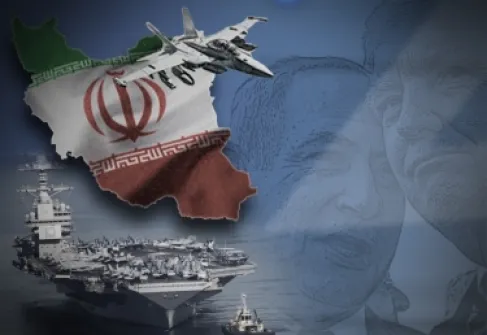
Khaberni - An Iranian official said that practical training is underway on multiple scenarios to confront any American attack on Iran, and in response, the American military mobilization continues in the Middle East.
The Iranian official added that carrying out the recent threats of Iran's Supreme Leader Ali Khamenei against Washington is operationally ready and feasible.
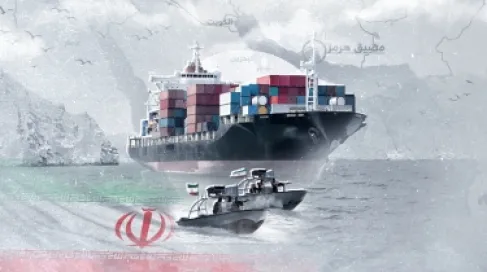
The Mehr news agency reported from the commander of the naval force in the Revolutionary Guard that his forces are ready to close the Strait of Hormuz if the senior Iranian leaders decide so.
On the other hand, the Axios website reported from aviation tracking data and an American official that "the US military has moved more than 50 military fighters, including F-35 and F-22 stealth fighters and F-16 fighters, to the Middle East region in the past few hours."
Alongside the aircraft carrier "USS Abraham Lincoln," Washington decided to send the "USS Gerald Ford" to the region, and reports talked about plans to send a third carrier.
These developments come despite assurances from American and Iranian officials of progress in the second round of indirect talks between the two countries, which took place today, Tuesday, at the Embassy of the Sultanate of Oman in Geneva, Switzerland.
During the negotiations, Iran demands lifting of sanctions in exchange for continuing its nuclear program within restrictions that prevent it from producing an atomic bomb. Meanwhile, the United States demands that Iran completely stop its uranium enrichment activities and remove its enriched uranium stockpile from the country.
The US administration also seeks to include the Iranian missile program and Tehran's support for armed groups in the region on the negotiation agenda, while Tehran asserts that it will not discuss any issues other than the nuclear program.
Threats of the Leader
Earlier on Tuesday, the Iranian Supreme Leader Ali Khamenei - in response to previous statements by the US President - said that the strongest army in the world might receive a slap that prevents it from getting up, hinting at the Iranian army's ability to sink the American aircraft carrier.
He added that the type and range of Iranian missiles are a domestic Iranian matter, and the United States has nothing to do with it. He emphasized that his country has the right to possess a nuclear industry for peaceful purposes, and said that it is not Washington's business to talk about this topic.
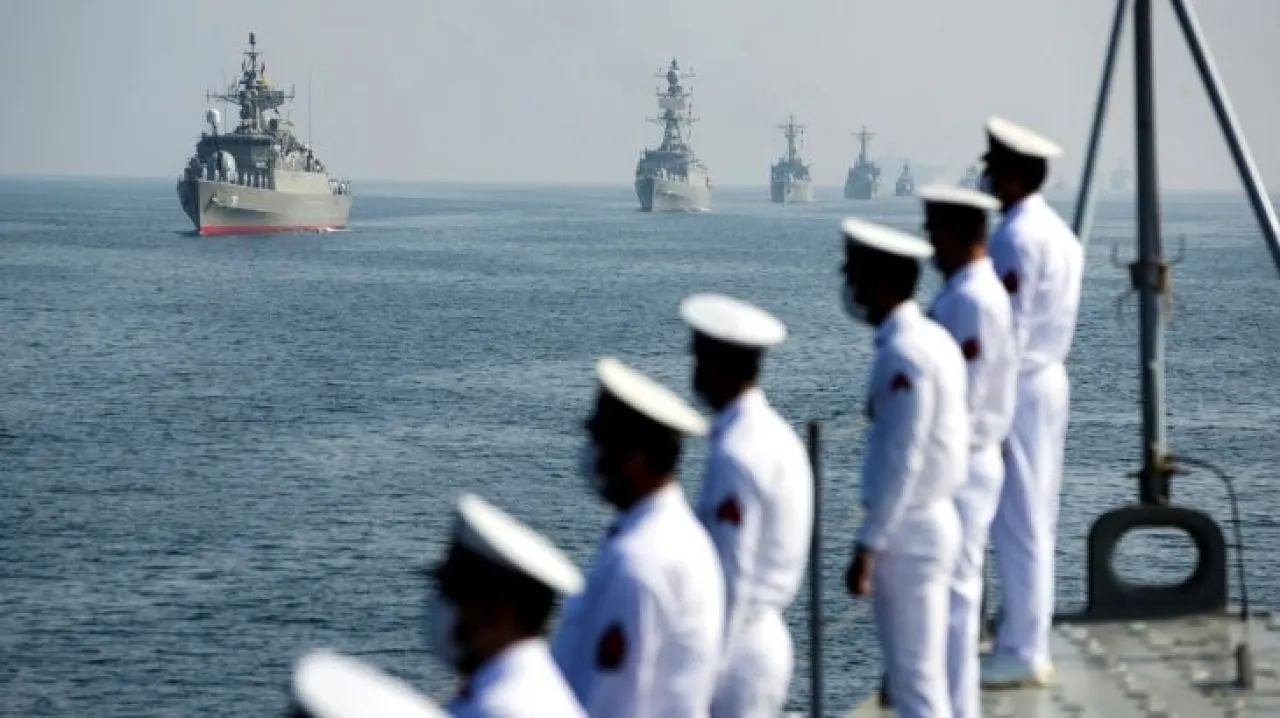
In the meantime, the Revolutionary Guard continues its maneuvers for the second day in the Strait of Hormuz, and said that it used defensive and offensive systems and weapons that accurately hit their targets.
Missile units and drones participated in the maneuvers. The Revolutionary Guard announced restrictions on the movement of ships in the Strait of Hormuz during the exercises.
The Revolutionary Guard had previously announced that its maneuvers in the strait aimed to test readiness and review operational plans to face threats, with the escalation of American military presence in the region and the deployment of additional aircraft carriers.
Recently, indications surfaced about the arrival of Russian and Chinese weapons shipments to Iran since what was known as the "12-day war" in June, transported on large military aircraft, including various defensive and offensive equipment.
Information talked about China's role in enhancing some of Iran's missile capabilities, and reports from Moscow indicated the arrival of military shipments to Tehran on a regular basis, as part of a growing strategic partnership between the two countries, especially after the recent escalation in the region.