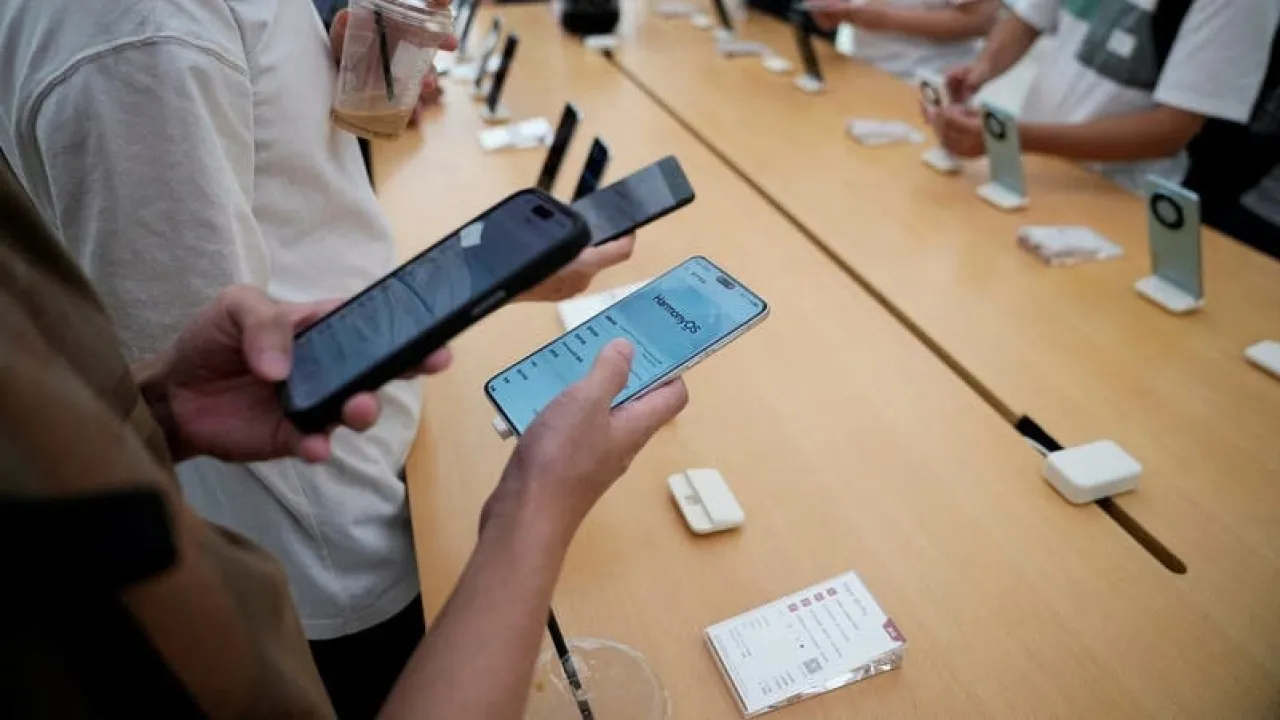
Khaberni - It seems that the race for big screens has not stopped yet. After the wave of foldable phones, new leaks indicate that "Huawei" and "Vivo" are testing smartphones with huge screens up to 7 inches, a step that may revive the "phablet" category which gradually disappeared with the rise of foldable devices.
According to the Chinese leaker DigitalChatStation, two companies — believed to be "Huawei" and "Vivo" — are working on developing full-screen 7-inch phones for the Chinese market.
But the question that arises: Do users really need a phone of this size in light of the presence of tablets and foldable phones?
16:9 instead of 21:9.. A larger display area
The discussions following the leak focused on an important point: the aspect ratio.
Instead of the common 21:9 ratio in tall phones, the new devices may adopt a 16:9 ratio, which provides a wider display area for content without annoying black edges appearing when watching videos.
Some users also see that a 7-inch screen will provide a more comfortable writing experience, especially for daily use or office work, which enhances the idea of the phone as a mini substitute for a tablet.
The idea is not new... but the timing is different
Big phones are not a new phenomenon. Last year, "Huawei" introduced a phone with a 6.96-inch screen, while "Vivo" previously introduced the X Note phone with a 7-inch screen in 2022.
Today, some flagship phones have already exceeded the 6.9-inch barrier, such as iPhone 17 Pro Max, making the shift to 7 inches a logical step in the evolution of sizes.
The difference this time is that the designs have become thinner and lighter compared to previous generations, which could make large-screen phones more practical than before.
Possible technical advantages
A bigger screen means more internal space, which could allow for integrating larger batteries without sacrificing camera sensors or other components.
Games and productivity applications can also benefit from the additional display area.
This step could pave the way for the return of the "phablet" (phone + tablet) category to the forefront, after it declined in favor of foldable devices that monopolized the concept of big portable screens.
What next?
So far, there are no official details about the launch date or final specifications. However, indications suggest that the Chinese market might be the first to receive this new-old category.
If the experiment is successful, we may witness a new wave of super-sized phones that redefine the "big phone," not through folding, but through a traditional larger and more productive screen.