Khaberni - When you hear the word "robots," the image that most likely comes to mind is factory machines or human-like robots running on a test track. This stereotype has long limited the use of robots to laboratories and industrial environments.
But there is a quieter shift happening, specifically around the ankles, knees, and hips. Wearable robots have begun to move out of research labs and into everyday human life. From power-assisted shoes to lightweight exoskeletons, this new generation of movement-assistance technologies has become a real consumer category.
The goal of this technology is not to replace your effort, but to support it, a shift bigger than any single brand alone, according to a report by Fox News, which was reviewed by "Arabiya Business".
For years, sports innovations have focused on speed, with most improvements targeting elite competitors. Now, the focus has expanded beyond just racing.
The "Amplify" project by Nike, developed in collaboration with Dephy, a robotics company, is an example of this.
This system combines a carbon plate inside the shoe and a robotic cuff worn over the ankle. Sensors track stepping patterns in real time, and the cuff provides slight anterior support designed to give a feeling of smoothness and naturalness. Instead of imposing movement, the device learns it.
Previous attempts at power-assisted shoes faced difficulty because of the heavy weight of batteries and motors, making the experience uncomfortable and unbalanced. Modern designs solve this problem by moving energy storage to above the ankle or to the hips. By lifting the weight higher up the leg, engineers reduce the pressure on the feet and improve balance.
Battery improvements and smart motion sensors play an important role, as today's systems adapt to the user's current step, making supported movement feel like an extension of your body rather than a separate device. The company stated that it is targeting a commercial launch around the year 2028. However, Nike is not alone in this field.
Robotic exoskeletons reach the consumer market
If you've ever felt heaviness in your legs in the middle of a long walk, you'll understand why this category of products exists. It might be a trip through the airport, a walk in the neighborhood, or climbing a few stairs that seem steeper than before. Most people don’t want to run faster; they just want to move without feeling exhausted.
And here wearable robots have begun to emerge; companies are manufacturing products designed for everyday use, not just for professional athletes or for lab experiments.
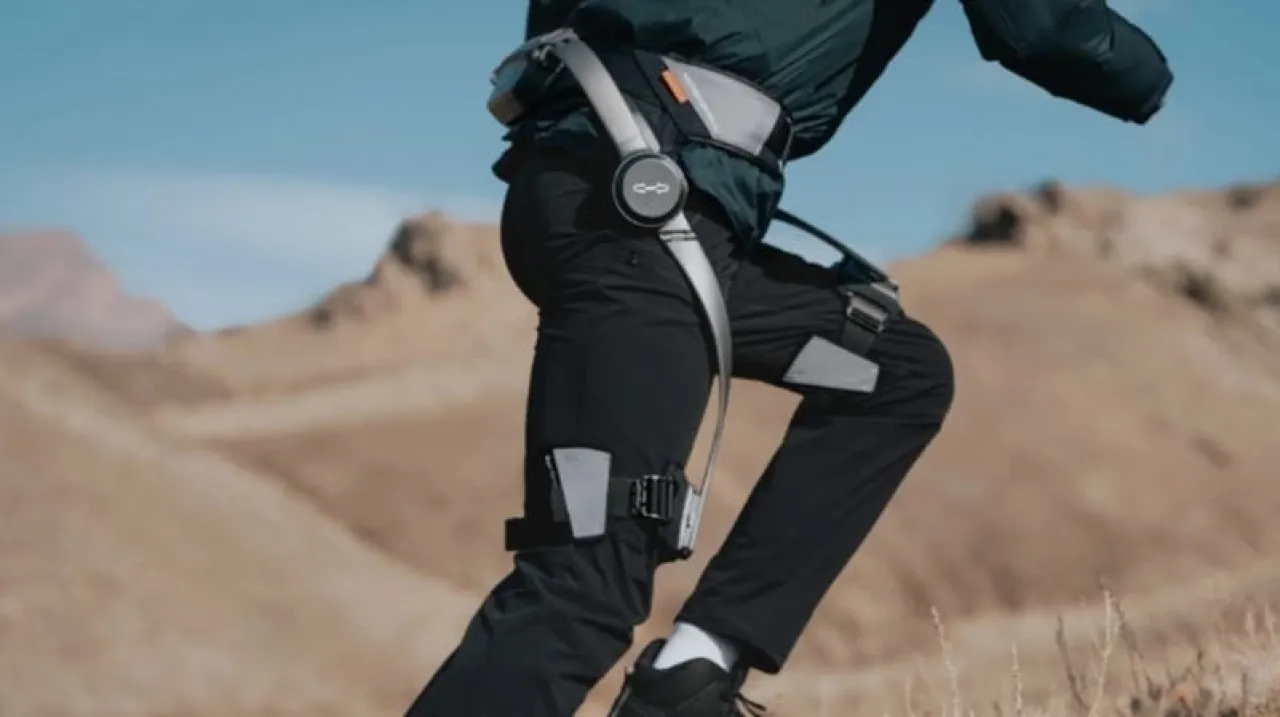
"Hypershell X" is one such example; a lightweight external structure designed for hiking and long-distance walking. The structure wraps around the waist and legs and uses small motors to reduce fatigue when climbing or walking on uneven terrain, with a clear and simple goal: to help the user walk longer distances without feeling exhausted halfway.
In addition to this, there is the "X Ultra" version, a stronger version of the same device designed for steep terrain and long journeys, offering stronger support levels while remaining small enough to be worn under regular clothes and outer gear. Both models are designed for users who want to support endurance, not for medical treatment.
"Dnsys" also launched the "X1" exoskeleton designed for all terrain. This system, which is fitted on the hip, is marketed to hikers and outdoor enthusiasts who want to reduce fatigue during climbing and long trips.
Unlike laboratory prototypes, the "X1" was sold through crowdfunding and direct online orders, making it one of the first products available to consumers in this field.
Another example is "WIM" from "WIRobotics", a wearable robot weighing about 3.5 pounds that supports natural hip movement during walking. It is intended for seniors, active adults, and individuals recovering from minor injuries who want additional assistance without needing to wear something bulky or medical-looking.
In addition to this, companies like "Ekso Bionics" and "ReWalk" have developed powered exoskeletons that help people with spinal cord injuries or strokes to stand and walk.
These systems are used in rehabilitation clinics and selected programs to improve the movement of individuals. These products show how wearable robots proved their worth first in the medical field before gradually impacting consumer designs.
These products vary in capability, price, and purpose, but what unites them is a common direction: wearable robots are now providing effective movement assistance, not just tracking it.