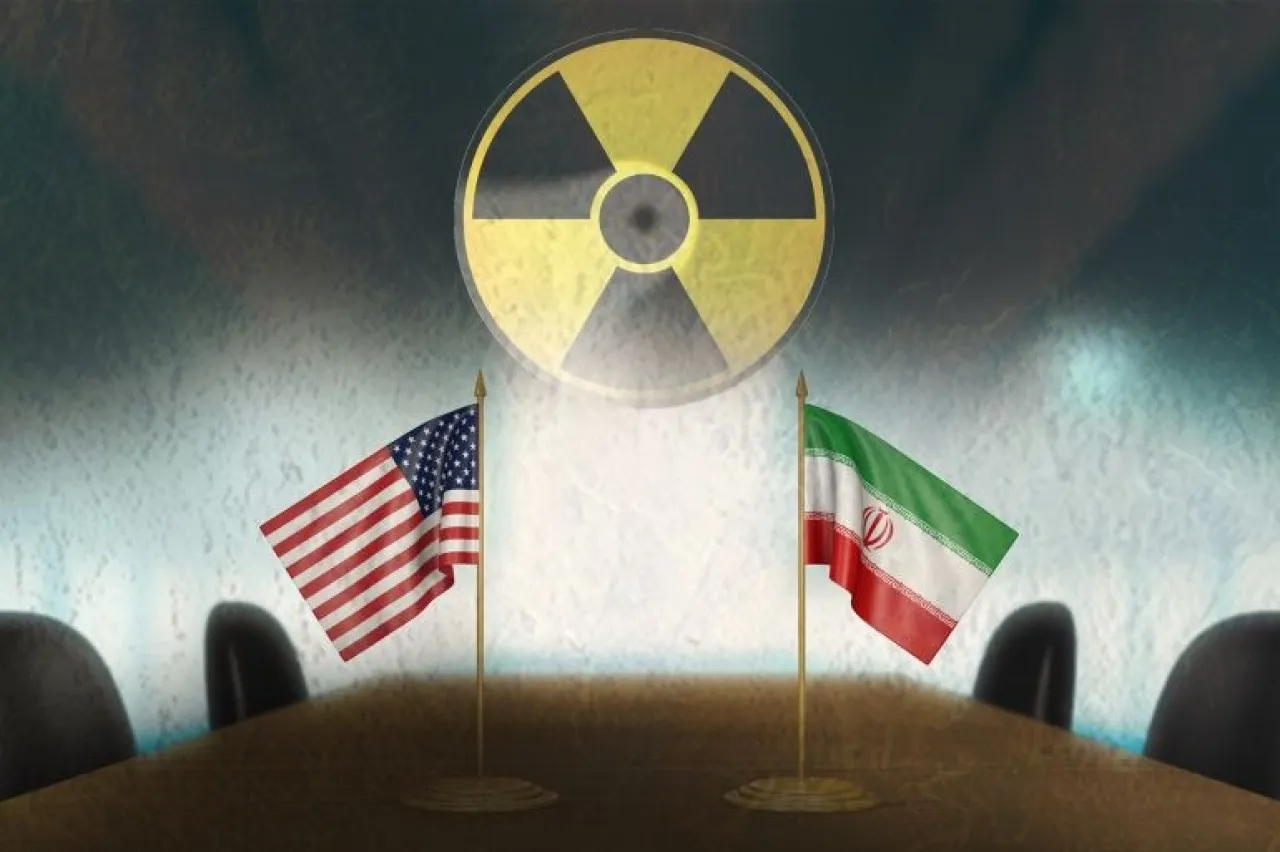
Khaberni - Eyes are on Geneva, where the second round of negotiations between Iran and the United States is expected to start, mediated by Oman, after a first round held in Muscat on February 6.
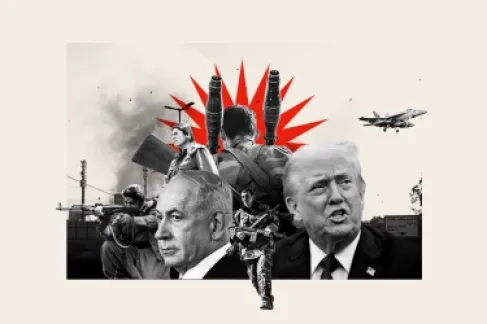
The talks come amidst ongoing escalation in the region, with continuing mutual threats and the possibility of sliding into a military confrontation, especially given the build-up of American military forces and increased tensions following Israeli Prime Minister Benjamin Netanyahu's visit to Washington.
President Donald Trump says he wants an agreement with Tehran, but at the same time warns that the alternative could mean "bad things".
While an official negotiation framework has not been announced, statements by U.S. Secretary of State Marco Rubio have been reported saying that Washington seeks to broaden the agenda to include, alongside the nuclear file, the missile program and Iran's regional influence and the regime's domestic dealings.
In turn, Iranian Foreign Minister Abbas Araghchi repeated his country's refusal to include the missile program in any negotiations, reaffirming Tehran's readiness to return to a nuclear path "on equal footing", at a time when Iran faces internal and external pressures, including economic crises and social unrest.
Although the diplomatic efforts progress, both Tehran and Washington realize that the current path does not by itself guarantee avoidance of escalation, especially with previous Oman-mediated rounds not leading to a decisive breakthrough, but rather a breakout of war between Iran and Israel in June 2025 just before a scheduled sixth round, amid indications that any new stumble could open the door to even more dangerous scenarios.
Diplomacy on the brink of confrontation
So far, Tehran focuses on intensifying political contacts and expanding the scope of regional consultations, warning that any American attack could trigger a regional war.
In this context, assessments indicate that the refusal of some regional countries such as Saudi Arabia, UAE, Jordan to allow their airspaces or territories to be used for any potential strike against Iran could restrict the American maneuverability.
On the other hand, Iran signals that American and Israeli bases and equipment in the region could become "legitimate" targets if war breaks out, meaning that several theaters could be affected by the fallout, a threat that could mean potential attacks on Iraq, Bahrain, Qatar, UAE, Saudi Arabia, Kuwait, Jordan, and Syria.
If diplomacy fails.. what are Iran's tools?
With the limited ability of Iran to match the traditional American military superiority, the prevailing view is that Iran’s options would combine missile deterrence and asymmetric warfare, pressing through allies, up to sensitive economic/navigation choices.
Launching ballistic missiles
The missile arsenal is one of the most prominent Iranian deterrence tools. In the event of a direct confrontation, Iran might seek to target bases or military locations in the region within the range of short and medium-range missiles, or expand the target bank depending on the nature and scale of the American attack.
During any wide conflict, American and regional missile defense systems would face a complex test, as covering multiple areas simultaneously differs from a defensive scenario confined to one front.
Tactics of "flooding" and intensive attacks
Facing American technological superiority, Iran might resort to asymmetric warfare methods, through simultaneous and intensive attacks using drones, fast boats, jamming devices, and sea ambushes, aimed at exhausting defenses and disrupting monitoring and intercept systems.
This type of tactics is considered more suitable for the geography of the Gulf, and for the capabilities Iran has developed in the field of drones over the past years.
Allies in the region
Over decades, Iran has woven a network of regional allies known as the "Axis of Resistance," which includes armed groups in Iraq, Lebanon, Yemen, and others. Despite some parts of this network being hit which weakened some of its capabilities in recent years, it still represents a pressure tool that can be used against American interests or against navigation and energy routes.
However, using this card is linked to sensitive calculations, as some of these groups face internal pressures for disarmament or reduction of roles, and engaging in a new confrontation could raise the cost for them and Iran alike.
Strait of Hormuz the last resort
The Strait of Hormuz remains one of the most sensitive pressure tools, as it is the passageway for about a fifth of the world's oil, making any disruption there have an immediate impact on the markets and energy.
Theoretically, navigation could be disrupted through a combination of sea mines, coastal missiles, and fast boats, but this scenario is often considered a last resort due to its high cost on Iran and its trading partners, particularly China as the largest importer of sanctioned Iranian oil, in addition to its effects on the Gulf countries.
Therefore, this option typically appears more in statements from deputies or local media than from senior executives who realize that the Hormuz card could turn into a comprehensive international crisis that is not easily controllable.
Challenging negotiations.. and open possibilities
Despite both parties asserting their preference for a diplomatic solution, the widening gap between Washington’s agenda and Tehran's terms makes reaching an agreement a daunting task. Should the Trump administration resort to force, Iran’s red lines may quickly shift between escalating the cost of confrontation to push Washington to back down, or offering calculated concessions to avoid a widespread war.
In all cases, the current negotiations are a test of the ability of both parties to control escalation in a region that needs only a small spark to ignite more broadly.